


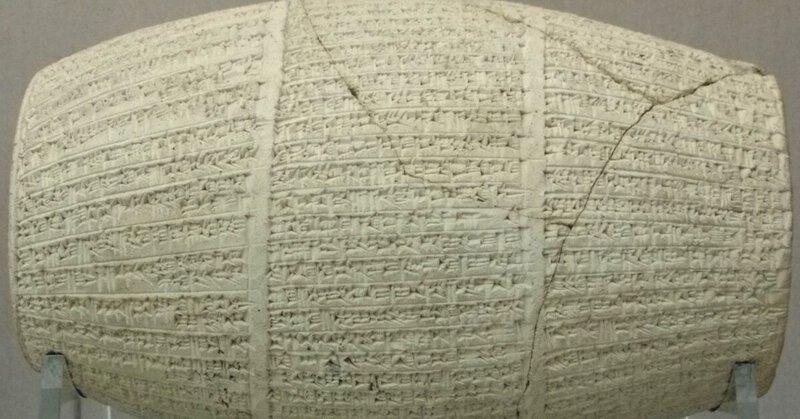
Somewhere in the ancient city of Uruk, around 3200 BC, a harried administrator pressed a cut reed into a palm-sized lump of wet clay and made a mark that would change the course of human history — not to compose a prayer, not to record a king’s victory in battle, but to keep track of barley. The world’s oldest writing system was born, and its first word was essentially an invoice.
What Cuneiform Actually Is (And What It Isn’t)

Cuneiform is not a language — it is a writing technology, a script system adapted over thousands of years to record multiple languages across the ancient Near East, including Sumerian, Akkadian, Elamite, and Hittite. Calling cuneiform a single language is a little like calling the Roman alphabet “English”: the alphabet is just the tool, not the tongue.
Technically, cuneiform is a logo-syllabic writing system, meaning it combined two types of signs. Some signs represented whole words or concepts — logograms. Others represented sounds or syllables, allowing scribes to build words phonetically. The result was a flexible, powerful, and genuinely demanding system that took years to master. At its peak complexity, a fully trained scribe might need to recognise and reproduce more than a thousand distinct signs.
The physical mechanics are surprisingly approachable. A scribe would take a reed, cut it at an angle, and press the tip into soft clay. The natural shape of that impressed mark — a thick wedge at one end, tapering away — gave the script its modern name. “Cuneiform” derives from the Latin cuneus, meaning wedge. As the British Museum explains, you can attempt the basics yourself with nothing more than a lolly stick and a piece of clay. Few of humanity’s most consequential inventions have such a modest materials list.
What makes cuneiform’s reach so staggering is its duration. Scribes used this writing system for more than three millennia — a span roughly equal to the gap between ancient Rome and today. It was, without question, the most widespread and historically significant writing system in the ancient Middle East.
The Origin Story: Counting Sheep Before Writing Poems

To understand why writing was invented at all, you have to picture Mesopotamia — the “land between the rivers,” the fertile floodplain of the Tigris and Euphrates in what is now Iraq. By around 4000 BC, cities like Uruk were growing at a pace that would have been unrecognisable to earlier, village-scale societies. Thousands of people, specialised trades, temple granaries receiving contributions from surrounding villages, herds of livestock, consignments of wool and oil and fish — the sheer volume of transactions created an administrative burden that no human memory could reliably shoulder.
The solution did not arrive all at once. For millennia before true writing, people across the ancient Near East had been using small clay tokens — simple geometric shapes representing commodities — to track goods. A cone for a jar of oil. A sphere for a measure of grain. Over time, these tokens were sealed inside hollow clay balls called bullae, then pressed into the outside of the clay for quick reference, and eventually simply drawn as flat impressions on clay tablets. Somewhere in that gradual drift from three-dimensional token to two-dimensional sign, the pictographic tablet emerged. Once you could draw a picture of grain on clay, abstracting that image into a stylised wedge-mark for speed and consistency was a natural next step.
By around 3200 to 3000 BC, this process had produced what scholars recognise as the world’s oldest writing. While Egyptian hieroglyphics emerged around a similar period, the Mesopotamian cuneiform tradition holds the earliest securely dated examples. And when you ask what those first tablets say, the answer is almost always the same: lists. Rations issued to workers. Livestock counts. Land transfers. The ancient world’s equivalent of a spreadsheet, pressed permanently into clay.
Three Thousand Years of Clay: What People Actually Wrote

If cuneiform had remained a bookkeeping tool, it would still be remarkable. But as the system matured, people realised that anything sayable could now be preserved. The technology escaped the accountant’s office and spread into every corner of life.
By the middle of the third millennium BC, cuneiform was being used for religious hymns, royal proclamations, legal codes, medical texts, astronomical observations, and diplomatic correspondence. The Code of Hammurabi — the Babylonian king’s sweeping body of laws, inscribed on a basalt stele around 1754 BC — was written in cuneiform. So was the Epic of Gilgamesh, one of humanity’s oldest surviving works of literature: a story of heroism, friendship, and a catastrophic flood that predates the biblical account and still resonates with uncanny force.
But it is the smaller, stranger tablets that reveal how fully cuneiform had woven itself into ordinary life. Scholars have translated a merchant’s furious letter complaining about a shipment of substandard copper — widely cited as one of the world’s earliest written consumer complaints, dating to around 1750 BC. There are students’ practice tablets with copying errors still visible. There are love poems of startling tenderness. There are what appear to be a pupil’s excuses for missing class. The cuneiform record is not a monument to the powerful alone; it is a chorus of ordinary voices, arguing and praying and doing their sums across the centuries.
The Scribal Schools: Where Children Learned to Press Clay

Mastering cuneiform was no casual achievement. The system required scribes to learn hundreds of distinct signs, each capable of carrying multiple readings depending on context. To produce this expertise at scale, the Sumerians developed dedicated institutions — the edubba, or “tablet house” — where students spent years under the guidance of senior scribes, copying texts, drilling sign lists, and receiving corrections that, judging by surviving teacher-pupil dialogues, could be delivered with considerable bluntness.
The physical texture of this education survives in a poignant way. School exercise tablets were never intended to last. Made of unfired clay, they were meant to be smoothed over and reused — the ancient equivalent of a whiteboard. But history has a habit of preserving things accidentally. When fires swept through buildings across Mesopotamia, these humble practice tablets were baked hard by the heat, inadvertently converted into permanent records.
What survives is therefore not only the polished output of master scribes but the hesitant, uneven practice marks of children just beginning to learn — signs pressed too deep or not deep enough, copies of texts with small errors left uncorrected. Among all the remarkable objects in the Mesopotamian archaeological record, these accidental archives may be the most human. A child’s uncertain handwriting, frozen in clay for four thousand years, is a reminder that every great civilisation was built by people who were once beginners.
As the Metropolitan Museum of Art observes in its examination of writing’s origins, the development of literacy in Mesopotamia was always tied to institutions — temples, palaces, schools — because literacy was power, and power required gatekeepers.
Lost, Found, and Decoded: How We Learned to Read It Again

Cuneiform did not survive as a living tradition. By the early centuries AD, the script had fallen out of use, replaced by the alphabetic writing systems of successor cultures. The clay tablets remained, buried under the ruins of Mesopotamian cities, but for more than a thousand years, no one on earth could read a single sign.
The rediscovery unfolded in earnest during the 19th century, when European excavators began pulling hundreds of thousands of tablets from sites including Nineveh and Nippur. The decisive breakthrough came from a cliff face in western Iran: the Behistun inscription, carved on an almost vertical rock face by the Persian king Darius I around 520 BC, which recorded the same royal proclamation in three scripts — Old Persian, Elamite, and Babylonian cuneiform. Working from the Old Persian text, which could be partially reconstructed from related languages, scholars including Henry Rawlinson made decisive progress in decipherment during the 1840s and 1850s. It was the Rosetta Stone moment for the ancient Near East.
What was unlocked was almost incomprehensibly vast. An estimated half a million cuneiform tablets are now known to exist, and tens of thousands remain untranslated, held in museum storerooms and archives across multiple continents. The Library of Congress holds its own cuneiform collection, a reminder of how widely these ancient objects have dispersed from their origins. The full story of Mesopotamian life — and with it the full picture of how writing shaped human civilisation — is still being assembled, sign by sign.
The pace of discovery is accelerating. Multispectral and digital imaging techniques now allow scholars to read damaged or worn tablets previously considered illegible. Machine-learning projects are being developed to assist with pattern recognition across large sign databases. Crowd-sourced transcription efforts are helping reduce the backlog. Cuneiform’s secrets are still being revealed, in real time, right now.
Why Cuneiform Still Matters

What makes cuneiform so extraordinary as a historical source is precisely what made it ordinary as a technology: people used it for everything. Because clay was cheap and abundant, and because the system was applied to sacred and mundane purposes alike, the cuneiform record offers a portrait of ancient Mesopotamian life that is richer, stranger, and more recognisably human than almost any other source from the ancient world. We have their lawsuits and their love letters, their astronomical theories and their shopping disputes, their schoolroom blunders and their literary masterpieces.
Writing did not merely record history — it made complex society possible in the first place. Laws pressed into clay could be applied consistently across a kingdom. Contracts could be disputed and adjudicated by parties who had never met. Stories could outlive their tellers by millennia. The administrative invention that began as a grain merchant’s memory aid became the infrastructure on which urban civilisation ran — and, through the long chain of script borrowings and adaptations that followed, an ancestor of every writing system used in the world today.
That is the magnificent fact at the heart of this story: everything that followed — the literature, the law codes, the science, the diplomatic archives, the astronomical tables — grew from one pressed administrator’s need to remember how many jars of beer he was owed. The mundane origin is not a deflating detail. It is the whole point. Writing was not handed down by the gods as a gift to poets. It was scraped out of necessity, pressed into clay by people with practical problems to solve, and it changed everything anyway.
Somewhere in a museum storeroom, a clay tablet pressed by an anonymous hand nearly five thousand years ago is waiting to be read. When a scholar finally works through its signs — deciphering the marks left by a stylus in wet clay one afternoon in a city that no longer exists — it will probably turn out to be an invoice. And it will be one of the most important things in the world.

 Arabic
 French
 Spanish
 Portuguese
 Deutsch
 Turkish
 Dutch
Dutch
 Italiano
 Russian
 Romaian
 Portuguese (Brazil)
 Greek
Greek