


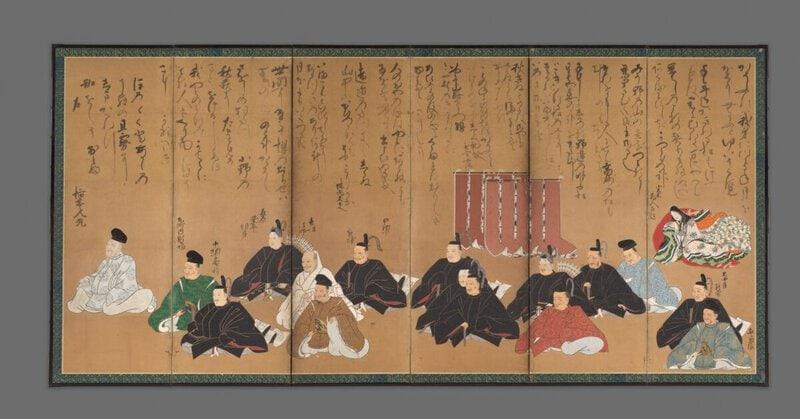
Imagine a woman in the year 1000 CE, layered inside twelve silk robes whose color gradations shift from deep violet at her collar to pale green at her wrist — a living gradient designed to suggest the turning of seasons. She sits by candlelight composing a thirty-one-syllable poem that she will send, before dawn, to a man she has never directly seen. Her entire world — her ambitions, her rivalries, her loves — fits inside the wooden corridors of Heian-kyō’s palace complex. She has never watched a farmer work a field, never heard the noise of a merchant’s stall, never seen a sword drawn in anger. And somehow, from this gilded cage, she is writing one of the most psychologically penetrating works in the history of human literature.
A World Inside the Walls: The Central Paradox of Heian Japan

The Heian period, which ran from 794 to 1185 CE, lasted 391 years — close enough to four centuries that historians round up without much guilt. It is remembered as the golden age of classical Japanese culture, a time of extraordinary artistic and literary achievement. But here is the irony that makes it endlessly fascinating: nearly everything that was beautiful about Heian Japan was produced by a ruling class almost pathologically insulated from the country it nominally ruled. The nobles wrote about the moon, debated the correct gradient of sleeve color, and sent poems to their lovers — while farmers, merchants, and craftspeople fed and built the capital entirely beyond their notice.
The insularity was not an accident. It was the design. And by some strange alchemy of human creativity, that suffocating enclosure produced the world’s first psychological novel, a feminist literary tradition without parallel in the medieval world, and a political dynasty that held power for generations without ever raising a sword. Understanding how that happened — and why it ultimately could not last — is the story of one of history’s most consequential and contradictory civilizations.
Moving the Capital: Why 794 Changed Everything

The story begins with a decision. In 794 CE, Emperor Kanmu ordered the abandonment of Nara, the previous imperial capital, and the construction of an entirely new city to the north: Heian-kyō, meaning “Capital of Peace and Tranquility.” We know that city today as Kyoto. The move was not simply logistical. It was a statement of intent — a deliberate break from the suffocating political influence of the great Buddhist temples that had clustered around Nara and grown powerful enough to challenge the imperial court itself. By building fresh on unencumbered ground, Kanmu was giving the imperial institution room to breathe, to reinvent itself, and to define what Japanese civilization would look like on its own terms.
The new city’s design reflected its ambitions. Modeled on Chang’an, the magnificent Tang Chinese capital, Heian-kyō was laid out as a precise grid of broad avenues, walled compounds, and formal gardens — a city that announced, in its very geometry, an ordered hierarchy. But while the template was Chinese, the culture that developed inside it became increasingly and self-consciously Japanese. The Heian period is recognized as the last division of classical Japanese history — the moment when centuries of absorbing Chinese influence finally fermented into something distinctly native. The grid of avenues encouraged the aristocracy to socialize almost exclusively among themselves, and in that turning inward, a Japanese aesthetic identity was born.
It is worth noting what “inward” actually meant in geographic terms. The court nobility who defined Heian culture numbered only in the hundreds. They occupied a small district of a planned capital that never fully achieved the scale its founders imagined. The western half of Heian-kyō was largely underdeveloped throughout the period. The entire golden age of Japanese classical culture was produced by a tiny social stratum clustered inside an incomplete city — which makes the scale of what they created all the more remarkable.
The Fujiwara Shadow Government: Power Without a Throne

No account of Heian Japan makes sense without the Fujiwara clan. They were, in essence, the masters of political theater — a family that never sat on the Chrysanthemum Throne but effectively controlled it for generations. Their method was elegant in its simplicity: marry Fujiwara daughters to emperors, ensure those emperors produced heirs young, then govern as regents when those heirs were too young to rule independently. By the time a son grew up, there was already another generation of Fujiwara women positioned in the inner court, ready to begin the cycle again.
At the height of Fujiwara dominance, around the early eleventh century, the clan patriarch Fujiwara no Michinaga held extraordinary influence as the father or grandfather of multiple emperors. He reportedly composed a poem comparing himself to the full moon — bright and lacking nothing. It was not an idle boast. His political authority was real and extensive, exercised not through armies but through ceremony, marriage alliance, and the careful management of court ritual. That word — soft — is the key to understanding the entire political character of the Heian era. Real governance happened through poetry competitions, strategic betrothal, and control of the rituals that gave the imperial institution its legitimacy. The Fujiwara never needed soldiers because they controlled the relationships and reproductive futures of the imperial family itself.
The elegance of this arrangement, however, concealed a structural catastrophe in the making. Four centuries of concentrating power inside the capital and dismissing the provinces meant that warrior clans were gathering strength in the countryside entirely outside the court’s field of vision. The Fujiwara, focused on the next marriage alliance and the next poetry anthology, were planting the seeds of the world that would eventually destroy them.
Daily Life in the Golden Cage: What Heian Aristocrats Actually Did All Day

A court noble’s day in Heian-kyō began before dawn with religious observances. Then came the elaborate business of dressing — a process that was, in itself, a form of public communication. The layered formal robes worn by noblewomen, known as jūnihitoe, were color-coded according to rank and season. The exact gradient of colors visible at the sleeve hem — a fashion practice called kasane no irome — was scrutinized by peers and could mark a person as exquisitely refined or hopelessly tasteless. Getting it wrong was social death of the most serious kind available in a world where social standing was nearly everything.
The rest of the day was given over to calligraphy practice, music performance, moon-viewing gatherings, and above all the composition of waka — the thirty-one-syllable poems that served as the social currency of court life. The aesthetic philosophy underpinning all of this was called miyabi: a quality of courtly elegance and refined sensitivity that was, in theory, the highest human attainment. Nobles blended their own signature incense and were judged on its composition. They sent poems to potential lovers before ever meeting face-to-face, and the quality of those poems — the handwriting, the paper selection, the poetic allusion — determined whether a romance even began.
The physical world these aristocrats inhabited reinforced the aesthetic one. The shinden-zukuri mansion style — open wooden corridors connecting pavilions arranged around garden ponds, with painted screens defining interior space — deliberately blurred the boundary between architecture and landscape. Beauty was not something you visited. It surrounded you and demanded your constant attention and response. The seasons were not backdrop but subject matter: the precise moment the plum blossoms opened or the maple leaves turned was a social and poetic event requiring acknowledgment. Sensitivity to these transitions was the mark of a fully formed human being. Indifference to them was close to barbarism.
Meanwhile, beyond the garden walls, the common people who built and fed the capital remained essentially invisible to the men and women writing poetry about its moonlit ponds. This was not hypocrisy so much as a complete failure of imaginative scope — a court so thoroughly sealed inside its own world that the existence of another world barely registered as a fact worth noting.
Women, Words, and Power: The Surprising Freedoms of Heian Japan

It would be a mistake to read the Heian noblewoman as merely decorative. Women in the Heian period could own property and inherit wealth independently — a degree of economic autonomy that was genuinely unusual by medieval world standards. They lived behind screens and curtains, rarely seen directly by men outside their immediate family. But that enforced seclusion created something unexpected: a hidden world of fierce intellectual competition, elaborate letter-writing networks, and literary one-upmanship that gave court ladies a form of influence entirely their own.
The two great poles of this tradition are Murasaki Shikibu and Sei Shōnagon — both ladies-in-waiting at rival imperial courts whose access to the inner life of Heian aristocracy gave them the raw material for masterworks. Sei Shōnagon’s The Pillow Book, written around the late tenth and early eleventh centuries, is a sharp, witty, sometimes barbed collection of observations about court life: lists of things that are elegant, things that are embarrassing, people who are tiresome, landscapes that are moving. It crackles with personality and with the wry intelligence of a woman who has watched the court’s pretensions with clear eyes. Murasaki Shikibu’s work, completed slightly later, goes somewhere deeper and stranger.
There is a fascinating historical irony embedded in Heian women’s literary dominance. Serious men at court wrote in classical Chinese — the prestige language of scholarship and official governance. Women wrote in the vernacular Japanese kana syllabic script, considered too informal for real intellectual work. History’s verdict has been unambiguous: the “lesser” script produced the greater literature. The refined world of the Heian period preserved women’s voices in ways that most medieval societies did not, and those voices turned out to be among the most enduring in all of Japanese cultural history. The exclusion that was meant to diminish them became the condition that made them indispensable.
The Tale of Genji and the Birth of the Novel

Around 1008 CE, Murasaki Shikibu completed — or at least substantially produced — a work unlike anything written before it anywhere in the world. The Tale of Genji runs to fifty-four chapters and follows the life, loves, and eventual fading of Hikaru Genji, the son of an ancient emperor. It is not an adventure story or a chronicle of battles. It is a sustained, searching examination of human psychology: of desire and grief, political calculation, the cruelty people inflict on one another in the name of love, and the way time dismantles everything it touches. European fiction would not reach comparable psychological interiority for several more centuries.
What makes The Tale of Genji indispensable to understanding Heian Japan is its documentary precision alongside its imaginative depth. The moon-viewing parties, the poetry exchanges conducted across curtained screens as the primary legitimate form of courtship, the crushing hierarchy of rank that could determine a person’s entire fate — these are not fantasy inventions. They are Heian-kyō as Murasaki Shikibu lived and observed it, rendered in fiction’s more honest light. When scholars want to understand Heian period culture, they read her novel alongside the historical record, because for the inner life of the court, she often tells us more than official documents do.
The novel also crystallized an aesthetic philosophy — mono no aware, the bittersweet awareness of impermanence, the particular ache of beautiful things that cannot last — that has threaded through Japanese art, poetry, film, and design ever since. The cherry blossom that falls precisely at its peak of beauty is the same idea, the same feeling, that Murasaki Shikibu was exploring in a candlelit corridor around 1008 CE. The Heian period produced not just great art but an entirely new art form, and in doing so it reached forward and shaped a civilization’s emotional vocabulary across a millennium.
It is also worth noting what The Tale of Genji reveals about gender within the Heian aristocracy that official histories obscure. Genji’s treatment of the women in his life — some of whom he pursues as a child, some of whom he essentially raises to become his ideal companion — is rendered by Murasaki Shikibu with a complexity that neither condemns nor endorses but simply observes. The novel does not flinch from showing how the same court culture that gave noblewomen unusual economic freedoms also treated them as instruments of political alliance and objects of male aesthetic cultivation. That ambivalence, held in tension across fifty-four chapters, is part of what makes the work feel so contemporary.
Art, Architecture, and the Aesthetics of Impermanence
Literature was not the only arena in which Heian culture achieved lasting distinction. The period produced significant developments in visual art, particularly the tradition known as yamato-e — Japanese-style painting that moved away from Chinese models to depict native landscapes, court scenes, and narrative sequences. The great illustrated scrolls of the twelfth century, including those depicting scenes from The Tale of Genji itself, represent a visual art form as sophisticated and original as the literary one that inspired them.
Buddhist art and temple architecture also flourished during the Heian period, partly because the religious establishments that Emperor Kanmu had moved away from Nara did not disappear — they followed the court to its new home and adapted. The Phoenix Hall of Byōdō-in, built in 1053 in Uji near Kyoto and now depicted on the Japanese ten-yen coin, stands as one of the period’s most complete surviving architectural achievements. Its design — light wooden structure reflected in a pond, the building almost appearing to float — embodies in stone and water the same aesthetic principles that governed Heian literature and fashion: the deliberate blurring of boundaries, the elevation of transient beauty, the suggestion of something just beyond what can be directly grasped.
Even music was systematized and refined during the Heian period. The gagaku court music tradition, which had Chinese and Korean roots, was absorbed and formalized into something distinctly Japanese during these centuries. It remains the world’s oldest continuously performed orchestral music tradition, still played at Japanese imperial ceremonies today — a direct living thread connecting the present moment to the candlelit halls of Heian-kyō.
The End of the Golden Age: Why the Walls Finally Fell
By the late twelfth century, the world the Heian court had ignored for four centuries came crashing through the gates. The Taira and Minamoto warrior clans — grown powerful in the provinces while the Fujiwara composed poetry about the moon — fought a devastating civil conflict known as the Genpei War between 1180 and 1185. When it ended, the Heian period ended with it. The Minamoto leader Yoritomo established the Kamakura shogunate, a military government that shifted the center of Japanese political life permanently from the courtiers to the warriors — from miyabi to the sword.
The structural flaw had always been there. Four centuries of aristocratic insularity had produced culture of breathtaking refinement and military capacity of virtually zero. The Fujiwara system of governance by marriage alliance and poetic prestige had no mechanism for responding to organized military force. When real violence finally arrived inside the elegant world of layered robes and poetry competitions, the court had nothing to answer it with. The golden cage had been precisely that: beautiful, intricate, and completely unable to defend itself.
And yet what the Heian period left behind survived its collapse entirely. A native literary tradition built in the Japanese vernacular. A visual art tradition that defined Japanese pictorial aesthetics for centuries. A refined philosophical sensibility — mono no aware, miyabi, the cult of seasonal attentiveness — that became the foundation of Japanese aesthetic identity and remains recognizable in Japanese culture today. A model of female intellectual achievement in Murasaki Shikibu and Sei Shōnagon that inspired writers across the subsequent centuries. The living musical tradition of gagaku. The architectural vocabulary of pavilions, ponds, and garden corridors. The 391 years of the Heian era were among the most insular in Japanese history and simultaneously among the most consequential.
The lesson the period offers is both specific and strangely universal: sometimes the most explosive creative energy ignites not in the wide open world, but in a single candlelit room, behind a silk curtain, where a woman in twelve layers of robes is choosing exactly the right word — and the weight of that choice, small as it seems, turns out to be enough to reach across a thousand years.

 Arabic
 French
 Spanish
 Portuguese
 Deutsch
 Turkish
 Dutch
Dutch
 Italiano
 Russian
 Romaian
 Portuguese (Brazil)
 Greek
Greek