


5ph/Getty Images
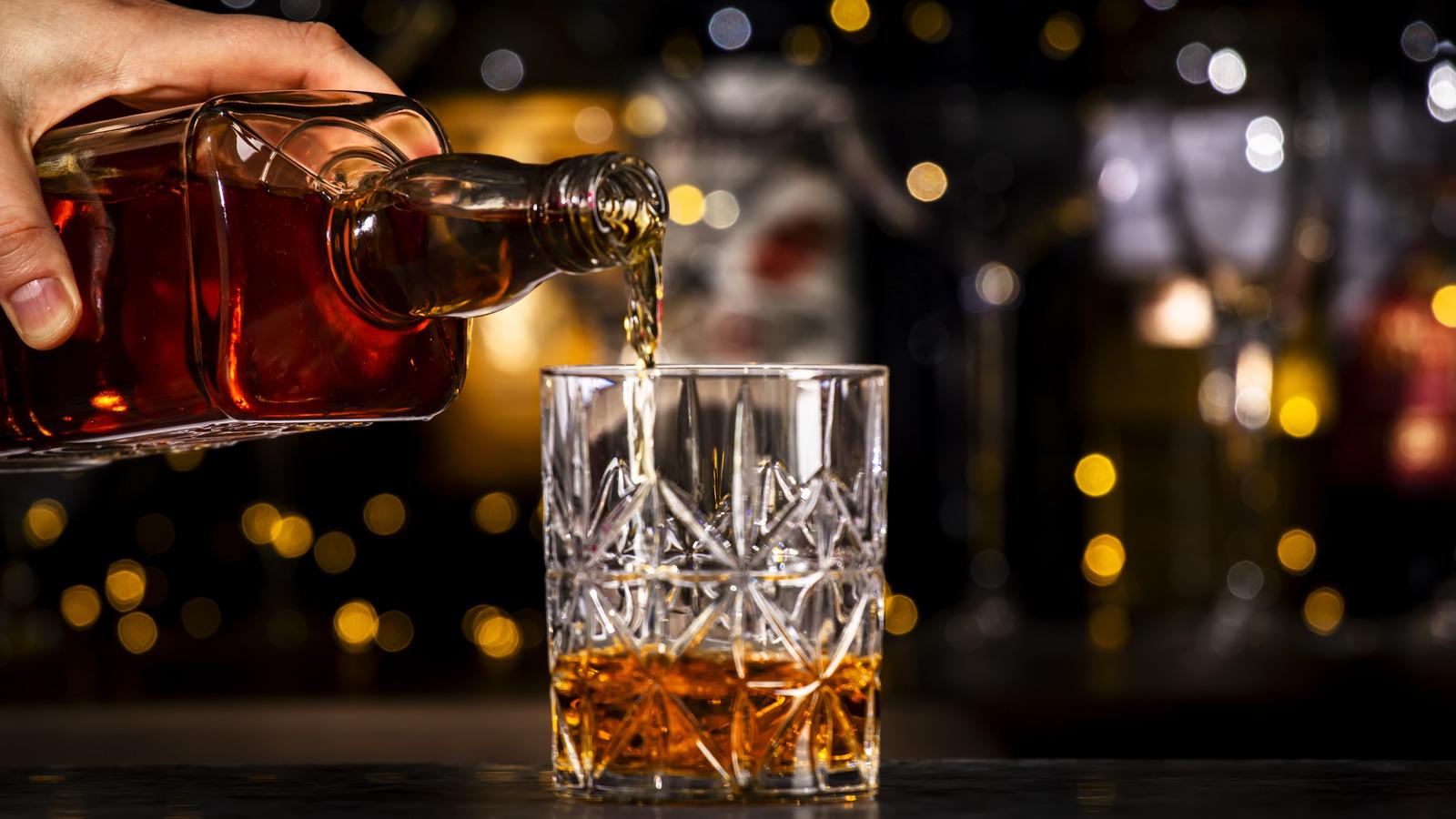
Ah, bourbon. It's a classic whiskey that's as American as apple pie. As you gently swirl your post-work drink in your favorite crystal glass, you may begin to wonder how that smooth bourbon whiskey got its brown color. In an exclusive interview with Mashed, executive bourbon steward Chris Blatner, also known as the urbanbourbonist on Instagram, explains: "Contrary to popular belief, bourbon doesn't get its color from the grain recipe. Its color comes from the charred new oak barrel it ages in." The char levels of these barrels, along with the characteristics of any secondary barrels the whiskey may be transferred to, also affect the final color of the bourbon, as do the warehouse climate conditions and duration of aging.
Legally, bourbon whiskey must be made with at least 51% corn and aged in barrels made from charred new oak. Bottles labeled "straight bourbon" must be aged for at least two years. So how do liquors made from these same base ingredients develop different colors? According to Blatner, "Very generally speaking, darker bourbons have spent more time interacting with the barrel and often show more oak influence." He pointed out that the flavors of darker bourbons often have notes of caramel, toffee, chocolate, tobacco, and oak. Lighter bourbons, on the other hand, have more pronounced tasting notes of grain, fruit, and spice. While these are basic distinctions, Blatner goes on to say, "Warehouse conditions, climate, and barrel selection can create surprisingly dark younger bourbons or relatively light older ones."
Characteristics to look for in a bottle of bourbon
Sean Gallup/Getty Images
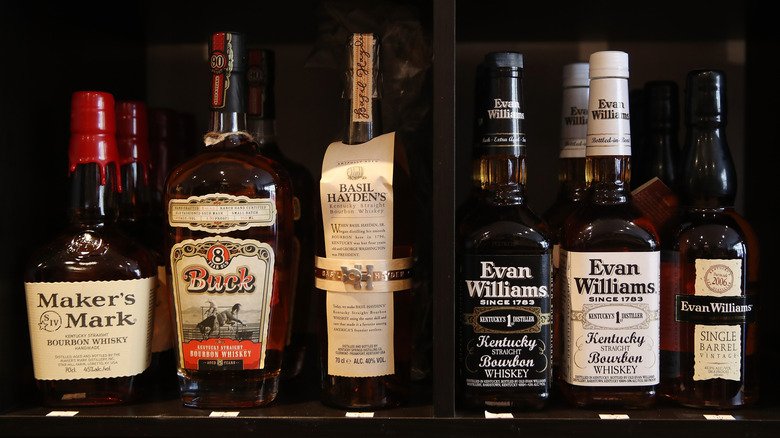
Some people may equate darker bourbons with higher quality, but that is not necessarily so. Although the shade of brown can indicate certain characteristics, a lot of factors go into the flavor of a bourbon whiskey. Executive bourbon steward Chris Blatner broke this concept down further, saying, "Some exceptional bourbons are relatively light in color, while some very dark bourbons can be overly oaked and tannic." In other words, it is possible for a bourbon to taste too much of the barrel it was aged in. If you are bourbon-curious, some of the best bourbons for beginners are the smooth and creamy Woodford Reserve and the accessible, affordable Wild Turkey.
Learning more about this spirit involves debunking bourbon myths. For instance, it is common (yet unwise!) to think that the higher the price, the better the bottle. There are many cheap bourbons you should buy, with several of them, including Maker's Mark, coming in under $30 a bottle. When determining a bourbon's quality, Blatner advises that color is only a small part of the equation. "The focus should be on the producer, any age statement, proof, and any tasting notes that may be provided," he says. Most of all, remember to stay open-minded. There are many excellent bourbon labels out there to enjoy; perhaps consider throwing a bourbon tasting party for you and your friends!

 Arabic
 French
 Spanish
 Portuguese
 Deutsch
 Turkish
 Dutch
Dutch
 Italiano
 Russian
 Romaian
 Portuguese (Brazil)
 Greek
Greek