


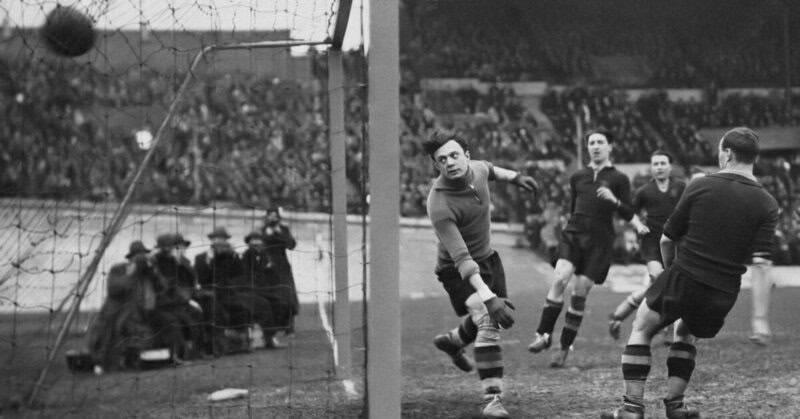
A military dictator who used the tournament to hide mass murder. A match allegedly fixed with grain and political prisoners. And the dawn raid on a Swiss luxury hotel that exposed decades of corruption at the heart of the beautiful game.
Every four years, the World Cup presents itself as sport in its purest form. The best players on earth. The highest stakes. The whole world watching.
The history behind those four weeks tells a different story.
Beneath the spectacle — the goals, the upsets, the tears, the ticker tape — runs a darker thread. Governments that used football to launder their reputations. Officials who sold hosting rights to the highest bidder for decades. A match in 1978 where the alleged price of victory was 35,000 tonnes of grain, $50 million in unfrozen assets, and thirteen human beings handed over to a dictatorship.
As the 2026 World Cup begins, here is the history nobody puts in the highlights reel.
How a Military Dictator Turned the 1978 World Cup Into a Propaganda Machine — While Torturing People Nearby
When the 1978 World Cup kicked off in Argentina, the country was in the thick of its bloody military dictatorship, often referred to as the Dirty War. It began just over two years earlier when the country’s military leaders arrested the democratically elected president and installed General Jorge Rafael Videla. ReVista
The Videla regime brutally repressed its opponents — students, trade unionists, journalists, communist sympathizers, and anyone suspected of left-wing activities. The regime was responsible for the deaths of between 15,000 and 30,000 of its own citizens. VICE
Much of this torture and murder took place right next to the tournament’s main stadium. Just a ten-minute walk from El Monumental, where the 1978 tournament kicked off, was the Navy School of Mechanics, where 5,000 prisoners were held between 1976 and 1983. Only 150 of them survived. Medium
Those prisoners could hear the roars of the crowd as Argentina progressed through the tournament. One political prisoner, Manuel Kalmes, recalled cheering along from his cell when Argentina scored — only to be told by a guard, “That’s the last goal you’ll ever cheer, you sons of whores.” Medium
Videla understood exactly what the World Cup offered him. He used the tournament as a public podium — an opportunity to present Argentina to the watching world as a modern, stable, celebratory nation. Foreign journalists arrived and reported on the football. The torture continued a short walk away. ReVista
How Argentina May Have Fixed the Match That Put Them in the Final
Argentina’s path to the 1978 final ran through a match that has been debated ever since.
Going into their final group game against Peru, Argentina needed to win by at least four goals to eliminate Brazil on goal difference and advance to the final. They won 6-0. The necessary number had been reached after just 50 minutes. HISTORY
The result was suspicious enough to generate decades of investigation. A former Peruvian senator later claimed a deal had been struck between Peru’s then-president and Videla, whereby Argentina would be allowed to win by the required margin. In return, Videla’s regime agreed to receive and imprison 13 Peruvian political dissidents who were vocally opposed to the Peruvian government. HISTORY
The alleged financial sweeteners were staggering. 35,000 tonnes of wheat were sent from Argentina to cash-strapped Peru. Argentine banks also unfroze $50 million of Peruvian assets. HISTORY
Argentina has always denied any wrongdoing. Peru insists they simply played badly. The investigation launched by an Argentine judge never produced a definitive conclusion. What is not in dispute is that thirteen political prisoners allegedly changed hands as part of the arrangement — and that Argentina went on to win the tournament in front of a crowd delirious with national pride, while Videla smiled from the stands.
How Johan Cruyff Refused to Play — and Why Almost Nobody Talked About It at the Time
One of the most famous players of his generation was not at the 1978 World Cup. Johan Cruyff refused to take part. The Dutch master, who had led the Netherlands to the 1974 final, stayed home while his country reached the 1978 final without him. pressreader
For years the reason was left deliberately vague. It was only decades later that Cruyff revealed the full story — he and his family had been the victims of a kidnapping attempt in Barcelona in 1977, and the trauma had made him unwilling to be away from home for an extended period. He had chosen his family over football.
The detail matters because it illustrates how much context was stripped from the 1978 World Cup in its public presentation. One of the world’s greatest players was absent partly because of political violence. The tournament proceeded. The cameras showed only the football.
How FIFA Executives Sold the World Cup for 24 Years Before Anyone Was Arrested
The 1978 scandal was a story of one government manipulating one tournament. The corruption revealed in 2015 was something else entirely — systemic, global, and running for decades.
On May 27, 2015, the U.S. Department of Justice disclosed a 47-count, 164-page criminal indictment charging FIFA executives with having received $150 million in bribes over a period of more than two decades. HISTORY
Seven were arrested at the Baur au Lac hotel in Zurich — one of Switzerland’s most prestigious addresses — as Swiss police moved in during the early morning. The charges alleged widespread corruption over a 24-year period, including wire fraud, racketeering, and money laundering. Yahoo Sports
Officials were accused of accepting bribes and kickbacks, and of buying and selling their votes for countries like Russia, Qatar, and South Africa to host the World Cup. Yahoo Sports
The scale of the operation was extraordinary. The FBI and IRS had coordinated with police agencies and diplomats in 33 countries to build the case. The investigation had been running for years. American prosecutors were able to bring charges because American banks had been used in the transactions — making it a U.S. federal matter regardless of where the crimes had occurred. Encyclopedia Britannica
FIFA president Sepp Blatter was not among those arrested that morning. He resigned four days later, having just been re-elected for a fifth term. He denied wrongdoing. He was subsequently banned from football for eight years by FIFA’s own ethics committee. HISTORY
How the 2006 World Cup Was Allegedly Bought — in Germany
The 2015 arrests opened doors that had been locked for years. Among the most startling revelations that followed was the allegation that Germany’s hosting of the 2006 World Cup — widely celebrated as one of the best-organized tournaments in history — had itself been secured through corruption.
Allegations surfaced that the German Football Federation had been involved in securing the 2006 World Cup for Germany, with Blatter himself hinting that the awarding of the tournament to Germany may have been influenced by bribery. A German football official was subsequently banned by FIFA for his role in the scandal. pressreader
The 2006 World Cup — the tournament of smiling German fans, of Zidane’s headbutt, of Toni Kroos’s emergence — had its own shadow story running underneath the surface. Almost every World Cup, it turns out, does.
What All of This Means as the 2026 World Cup Begins
The 2026 World Cup is happening in the United States, Canada, and Mexico — three democracies, under a FIFA that has spent a decade promising reform, with more oversight than ever before.
Whether those reforms have genuinely changed the culture of the institution remains a matter of debate. When FIFA’s new president Gianni Infantino, who succeeded Blatter, attempted to influence the Ethics Committee’s leadership in 2017, it raised doubts about FIFA’s commitment to transparency and suggested that the culture of secrecy might persist despite public promises of change. Ethics Unwrapped
What is not in doubt is the pattern. The World Cup has always been more than a football tournament. It has been a stage on which governments perform legitimacy, officials extract wealth, and the world watches the football and asks relatively few questions about what is happening offstage.
The 1978 prisoners could hear the crowd from their cells. The 2015 executives were arrested in a luxury hotel. The truth of how tournaments are won, hosted, and decided has rarely matched the version shown on television.
The 2026 tournament will produce extraordinary football. Moments that will be talked about for decades. Goals, heroes, and heartbreaks that will define the careers of players who have been preparing for this their entire lives.
It will also, almost certainly, produce stories that won’t fully be understood for years.
That is the nature of the World Cup. It always has been.

 English
 Arabic
 French
 Spanish
 Portuguese
 Deutsch
 Turkish
 Dutch
Dutch
 Italiano
 Romaian
 Portuguese (Brazil)
 Greek
Greek