


Dian Oktaviani/Shutterstock
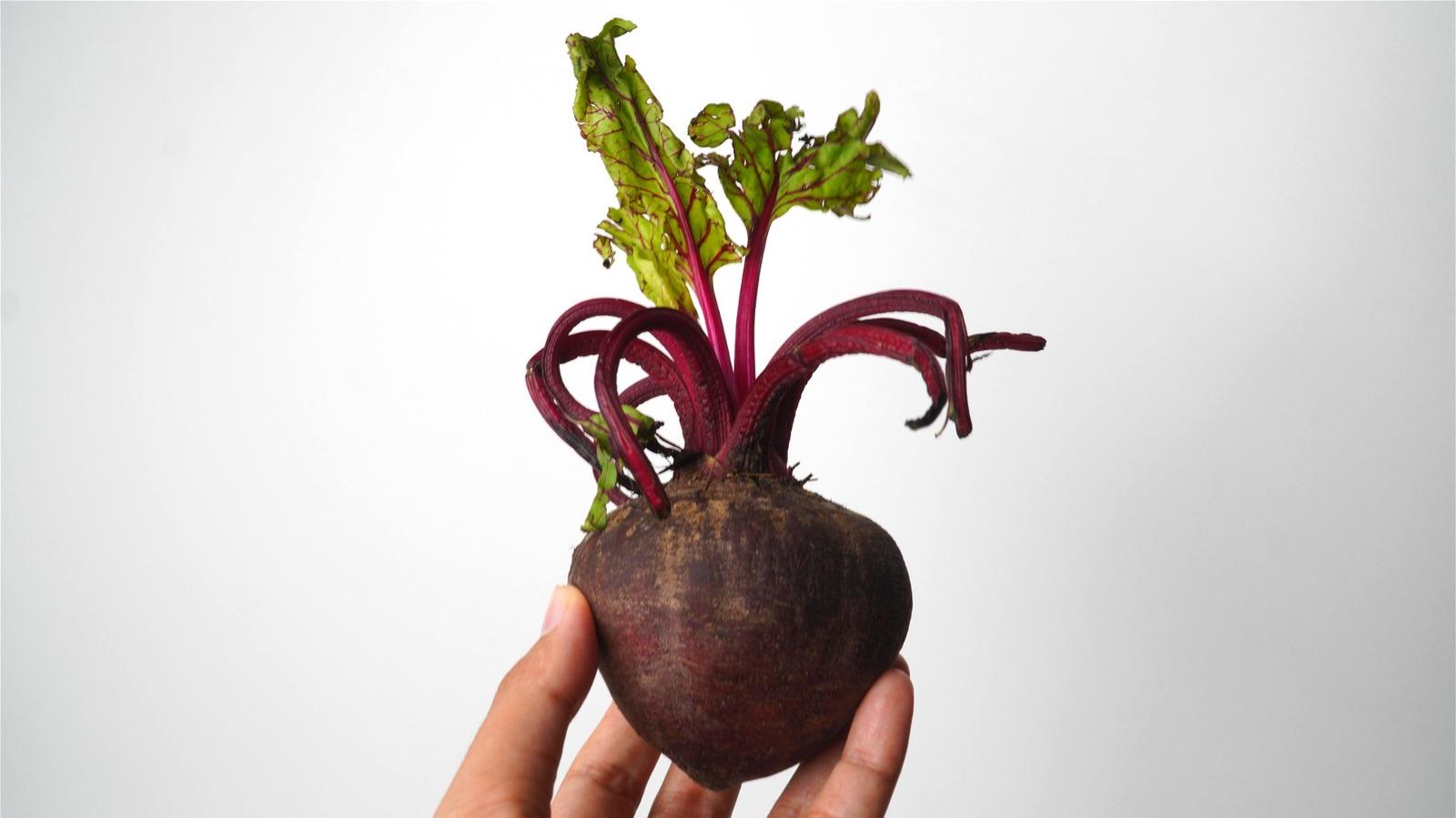
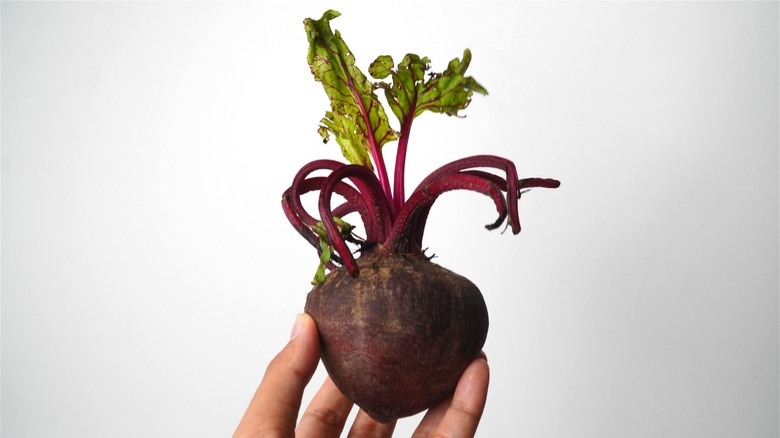
One of the best things about beets is that they keep for months with proper storage. The downside to this is that it's also pretty easy to forget about them. Sometimes, they'll have been in storage for so long that when you finally decide to grab a few, they've already sprouted some leaves. While this may set off some alarm signals, you don't need to worry.
Sprouted beets are completely safe to eat as long as the root itself doesn't show any signs of mold or spoilage. Check if the vegetable feels soft or mushy or has any weird smells — either of these means that it's likely gone bad. If everything seems in order, feel free to slice off the sprouted area and cook the beet as normal.
Don't throw away the unwanted slices just yet, though. If you keep around half an inch of the beetroot attached to the sprouts, you can place that portion in a shallow dish with water and let the leaves continue to develop. Beet greens are edible and serve as a good source of potassium and Vitamin C. They're safe to eat raw and taste a bit like Swiss chard, so feel free to use them in salads. You can also try out this recipe for easy sauteed beet greens if you need some inspiration for cooking them.
How to prevent beets from sprouting
Pixel-Shot/Shutterstock
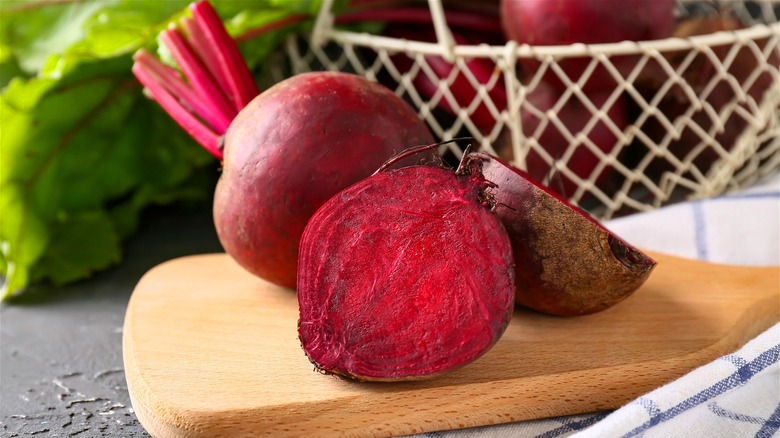
While eating sprouted beets is perfectly fine, there's a good reason to prevent it from happening altogether. Sprouts can grow into leaves over time. These could end up draining the root of its moisture, impacting the beets' flavor, and possibly even causing early spoilage. This isn't much of a problem if you catch the sprouting early enough, but if you're the type to keep beets in long-term storage, things might get out of hand.
The best way to prevent sprouting is by understanding beets and controlling the conditions that trigger this unwanted process. Root vegetables like beets, potatoes, and onions are still capable of undergoing photosynthesis even in storage, which in turn causes them to start growing new leaves. Keeping them away from light should help delay that development. Warm environments can also trigger the process, so shoot for a storage temperature between 32 and 40 degrees Fahrenheit. Consistent cooling is crucial, as fluctuations may spur sprouting.
The crisper drawer in your refrigerator and a root cellar are ideal locations for storing your beets. Just make sure that they're kept away from ethylene-producing fruits like apples and bananas. The naturally occurring gas causes produce to ripen. You can also try storing beets in damp sand, which helps control sprouting by insulating them from temperature changes and shields them from the light.

 Arabic
 French
 Spanish
 Portuguese
 Deutsch
 Turkish
 Dutch
Dutch
 Italiano
 Russian
 Romaian
 Portuguese (Brazil)
 Greek
Greek