


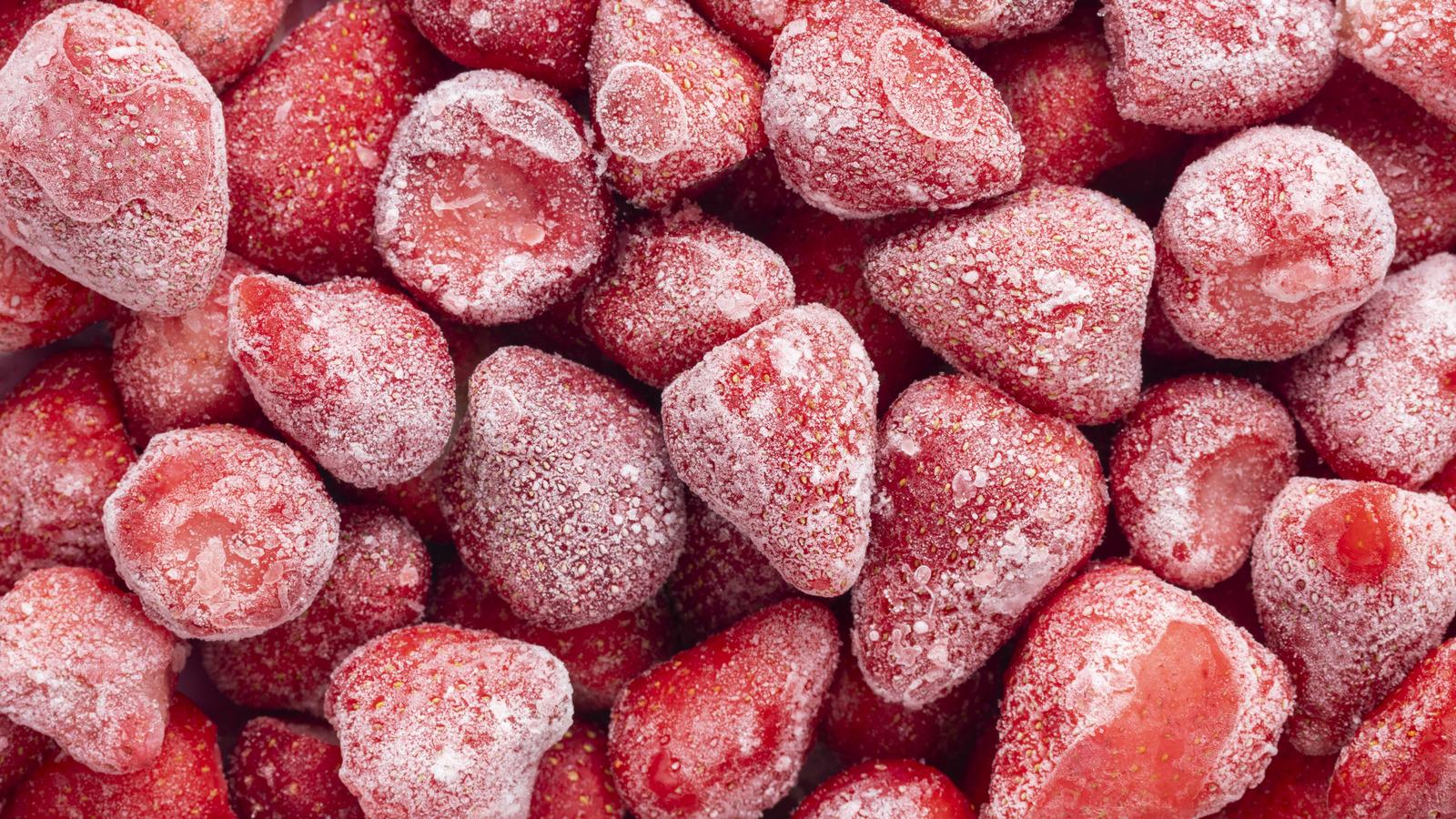
Don't Just Throw Strawberries In The Freezer. Follow These Steps First
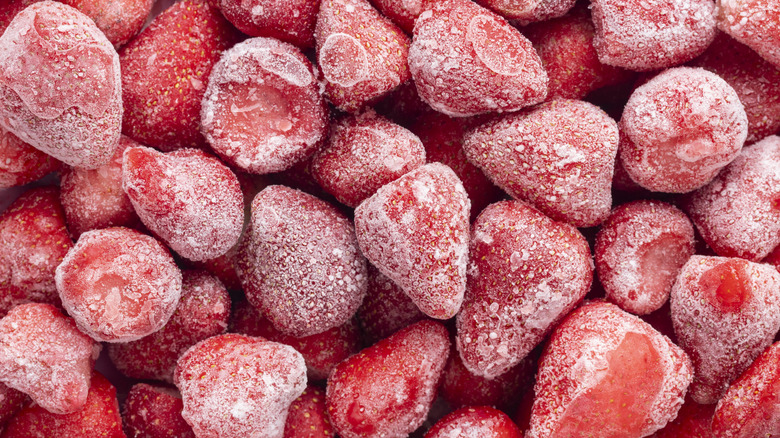
Amstockphoto/Getty Images
We may receive a commission on purchases made from links.
Strawberries are one of nature's spring and summertime treasures, but that perfect red goodness only lasts for a short period of time. The shelf life of fresh strawberries is only about a week. Luckily, strawberries can last more than a year if they are frozen, which means that you can enjoy the fruit during any season. That said, you can't just throw them in the freezer. If you prepare them according to these steps, you won't be disappointed when you are ready to eat them.
The best frozen strawberries are carefully selected, washed, dried, and cut. You could also add some sweetener before they are packaged and placed in the freezer. Whether you want frozen fruit for a snack, a smoothie, a savory dish, or a strawberry dessert, having an idea of the end use for your strawberries can help you choose the best preparations at every stage and stop freezing fresh berries wrong. While you are considering those future possibilities, here's a look at the entire process, so you can end up with the best frozen fruit.
Only freeze the best berries
naturepicture_rika/Shutterstock
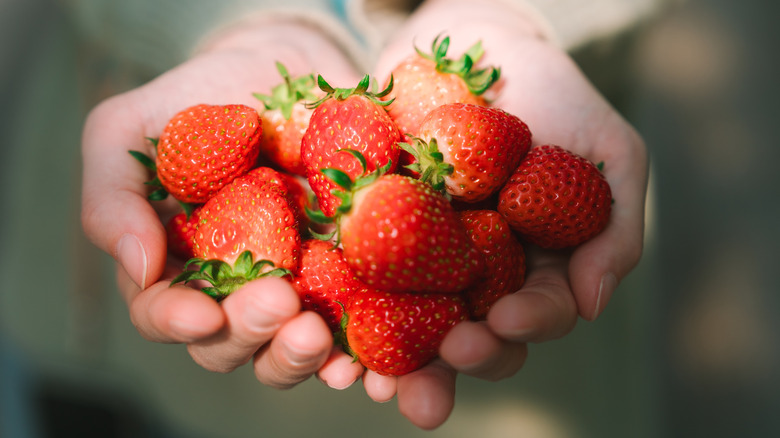
It's easy to overdo your strawberry patch haul because you might think you can never have too many. If you have a lot of strawberries on hand and realize you need to save some for later, go through your basket and only choose the very best for freezing. This step is also important if you are freezing store-bought strawberries because if they're not at peak ripeness when frozen, they won't taste as good when thawed.
Look over each berry to select the ones that are bright, shiny, and firm. Although size doesn't matter when it comes to a strawberry's taste, you don't want fruits that still have a lot of white in them. Likewise, if a berry has passed its prime and begun to darken and get mushy, it's not a good candidate for freezing. You can also tell the ripeness of a strawberry from the green cap. The berries that you will prepare for the freezer should have caps with fresh-looking leaves.
Wash and dry your strawberries
Whitetea/Getty Images
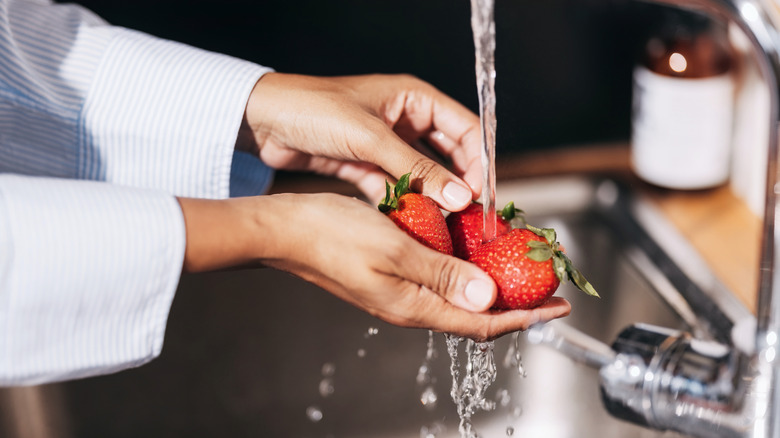
Whether you are eating them fresh or preparing to freeze them, you should always wash your strawberries to remove dirt and any chemicals used in the fields. Many people choose to rinse their berries under cold water in the sink or in a colander. Others like to soak strawberries for about five minutes in a pot of cold water with a splash of vinegar or baking soda. Both solutions alter the pH level of the water, killing off any bacteria or mold spores on the fruit's surface. Either way, it's important to be gentle when cleaning strawberries so you don't cause bruising, which will lead to mushy berries.
After washing, do not skip the drying stage. This step is key to your strawberries freezing well. Any moisture on the strawberries prior to hitting the freezer could cause the entire batch to be moldy or soggy once it's defrosted, and the frozen berries will definitely stick together. Let your strawberries air dry for a while, laying them out in a single row so that water doesn't get trapped in between. You can choose to blot the berries with a cloth or paper towel, but be careful to avoid bruising.
Hull or slice your strawberries
Guillermo Spelucin Runciman/Getty Images
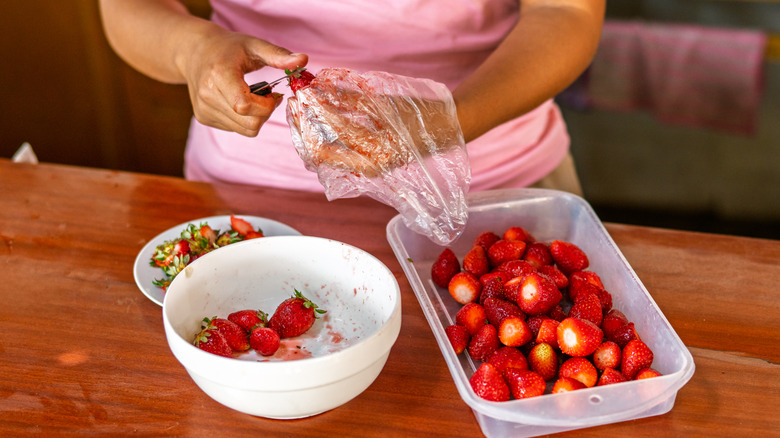
This is the point in your freezing preparations when it can help to have an idea of what you want to make with your frozen strawberries. Technically, you can leave the green stem on your berries when you freeze them, but it's easier to get them off beforehand, so you don't have to over-handle them after they are thawed and softer in texture. You could simply cut the tops off, remove them with a strawberry huller, or use a straw to hull out the white core and the top, leaving only the berry's red flesh.
Whole frozen strawberries are great for baking a strawberry pie or creating a sauce, but slices are preferable for throwing into the blender for a smoothie, whipping up a strawberry recipe that calls for pieces, or sprinkling on oatmeal or yogurt. Cut the strawberries before you stash them in the freezer. It's harder to slice frozen or thawed berries, and you could end up with a big mess if you don't get the prep work done ahead of time.
Consider sweetening your strawberries
Juan Pablo Jareno Alarcon /Getty Images
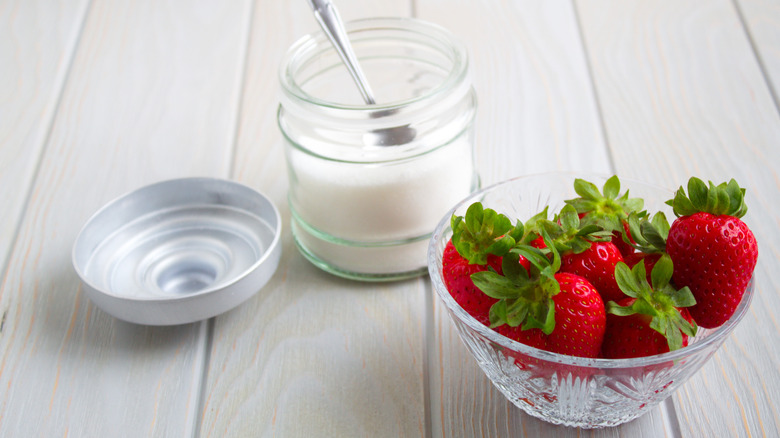
Depending on how you use your frozen strawberries, you may choose to skip this step. Adding a little sweetener to strawberries you plan on freezing can preserve their color and shape, and ensure that they taste sweet when you eat them later. You can use granulated sugar, tossing about 1 cup of sugar per 6 cups of strawberries, or you can add simple syrup. To make simple syrup, dissolve sugar in an equal amount of water on low heat, then cool. Alternative sweeteners like Stevia can add sweetness, but they don't protect the color of frozen strawberries like sugar does.
To use sweetened frozen strawberries in a recipe that calls for sugar, you should reduce the recipe's specified measurement by about ½ cup of sugar per 2 cups of strawberries. Or, if using all the frozen berries at once, you would subtract the amount of added sugar from what the recipe calls for (writing how much sugar you added on the freezer bag is a good way to keep track). For example, if a homemade strawberry jam recipe calls for 1 cup of sugar and 6 cups of strawberries, and you sweetened yours according to the 1:6 ratio indicated above, you wouldn't need to add any sugar at all.
Packaging strawberries for the freezer
TatianaKim/Shutterstock
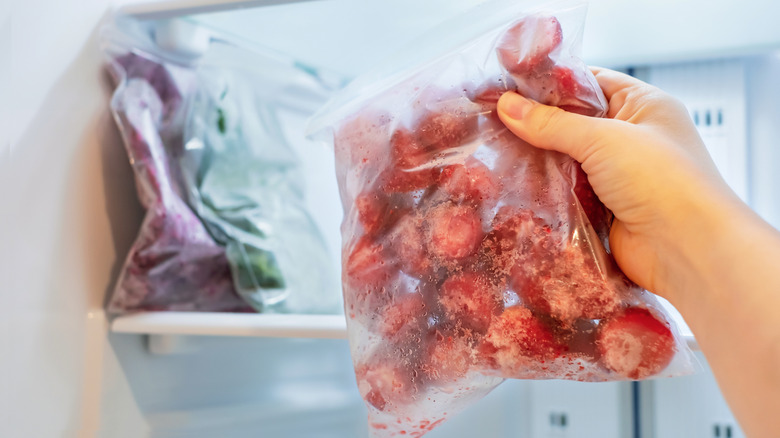
How you pack strawberries bound for the freezer influences how they will look and taste when thawed. One frozen strawberry hack that helps the berries not clump together as much in their container is flash freezing. To flash freeze strawberries, arrange them in a single layer on a baking sheet or tray lined with wax or parchment paper, and freeze for a few hours before packaging. Whether or not you take this extra measure, you still need to package your berries correctly to make sure they are well-preserved.
If you are using a flexible bag, remove the air inside before sealing it up. You can also freeze strawberries in food storage containers made of plastic or glass, but be sure that the covers fit tightly and the fruit is packed snugly. Leave about ½ inch of headspace for dry-packed berries (sweetened with sugar or without), and allow even more headspace for strawberries packed in simple syrup. Berries in syrup should be frozen in non-flexible containers to prevent leaking.
That's all there is to it! Once you've taken the proper steps to prepare and pack your frozen fruit for long-term storage, you'll be able to pull out a package and enjoy the sweet taste of strawberries at any time of the year.

 Arabic
 French
 Spanish
 Portuguese
 Deutsch
 Turkish
 Dutch
Dutch
 Italiano
 Russian
 Romaian
 Portuguese (Brazil)
 Greek
Greek