


Towfiqu Ahamed/Getty Images
With a nickname like "America's Dairyland," it stands to reason that Wisconsin would have laws regarding the production and sale of dairy products. Many, such as those governing cheesemaking licenses, make sense when it comes to protecting the dairy industry in what was once the top-producing dairy state in the country. Others, like the state's odd prohibitions on margarine, remain more of a curiosity.
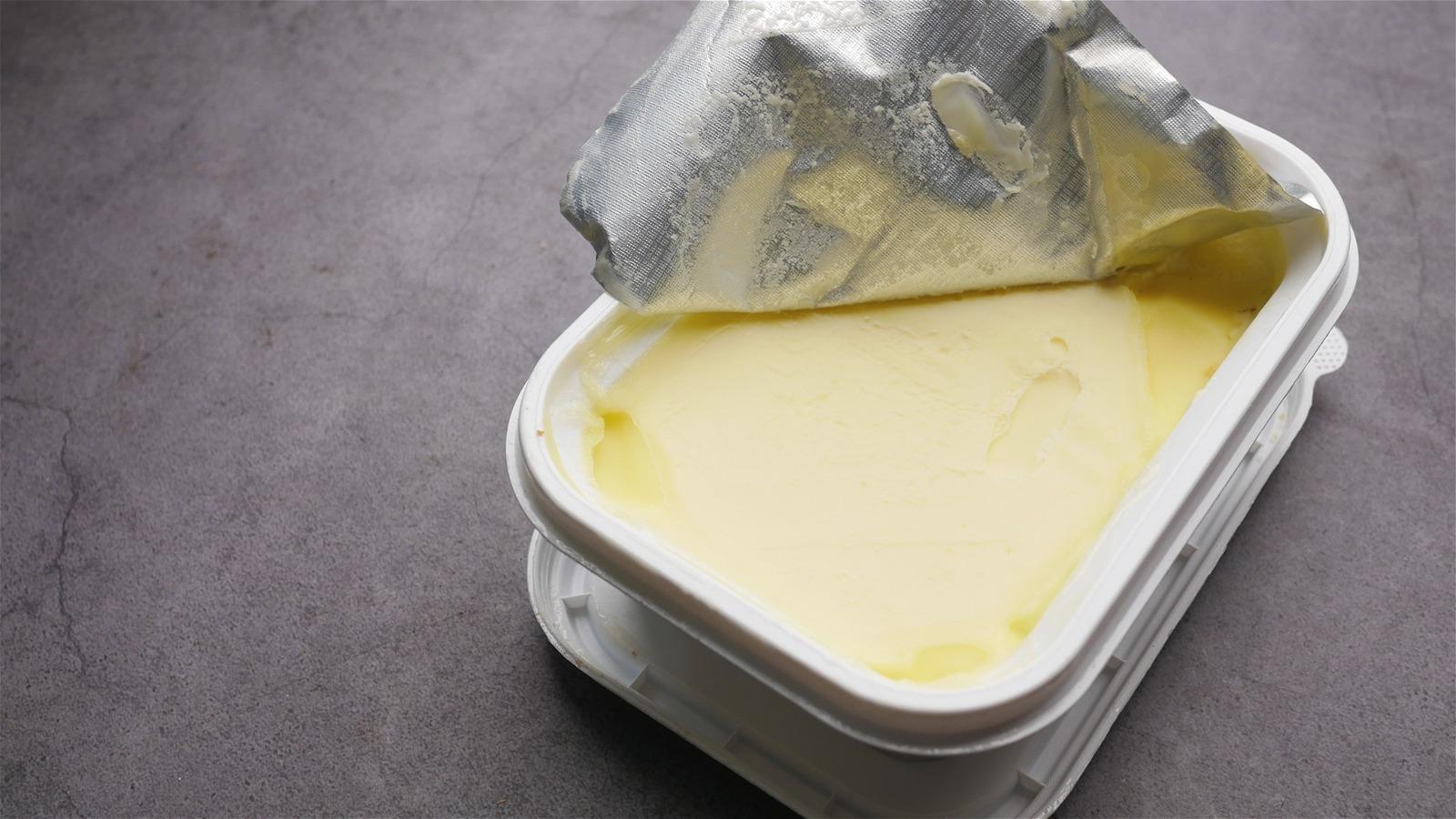
While it isn't actually illegal to use margarine in Wisconsin today, a few quirky regulations are still in place. According to Wisconsin Statute 97.18, margarine can't be sold unless it's in a clearly labeled 1-pound package, with the rule going so far as to specify that the words "margarine" or "oleomargine" must be in 20-point type or larger. The statute also prohibits serving margarine as a substitute for table butter to students, patients, and inmates of state institutions unless necessary for health reasons.
Additionally, the statute prohibits restaurants from serving colored margarine to customers as a butter substitute, unless specifically requested. This particular clause is an offshoot of prior laws that banned the production of margarine that was dyed yellow to resemble butter, which anti-margarine proponents considered a deceptive practice. Similar concerns in Vermont, New Hampshire, and South Dakota even required manufacturers to dye their margarine pink in the late 19th century.
The history behind Wisconsin's anti-margarine laws
Underwood Archives/Getty Images
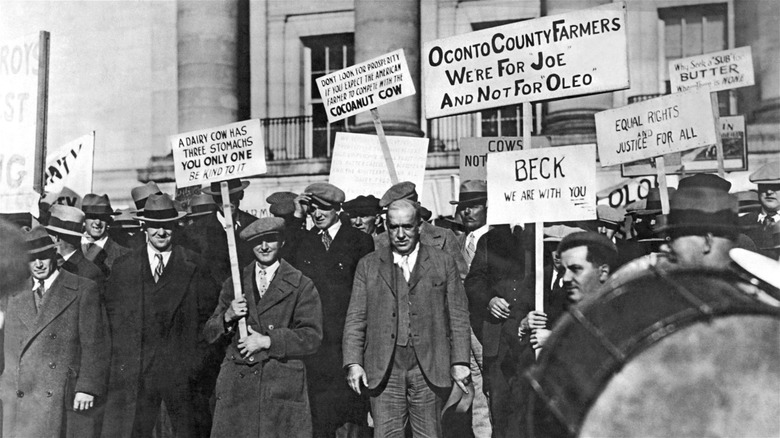
The existing Wisconsin laws around margarine were a product of past panic. Margarine was invented as a butter substitute and patented in France in 1871, and the U.S. began producing it in 1875. American dairy farmers saw its introduction into local markets as a threat, as it was cheaper than butter at a time when millions of households couldn't afford the real thing.
The timing of this development was of particular concern to Wisconsin. By 1880 the state started its transition to dairy farming after Minnesota, North Dakota, and South Dakota overtook Wisconsin in wheat production. The state needed to protect its interests, and that meant safeguarding dairy products like butter.
Debate over margarine raged on over the next few years, built upon the argument put forward by the dairy industry that it was a fraudulent product. In 1886, the U.S. Congress passed the Oleomargarine Act. The law introduced prohibitive taxes on the production and sale of margarine; Wisconsin U.S. Representative William Price expressed wanting taxation that would destroy the "counterfeit butter" industry altogether. It was during this period that legislation over the color, sale, and serving of margarine continued to develop, leading to the statute that stands in Wisconsin law to this day.
How Wisconsin lightened up on margarine
PJ McDonnell/Shutterstock
When World War II hit, the U.S. faced a butter shortage. Coupled with earlier economic struggles during the Great Depression, households were forced to switch to the more affordable margarine as a substitute, and many eventually developed a taste for it. In response, between the late 1930s and early 1950s, multiple states began to repeal bans on colored margarine. By the late 1940s, Gallup polls showed that 76% of respondents favored repealing the taxes on the spread.
In 1950, Congress repealed all taxes established by the Oleomargarine Act, and more state legislatures across the country lifted their bans on colored margarine. Wisconsin was the last holdout on the matter of color, lifting its ban on the sale of yellow margarine only in 1967. Lawmakers attempted to repeal the remaining portions of Wisconsin Statute 97.18 in 1996 and 2011 (via ABC News), but both efforts fell short. In late 2025 legislators introduced a bill to widen the reach of the existing prohibitions; that bill failed to pass in March 2026.
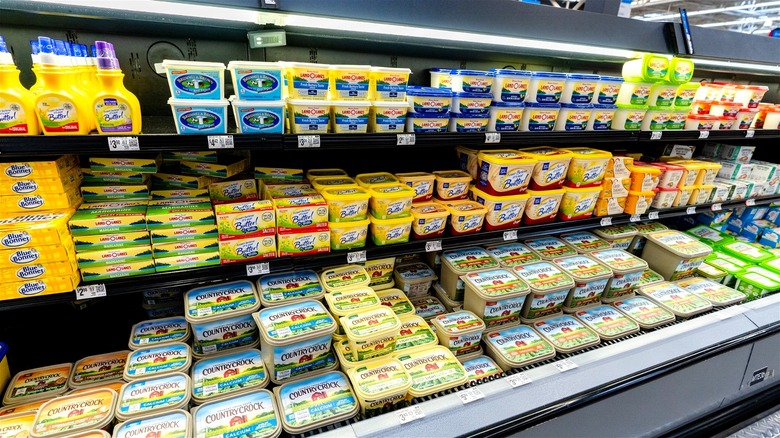
Today, Wisconsin households can freely buy and use margarine however they choose, which is a good thing considering some bakers prefer margarine over butter. Wisconsin has come a long way since the days of the ban, when people had to smuggle margarine in from other states if they wanted it in their kitchens.

 Arabic
 French
 Spanish
 Portuguese
 Deutsch
 Turkish
 Dutch
Dutch
 Italiano
 Russian
 Romaian
 Portuguese (Brazil)
 Greek
Greek