


Towfiqu ahamed barbhuiya/Shutterstock
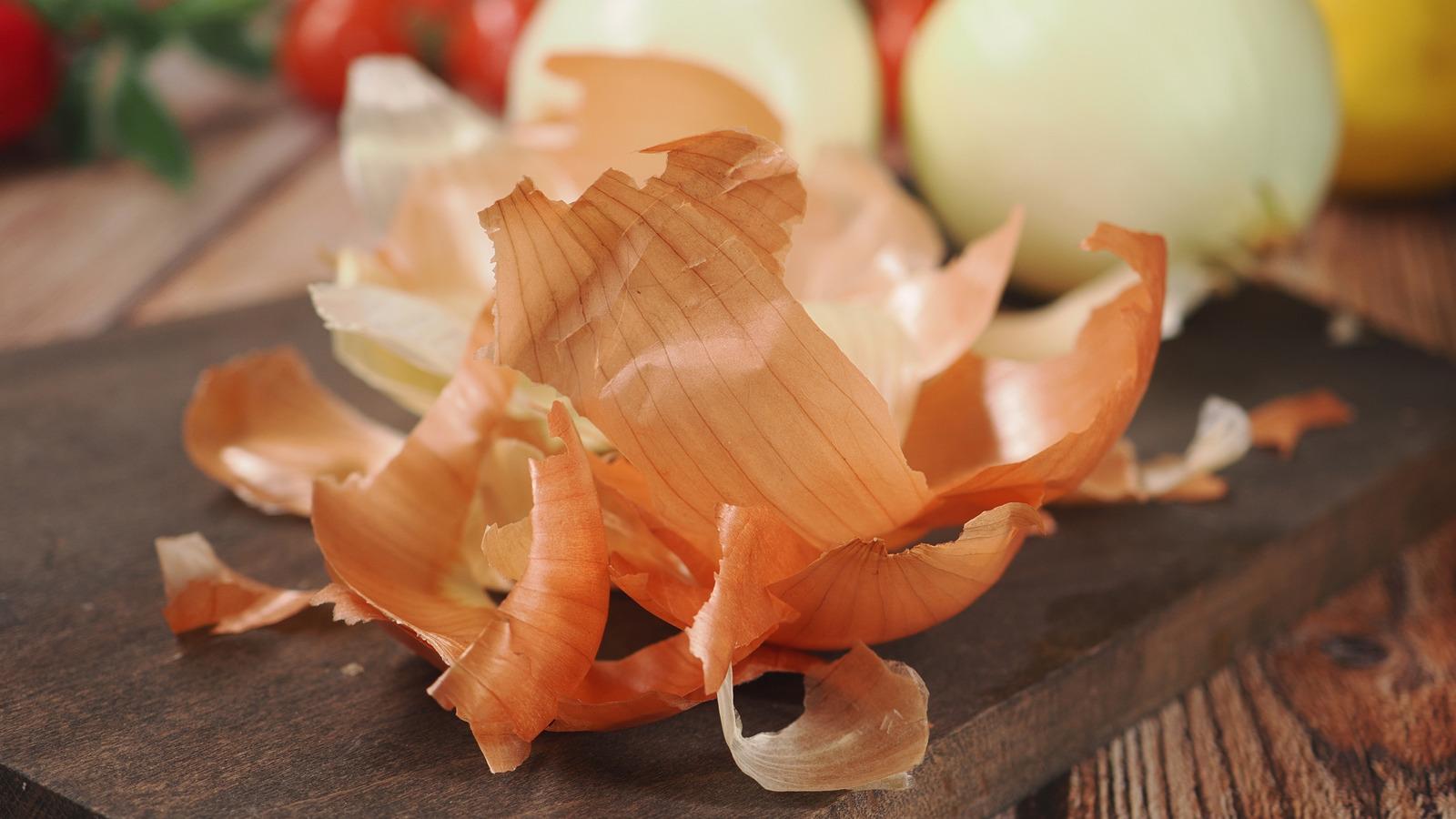
Every layer of an onion is good for your health — and that even includes the outer peels that most people just strip off and throw into the garbage bin. In this day of sustainability, there are a lot better ways to reuse those outer protective peels than just sending them to the landfill. People have come up with some creative ways to use onion skins, including homemade dyes and natural remedies for issues like athlete's foot and insomnia. But one of the most proven uses for those flaky outer layers is to recycle them in your garden to grow more vegetables for your meals.
Since the onion skin is meant to safeguard the bulb while it's growing, it also has some natural properties that can protect your plants in the garden, including vitamins, A, C, and E, flavenoids, and other antioxidants. Research has shown that using fertilizer made from onion peels in your garden can help to protect plants from disease and funguses, and another study showed that the treatment can improve the productivity and growth of plants like lettuce, bok choy and radish plants. The results show that leftover onion peels in the garden can lead to a bigger, healthier harvest, and that's a good reason never to buy pre-cut fruits and vegetables again.
How to apply onion peels in your garden: compost, mulch, and liquid fertilizer
Hendri kumbang/Shutterstock
A growing number of home cooks have been recycling their kitchen waste into compost, and onion skins can be used alongside other vegetable scraps like garlic peels. In the past, some people have warned about using larger onion pieces in compost because of the smell and the possibility that a new onion could sprout again. Luckily, the onion peels don't cause those problems, so they are a welcome addition to the compost bin.
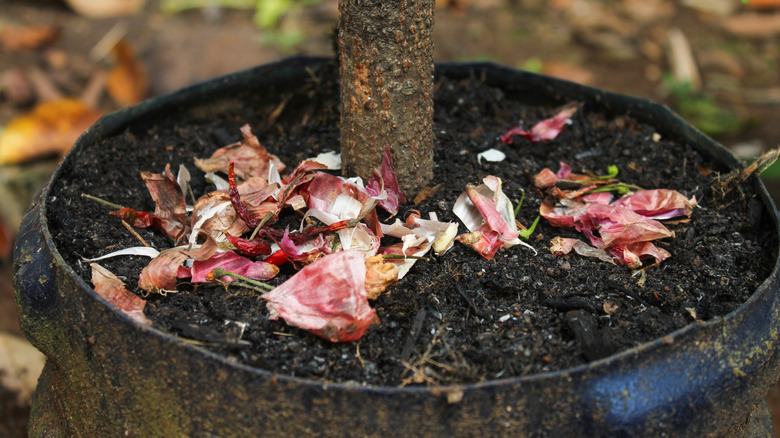
In composting, you have to add a lot of kitchen scraps and ingredients, and it can take months to turn the concoction into nutrient-rich soil. But there are also ways to take your leftover onion peels and work with them more quickly into your garden. For example, there are benefits to adding the skins directly on top of the soil or using them with your mulch, which adds potassium slowly and helps the ground retain moisture.
One of the latest trends is to make a liquid fertilizer and spray it on to your plants. The trick is to gather your onion skins and let them soak in water for a day or two. The nutrients — including magnesium, calcium, iron, and copper — will steep into the water, and then you can put it in a spray bottle or pour it on the base of your plants. Soon, the leftover peels from your kitchen are doing the work to help put more food on your table.

 English
 Arabic
 French
 Spanish
 Portuguese
 Deutsch
 Turkish
 Dutch
Dutch
 Russian
 Romaian
 Portuguese (Brazil)
 Greek
Greek