


TihomirLikov/Shutterstock
Honey is one of those natural products that many people take for granted. Beyond knowing that bees and plants are involved, the average person might not know much about the process. Even though humans have enjoyed honey for thousands of years, the (literally) stomach-turning process may catch some off-guard.
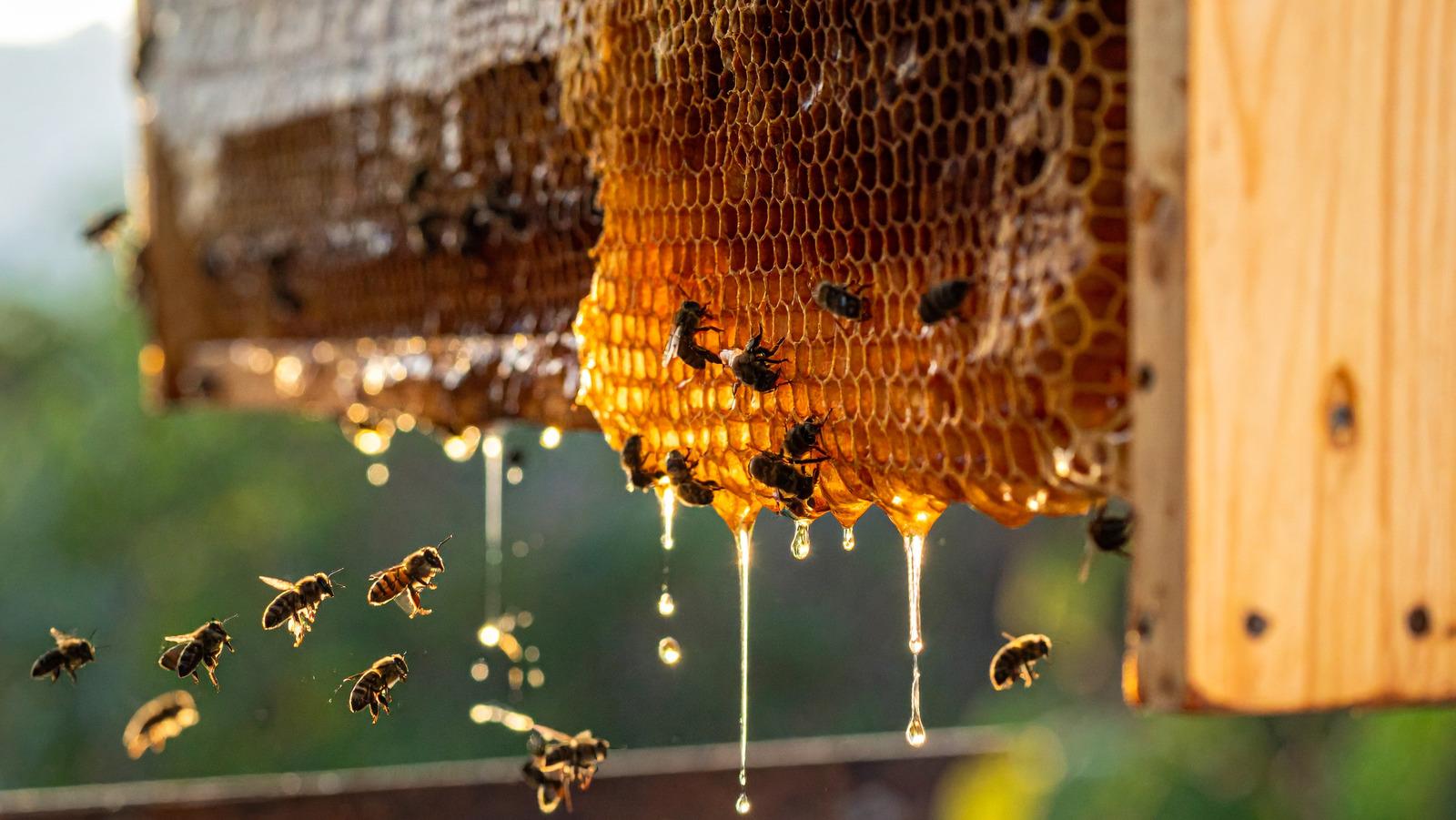
Honey-making starts in a predictable and generally well-known way. Worker bees scan a several-mile radius around their hive for nectar-bearing plants, each type of which offers a unique flavor and aroma profile when the honey is raw. Once the bee locates the nectar, its long tongue siphons it into a special nectar organ inside its body, where a chemical process known as inversion begins. This involves the bee's stomach breaking down and altering the nectars' sugars to inhibit crystallization.
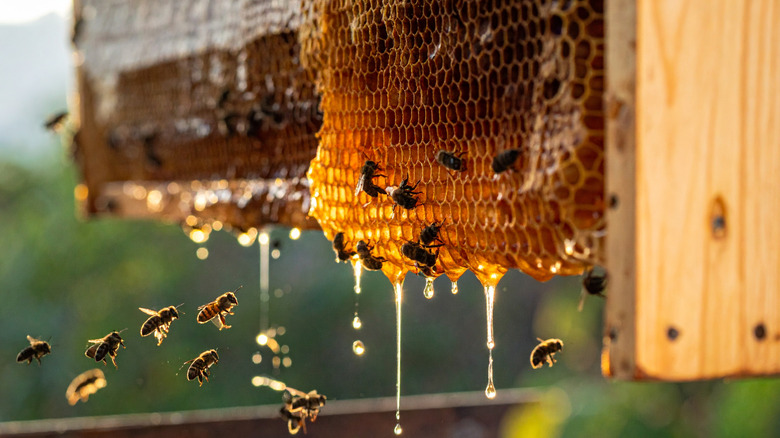
When worker bees return to their hive, the contents of this stomach are transferred directly to a house bee, who essentially regurgitates the substance from one insect to another. Some of this lightly treated pre-honey is fed directly to young bees, with the rest is regurgitated one final time into the prebuilt honeycomb structure. After briefly fanning the area with their wings to dry out the honey, the bees seal each honeycomb cell with wax to eat later, unless humans harvest it.
From the bee's stomach to your favorite recipes
abee22/Shutterstock
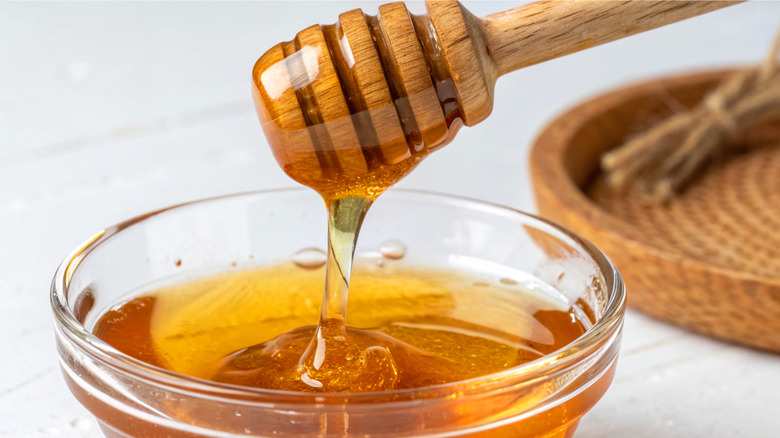
The National Honey Board reports that a typical hive produces roughly 55 more pounds of honey than it needs each year, allowing beekeepers to harvest significant amounts without causing the bees hardship. Although manufacturers strain this honey to remove large particles and other contaminants before packaging for human use, it's generally left as-is — meaning every single honey recipe you're sweet on is essentially powered by aged, lightly processed bee vomit. The only exception to this is for mass-produced pasteurized honey, which is heated to kill yeasts inside that can lead to faster crystallization. Still, at its core, it remains fundamentally the same.
This may not be true in the future, however. Some believe lab-made honey may be the solution to a host of risks facing global bee populations. These modern attempts are more than just honey flavoring mixed with corn syrup; high-end offerings combine natural sugars with plant compounds and other substances that would be introduced during the typical pollination and production cycle.
So, no matter which of the dozens of unique types of honey you're enjoying, don't get caught off guard by the unusual method that produced it. It's as natural as it gets, and the delicious results found in cuisines across the globe speak for themselves.

 Arabic
 French
 Spanish
 Portuguese
 Deutsch
 Turkish
 Dutch
Dutch
 Italiano
 Russian
 Romaian
 Portuguese (Brazil)
 Greek
Greek