


Chatham172/Shutterstock
We may receive a commission on purchases made from links.
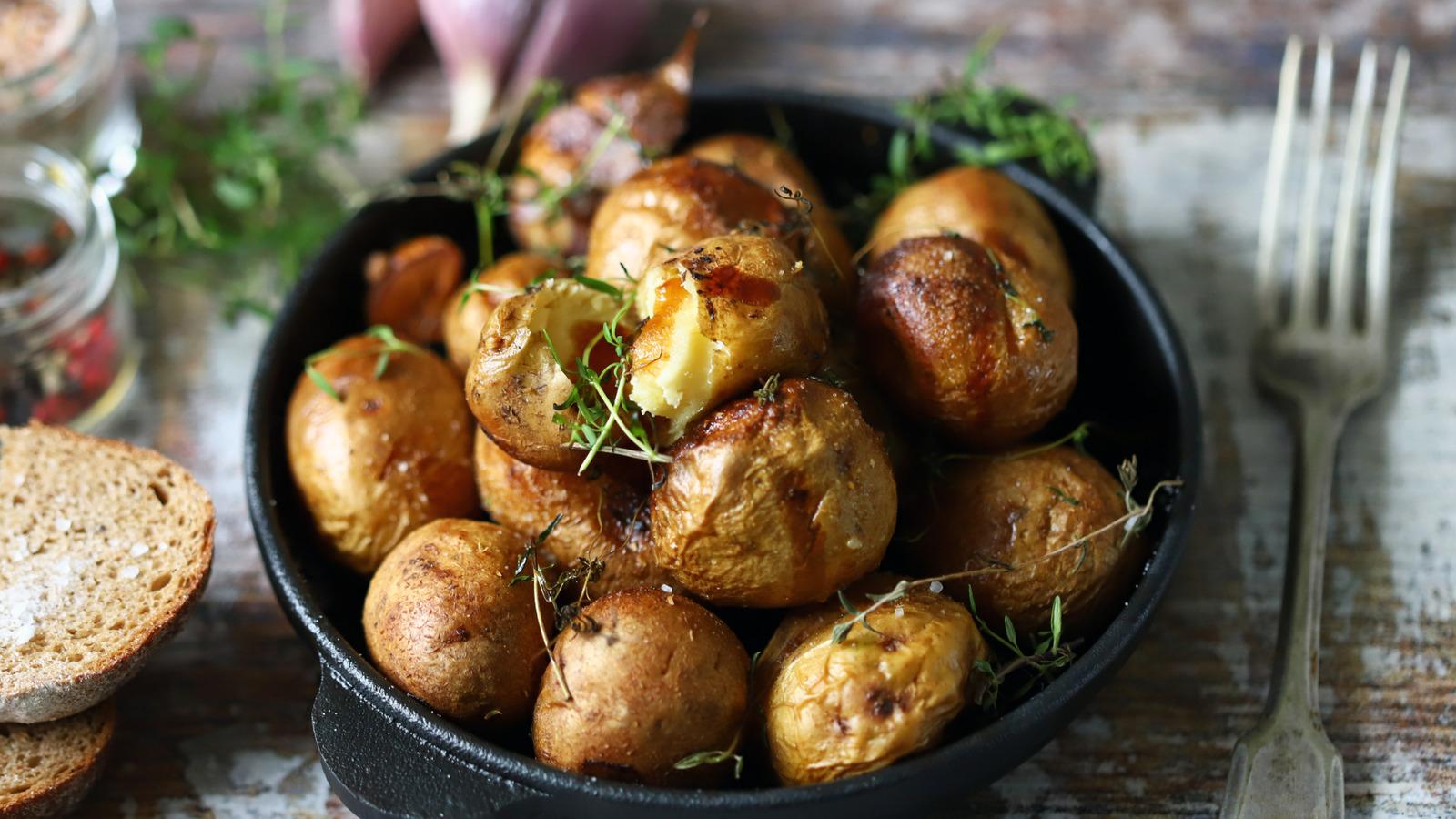
Roasted potatoes can be a weeknight staple or a special weekend home brunch treat to enjoy with some eggs and bacon. They're super versatile — minimum work with maximum flavor. But if you've been defaulting to aluminum foil every time you line a baking sheet to prep your potatoes, you may be losing some flavor, meanwhile making the whole process more difficult than it needs to be. The upgrade you need is parchment paper, and once you make the switch, you won't look back.
Let's start with the main reasons why: Aluminum foil isn't really designed to be a non-stick surface. Even if it's covered in oil, the starch and moisture in potatoes will easily and stubbornly stick to it. Parchment paper, on the other hand, is made with cellulose — it's basically wood pulp paper that's been treated with food-grade silicone and can handle temperatures of 425 degrees Fahrenheit or more, so it works great for potatoes.
When it comes time for the cook, there are some roasted veggie secrets — like you may just want some citrus or another acidic component. Aluminum foil reacts with acid and can add a metallic taste, while parchment paper is non-reactive, so you'll just get all the flavor without the unwanted taste (like the inside of a can). While cooking in parchment paper may not give you the extremely crisped edges that aluminum foil and some oil can, there are some tips to getting the most out of your parchment-cooked potatoes (more on that below), and the cleanup is always easy.
How to roast potatoes in parchment paper and what brands to use
HannaTor/Shutterstock
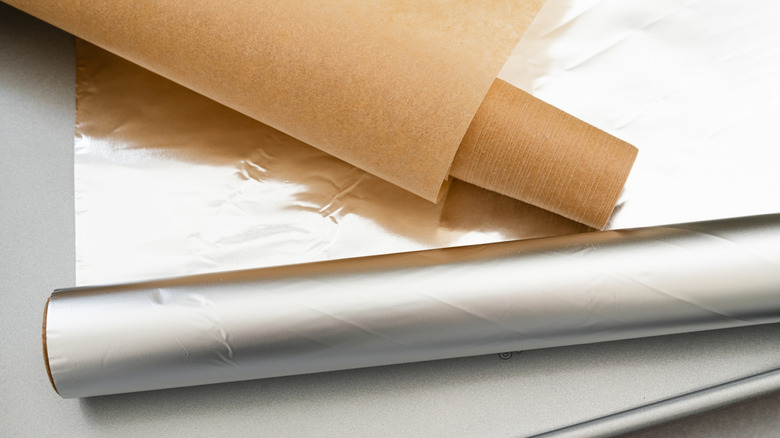
When cooking with parchment paper, you should put the potatoes against the glossy side (silicone side) to prevent sticking. And for one of the tips for cooking veggies you'll wish you'd known sooner, avoid overcrowding the potatoes in the pan because they'll steam rather than brown. With a sufficient oil drizzle and plenty of space to breathe, they'll get nice and caramelized and still won't stick to the surface.
When choosing a parchment paper, take a look at the oven rating on the box. Most will be safe between about 425 and 450 degrees Fahrenheit. Reynolds Kitchens Unbleached Parchment Paper is available at most grocery stores, rated to 425 degrees Fahrenheit, FSC-certified (from sustainable wood), and free of chlorine. If you need to up the oven to 450, you may want to try Beyond Gourmet Unbleached Parchment Paper, similarly non-stick and made from renewable pulp. Although it is considered safe, both do use synthetic silicone. So if you want something made with a natural rubber coating that's totally compostable, you may want to try If You Care Baking Parchment Paper rated at just above 425 degrees Fahrenheit. They're all great for lining a baking sheet or making a little packet to cook potatoes — or any kind of veggie — in the oven. Just don't use them over an open flame, as you would when grilling with aluminum foil packets or as a lined coating on the grill grates, because they're still made of paper and will almost certainly catch fire.

 Arabic
 French
 Spanish
 Portuguese
 Deutsch
 Turkish
 Dutch
Dutch
 Italiano
 Russian
 Romaian
 Portuguese (Brazil)
 Greek
Greek