


Elif Bayraktar/Getty Images
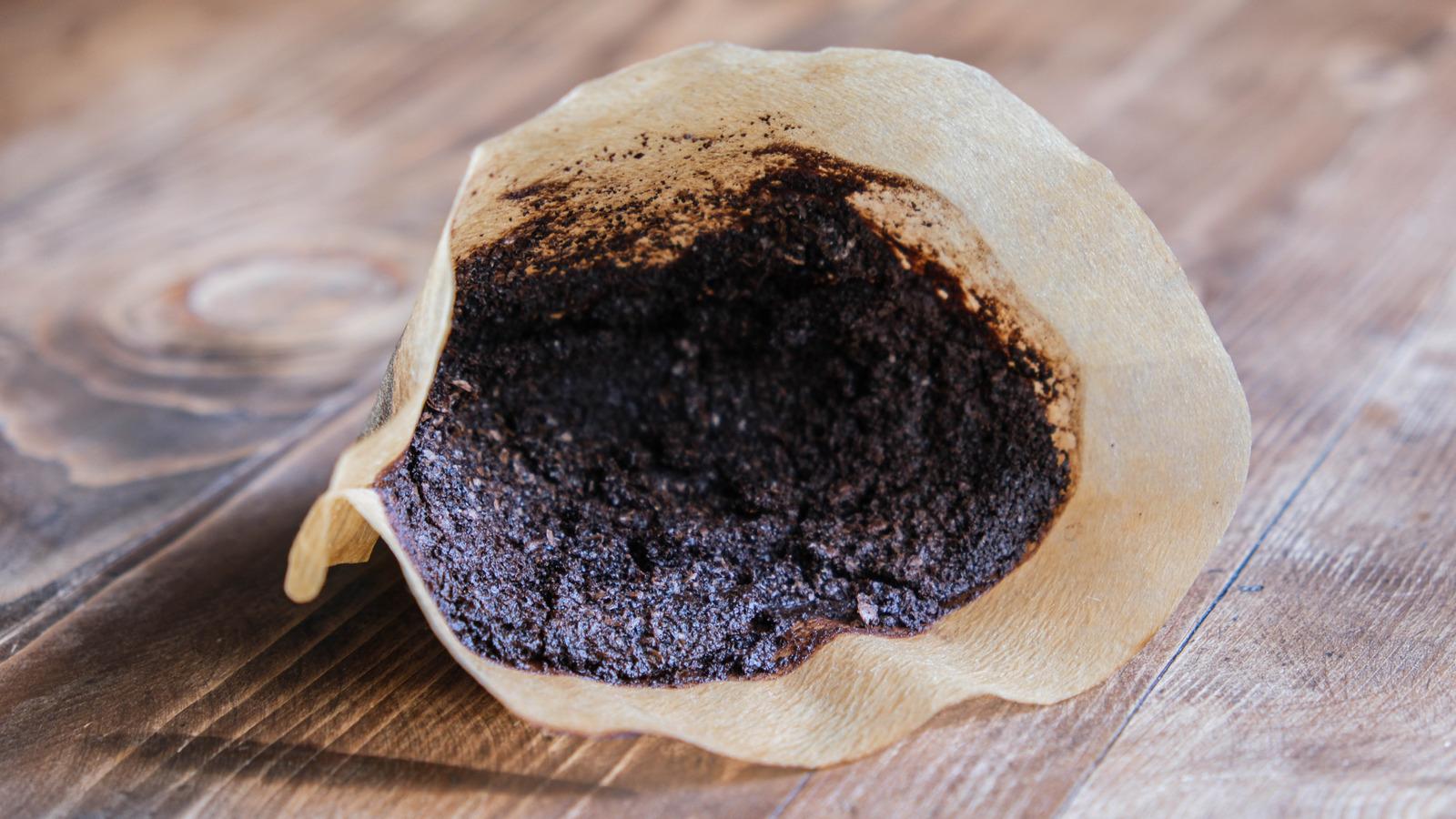
There are a lot of things in your kitchen that you should never reuse, like old herbs and spices. Luckily, there are benefits to being more eco-friendly with your coffee grounds rather than just throwing them away. The byproducts of your morning cup of joe can be used for more than a dozen purposes, such as exfoliating your skin, treating bags under your eyes, scouring your dishes, even repairing your furniture. One of the best options is to add used coffee grounds to your garden, which could benefit the plants and even help you produce food.
A gardener knows that one of the most important steps to growing bigger, healthier plants is to start with good soil. For folks who don't want to use potentially harsh chemicals, coffee grounds can provide small amounts of nutrients like magnesium and calcium. They also help to aerate the soil and boost the nitrogen content for healthy plant growth. Through gardening, you can give a second purpose to your morning cup of coffee. (That's just one more reason not to drink the instant kind.)
Coffee grounds are good for your soil but can also pose problems
Thamkc/Getty Images
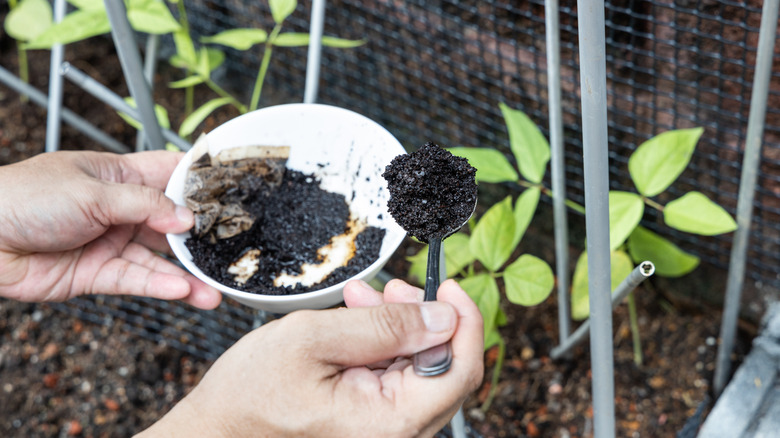
There are two basic ways you can introduce spent coffee grounds to your soil. One is to add them directly. The other is to incorporate them in a broken-down form along with compost as part of the recipe for a so-called "soil amendment" to nourish your garden. The addition can also be good for worms making their way through the compost, which in turn improve growing conditions for plants.
One thing that the coffee remnants likely won't do is change the pH level of your soil. While fresh grounds are acidic, they become more neutral after brewing. We should also warn you that used coffee grounds aren't great for every plant in the garden. You should keep them away from seeds and seedlings because the caffeine content can interfere with plant development. Moreover, too much nitrogen could harm the roots. You should also avoid exposing delicate plants, such as young tomatoes, to coffee grounds.
If you don't drink coffee or prefer to pay for caffeinated beverages at a popular coffee shop like Starbucks, you can ask your local store for used grounds. The company understands that they don't belong in the trash when you could use them to help grow food.

 English
 Arabic
 French
 Spanish
 Portuguese
 Turkish
 Dutch
Dutch
 Italiano
 Russian
 Romaian
 Portuguese (Brazil)
 Greek
Greek