


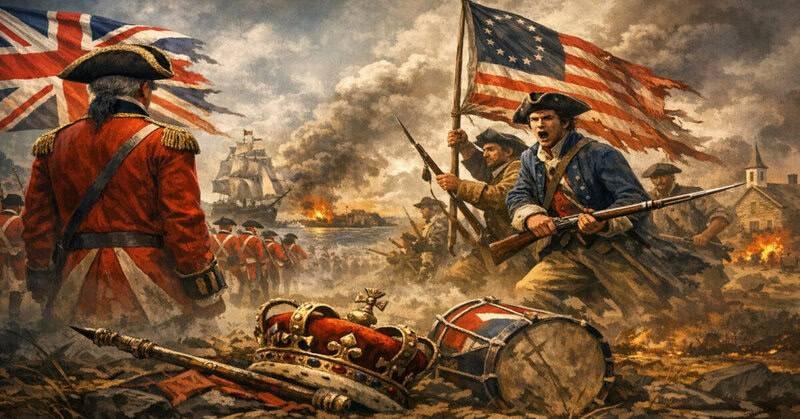
15 Reasons Why The British Empire Gave Up On American Rule

0
9

15 Reasons Why The British Empire Gave Up On American Rule

2. International Isolation

15 Reasons Why The British Empire Gave Up On American Rule
Strategic alliances during the American Revolution united nations against British dominance.

The American Revolution saw the colonies form strategic alliances that isolated Britain both diplomatically and militarily. France, motivated by a desire to weaken Britain, provided substantial support to the American cause. Spain, while not officially allied with the colonies, offered crucial assistance, including supplies and military support, and declared war on Britain in 1779. The Netherlands, engaged in its own conflict with Britain, also provided financial support to the Americans. These alliances stretched British military resources and significantly impacted the war’s dynamics. For more details on France’s involvement, see History.com: France in the American Revolution.

3. Global Colonial Challenges

15 Reasons Why The British Empire Gave Up On American Rule
Britain’s overseas commitments strained resources during the American Revolution, complicating its military efforts.

Defending its extensive overseas empire, including the Caribbean and India, placed immense pressure on Britain during the American Revolution. The Caribbean islands, vital for their sugar production, became targets for French and Spanish forces, diverting British resources. In India, conflicts with the French and local rulers required additional military commitments. These global challenges stretched Britain’s military capabilities, complicating its efforts to suppress the American rebellion. For more insights, refer to the British Library’s exploration of the Empire and Colonial Expansion.

4. Evolving Public Opinion

15 Reasons Why The British Empire Gave Up On American Rule
Declining British public support for the American Revolution amid rising casualties and war fatigue.

As the American Revolution progressed, British public support for the war diminished. Rising casualties and the prolonged conflict led to war fatigue among the populace. This shift in sentiment made it increasingly challenging for the government to justify the continuation of military efforts in the colonies. For a comprehensive analysis of the British perspective on the American Revolution, refer to the BBC’s coverage on the American Revolution.

5. Effective American Resistance

15 Reasons Why The British Empire Gave Up On American Rule
Local militias employed guerrilla tactics, challenging British forces and disrupting their supply lines.

The American colonies’ sustained resistance, bolstered by local militias and guerrilla tactics, significantly challenged British forces. Militiamen, often lightly armed and untrained, engaged in irregular warfare, ambushing British troops and disrupting supply lines. This unconventional warfare, combined with the Continental Army’s resilience, led to significant British casualties and stretched their resources thin. For a detailed analysis of the British military’s challenges during the Revolutionary War, refer to the Smithsonian Magazine’s article on Why the British Lost the Revolutionary War.

6. Logistical Difficulties

15 Reasons Why The British Empire Gave Up On American Rule
Logistical challenges strained British supply lines during the American Revolution across the Atlantic.

Maintaining supply lines across the Atlantic Ocean presented significant challenges for the British during the American Revolution. The vast distance and the threat of American privateers disrupted the timely delivery of essential provisions, leaving British forces vulnerable and often undersupplied. This logistical strain hindered their operational effectiveness and contributed to the difficulties faced in sustaining the war effort. For a detailed exploration of these challenges, refer to the History Extra article on British Army Logistics.

7. Political Upheaval in Britain

15 Reasons Why The British Empire Gave Up On American Rule
Political turmoil in Britain during the American Revolution weakened its resolve against the colonies.

During the American Revolution, Britain experienced significant political turmoil, including infighting and frequent changes in leadership. These internal conflicts weakened the government’s resolve to continue the colonial fight. For a detailed exploration of the political landscape during this period, refer to the UK Parliament’s overview of the American Revolution.

8. Loss of Loyalist Support

15 Reasons Why The British Empire Gave Up On American Rule
Declining Loyalist support critically weakened British strategy during the American Revolution.

The decline in Loyalist support significantly undermined British strategy and morale during the American Revolution. Loyalists, constituting about one-third of the colonial population, were crucial for British operations. However, as the war progressed, many Loyalists faced harassment, property confiscation, and social ostracism from Patriots, leading to a substantial decrease in their active support. This erosion of Loyalist backing weakened British efforts and contributed to the challenges faced in maintaining control over the colonies. (britannica.com)

9. Economic Barriers

15 Reasons Why The British Empire Gave Up On American Rule
Boycotts during the American Revolution crippled British trade and fueled economic turmoil.

The American Revolution’s boycotts and disrupted trade severely impacted British merchants, leading to significant economic challenges. The cessation of trade with the colonies resulted in financial losses and contributed to the British credit crisis of 1772-1773, which further strained economic relations between Britain and its colonies. For a detailed exploration of the economic impact of the American Revolution on British trade, refer to the British Library’s analysis of British Trade and the American Revolution.

10. Changing Imperial Priorities

15 Reasons Why The British Empire Gave Up On American Rule
Britain’s strategic pivot during the American Revolution prioritized Caribbean and Indian colonies for economic stabilit…

During the American Revolution, Britain shifted its focus to other lucrative colonies, such as those in the Caribbean and India, to protect its broader imperial interests. This strategic realignment was influenced by the need to secure profitable trade routes and resources, which were vital for maintaining the empire’s economic stability. For more insights into Britain’s imperial strategies during this period, refer to the National Archives UK’s overview of The British Empire.

11. Ineffective Military Strategy

15 Reasons Why The British Empire Gave Up On American Rule
British military tactics faltered against American guerrilla warfare, struggling in unfamiliar terrain.

The British military’s reliance on traditional European tactics, such as linear formations and direct confrontations, proved ill-suited for the American terrain and unconventional warfare. This approach often left British forces vulnerable to guerrilla tactics employed by American militias, leading to significant challenges in maintaining control over the colonies. For a detailed analysis of British military strategy during the American Revolution, refer to the US Army Center of Military History’s publication on Military Strategy.

12. Geographical Hurdles

15 Reasons Why The British Empire Gave Up On American Rule
Image Source: Pexels.

The vast and diverse American landscape posed significant challenges for British forces during the Revolutionary War. The terrain varied from rocky, cold New England winters to humid, boggy southern summers, and dense, impenetrable forests on the western frontier. This unfamiliar and rugged geography hindered British military movements, making occupation and control nearly impossible. For more insights into how geography influenced the war, refer to the National Park Service’s overview of Revolutionary War geography (nps.gov).

13. Enlightenment Ideals

15 Reasons Why The British Empire Gave Up On American Rule
Enlightenment thinkers inspired revolutionary ideas of reason, individualism, and self-governance in America.

The Enlightenment, an intellectual movement of the 17th and 18th centuries, emphasized reason, individualism, and skepticism of traditional authority. These principles profoundly influenced the American Revolution, inspiring colonists to challenge monarchical rule and advocate for self-governance (khanacademy.org). Enlightenment thinkers like John Locke, Jean-Jacques Rousseau, and Montesquieu introduced concepts such as natural rights, the social contract, and the separation of powers, which became foundational to American political thought. These ideas not only fueled resistance in the colonies but also resonated within Britain, contributing to a broader discourse on liberty and governance.

14. American Political Organization

15 Reasons Why The British Empire Gave Up On American Rule
The Continental Congress: uniting colonies for independence and shaping the foundation of the U.S.

The Continental Congress played a pivotal role in unifying the American colonies against British rule. Established in 1774, it coordinated resistance efforts, managed diplomatic relations, and eventually declared independence, laying the foundation for the United States. For a comprehensive overview of the Continental Congress, you can watch the following video: The Continental Congress: The Revolutionary War in Four Minutes

15. Yorktown and the Loss of Hope

15 Reasons Why The British Empire Gave Up On American Rule
The Siege of Yorktown: A pivotal moment in the American Revolutionary War, 1781.

The Siege of Yorktown, from September 28 to October 19, 1781, marked a decisive turning point in the American Revolutionary War. A combined force of approximately 14,000 American and French troops, led by General George Washington and French General Comte de Rochambeau, laid siege to General Lord Charles Cornwallis’s 8,000-strong British army in Yorktown, Virginia. The siege effectively trapped Cornwallis’s forces, cutting off potential reinforcements and escape routes. After intense bombardment and mounting casualties, Cornwallis recognized the futility of further resistance. On October 19, he formally surrendered, marking the end of major combat operations in the war. This defeat had profound implications for Britain. The loss of a significant portion of its army, coupled with the prolonged conflict’s toll, eroded public support and political will to continue the war. The British government, already strained by the financial and human costs of the conflict, found it increasingly difficult to justify further military engagement. The surrender at Yorktown thus paved the way for peace negotiations, leading to the Treaty of Paris in 1783 and the recognition of American independence (britannica.com).

Conclusion

15 Reasons Why The British Empire Gave Up On American Rule
A pivotal moment in history: the British Empire’s strategic retreat from its American colonies.

The British Empire’s decision to relinquish control over its American colonies was influenced by a complex interplay of factors. Economic strains, such as the costs of the Revolutionary War and the loss of trade with the colonies, combined with military challenges, including the effective resistance from American forces and logistical difficulties, eroded Britain’s capacity and resolve. Additionally, shifting imperial priorities, and evolving public opinion, further underscored the unsustainable nature of continued colonial rule. These interrelated pressures ultimately led to the cessation of British governance over America, marking a pivotal moment in the decline of the British Empire (britannica.com).

Search
Categories
Read More
Food
Martha Stewart's Chef Prep Tip To Boost Chicken Crispiness
Martha Stewart's Chef Prep Tip To Boost Chicken Crispiness...
By Test Blogger1 2026-02-03 23:00:08 0 2K
Food
Visiting LA? These Are 4 Gems To Try, According To Alison Brie - Exclusive
Visiting LA? These Are 4 Gems To Try, According To Alison Brie - Exclusive...
By Test Blogger1 2026-03-26 17:00:09 0 607
Food
How A Restaurant Menu Tricks You Into Overspending
How A Restaurant Menu Tricks You Into Overspending...
By Test Blogger1 2026-02-11 03:00:12 0 2K
Home & Garden
The Best Robotic Pool Cleaner We've Ever Tested Now Has a Similar Model That Costs $1,000 Less
The Best Robotic Pool Cleaner We've Ever Tested Now Has a Similar Model That Costs $1,000 Less I...
By Test Blogger9 2026-03-08 23:00:20 0 1K
Technology
Regularly $800, you can score the Jackery Explorer 1000 v2 power station for $449 if you act fast
Regularly $800, you can score the Jackery Explorer 1000 v2 power station for $449 if you act...
By Test Blogger7 2026-04-16 10:00:23 0 203