


Alexthq/Getty Images
Among the different types of Scotch produced by the five whisky regions of Scotland, one of the most interesting contrasts can be found between varieties from the Lowlands and Highlands. In general, Lowland Scotch is characterized as mellow, subtle, and approachable, while Highland Scotch is known for its eclectic character. Part of this is due to the terroir of each region, but another major contributor to the differences between Lowland and Highland Scotch is the aftermath of taxation schemes from the 1700s.
Tax increases on spirits in the 18th century made distilling whisky unsustainable for smaller producers and led to the rise of illegal distilleries hoping to skirt government oversight. The Scottish Highlands' complicated topography made it easier for these illicit distilleries to hide. In 1784, the Scottish government aimed to curb illegal distillation by establishing the Wash Act, which defined the geographical boundaries of the Highlands and Lowlands we know today. Each region was taxed differently. Highland distilleries were given easier taxes based on still capacity, while Lowland distilleries were taxed on the amount of wash they produced before it was distilled into whisky.
The idea was to give Highland distillers a different tax scheme so that they'd be inclined to produce their Scotch legally. The plan didn't work. Not only did the Highland distilleries continue to produce unregulated whisky, but the Lowland distilleries' unfair taxation encouraged them to innovate ways to make more whisky out of cheaper wash. This resulted in Lowland Scotch developing a milder profile in comparison to the more robust Highland Scotch.
The character of Lowland Scotch is transforming
Irik Bik/Shutterstock
Soil in the Scottish Lowlands has low salt content, which makes water in the region taste crisp. Couple that with the triple-distillation process that some Lowland distilleries used in the past, and you end up with the subtle finish that Lowland whiskies are known for today. Lowland distilleries also tended to make more unpeated whiskies, so it's noticeably less smoky than what you might get from regions like Islay, where moss and bogs abound.
According to Scottish Delight, the region also produces a lot of grain whiskies used for blending. In fact, you may have tasted Lowland whisky without realizing it. Cameronbridge is one of the most important distilleries owned by Diageo, an international giant of the beverage industry. Whiskies from Cameronbridge are blended into some of the world's biggest liquor brands, including the best-selling Johnnie Walker Black Label, J&B, and Vat 69. The lightness of Lowland Scotch makes it a prime ingredient for blends, since there's a low risk of it overpowering a finished product's flavor profile.
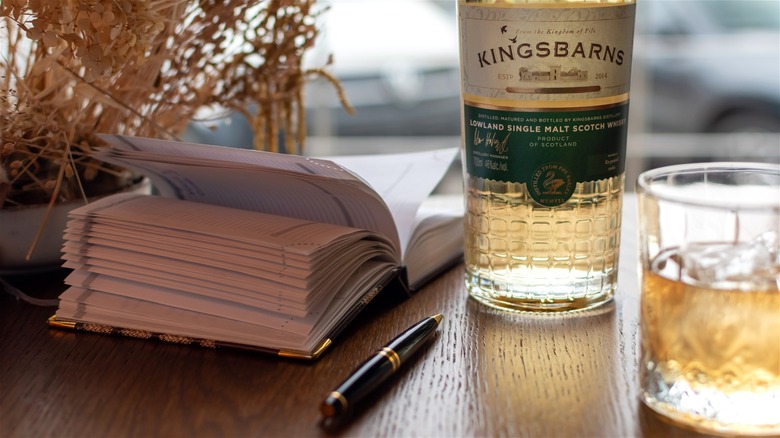
In recent years, however, Lowland Scotch as a standalone drink has been undergoing a bit of a renaissance. According to Master of Malt, new distilleries have opened in the region over the past two decades, bringing novel approaches to Lowland whisky. Kingsbarns Distillery, for example, incorporates peat to develop smokier variations of Lowland Scotch. InchDairnie has been producing a well-received Scottish rye whisky since 2018, a style that was largely pioneered by Highland distillery Arbikie. These modern innovations have created a particularly exciting moment in Lowland whisky production.
Highland Scotch is so diverse it has its own categories
Kosoff/Shutterstock
The defining quality of Highland Scotch is the diversity of flavors available in the region. It is by far the largest Scotch-producing region, bordered by the Lowlands to the south, Speyside to the east, and Campbeltown and Islay to the southwest. The geographic area of the Highlands also encompasses the Islands, which are often considered an unofficial sixth region. With so much variety in the terroir of these areas, Highland Scotch displays a wide range of tasting notes.
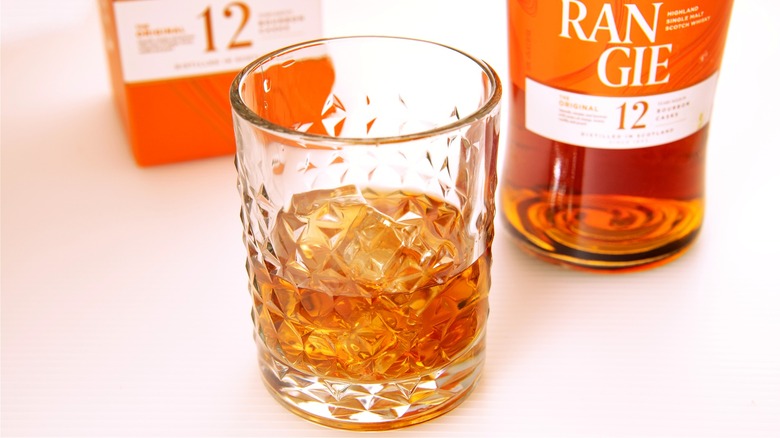
Highland Scotch is sometimes divided into four sub-regions to more clearly delineate its different whiskies. Scottish Delight describes Northern Highland Scotch as complex, with notes of spice, fruit, and heather. Examples include Dalmore and Glenmorangie, with the latter producing some of the best Scotch whiskies of the early 2020s. Southern Highland Scotch bears similar qualities to its neighboring Lowland region, including a lighter profile and fruity tones. Dalwhinnie and Glengoyne are a couple of popular whiskies from this sub-region.
Western Highland Scotch, given its proximity to the Islands, has a defined peatiness, a byproduct of the vast bogs on the craggy, coastal landscape. Due to its difficult terrain, there are only four active distilleries in the sub-region: Ben Nevis, Loch Lomond, Nc'Nean, and Oban. Eastern Highland Scotch, on the other hand, shares similarities with whiskies from the nearby Speyside region. Scotch produced here is full-bodied with a dry finish; its fruitiness balanced by more earthy flavors. Fettercairn and Glen Garioch are among the Scotch whiskies that call the Eastern Highlands home.

 English
 Arabic
 Spanish
 Portuguese
 Deutsch
 Turkish
 Dutch
Dutch
 Italiano
 Russian
 Romaian
 Portuguese (Brazil)
 Greek
Greek