


HelgaQ/Shutterstock
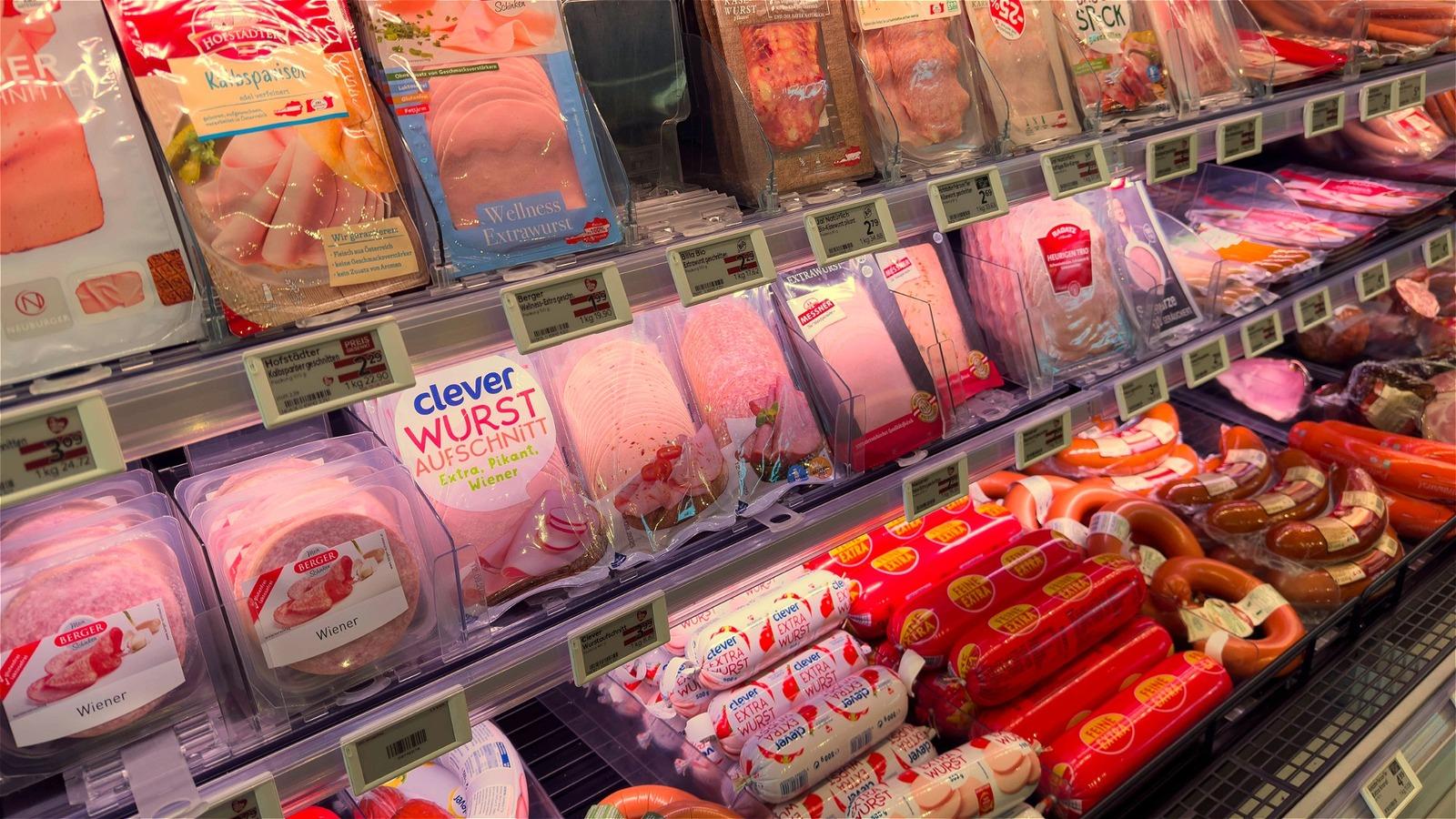
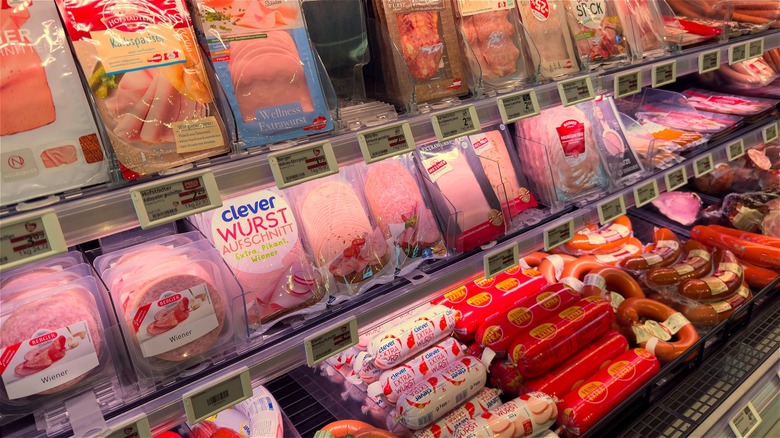
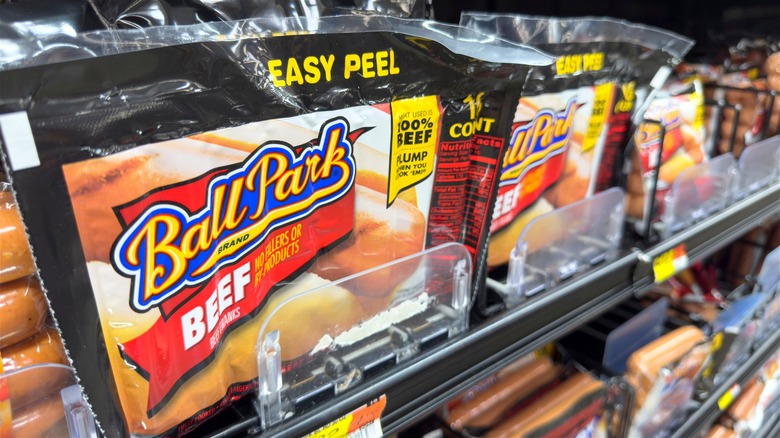
However you slice it, 35 million pounds of meat is a massive amount. Unfortunately, that's roughly how much the Sara Lee Corporation had to pull off of grocery shelves back in the late 1990s because its products were tied to one of the deadliest food-related outbreaks in U.S. history. Among the many brands impacted by the recall were Ball Park franks, Sara Lee Deli Meat, and Mr. Turkey.
According to the Centers for Disease Control and Prevention (CDC), at least 50 cases of illnesses caused by the bacteria Listeria monocytogenes were reported across 11 states from August 1998 to January 1999. Investigations found that the infections resulted from contaminated hot dogs and deli meats, and by June 1999, the outbreak was traced back to a processing plant of the Sara Lee-owned Bil Mar Foods (via the Chicago Tribune). By then, the number of confirmed cases had ballooned to 100 illnesses, along with 15 deaths. A 2025 report in Food Safety Magazine later put the final estimates at 101 illnesses, 21 total deaths, and 6 miscarriages caused by the tainted meat.
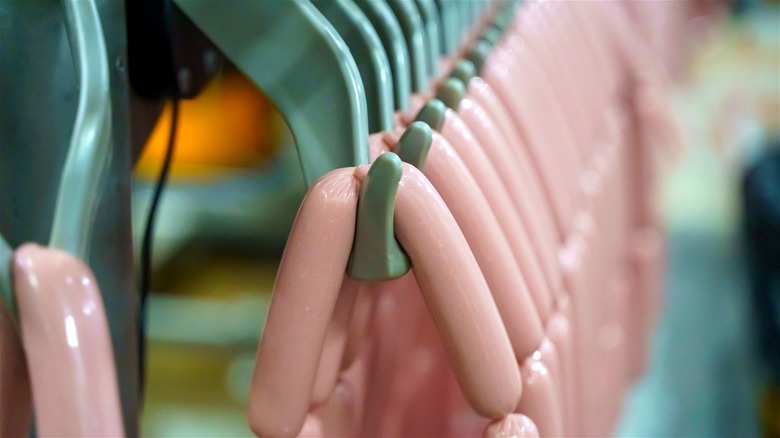
How did the deadly outbreak happen? According to a 1999 report by the CDC, the most likely culprit was a refrigeration unit (via Food Ingredients Online). Inspectors found listeria on equipment across the entire plant, and the refrigeration unit was the only piece of machinery that came into contact with the contaminated hot dogs. At some point during operations, the unit was removed from the building in smaller sections, and the theory was that the movement of these pieces inadvertently spread the bacteria throughout the plant.
Why the massive meat recall was necessary
Zuyeu Uladzimir/Shutterstock
Estimates from the CDC in 2019 suggest that a listeria infection, or listeriosis, is relatively rare compared to other foodborne pathogens. Salmonella, for example, led to an estimated 1.2 million illnesses every year; listeria, on the other hand, led to about 1,250. What makes listeriosis dangerous is its relatively high fatality rate — the CDC estimated 172 cases of listeriosis resulting in death each year, meaning nearly 14% of cases were fatal. Listeriosis is typically only life-threatening to pregnant women, babies, and individuals with weakened immune systems, but the high risk of death for these patients makes it a serious concern.
In a 2025 interview with Harvard Medical News, microbiology professor Darren Higgins shared that more recent outbreaks saw anywhere from 20 to 30% of cases resulting in death, giving listeriosis the highest fatality rate among all foodborne illnesses. It can take as long as three months before listeriosis symptoms start showing up, by which time the infection might have already progressed to dangerous levels.
Higgins also explained that the bacteria can survive refrigeration temperatures, making certain types of food particularly risky if contaminated. One of the most effective ways to destroy listeria is by cooking food at temperatures higher than 149 degrees Fahrenheit, but cold cuts and deli meats are typically eaten straight out of the fridge. It's one of the major reasons why drinking raw milk isn't recommended; in 2022, in fact, alarms were raised in New York over raw milk that was found to contain listeria and subsequently recalled.
The aftermath of the 35 million-pound Sara Lee recall
The Image Party/Shutterstock
According to CBS News, an investigation found that managers were aware of a growing listeria problem months before the outbreak happened, but kept the findings under wraps. Testing procedures were also inadequate — lab technicians were allegedly told to test only if the environment in the plant was conducive for the growth of bacteria, and not to test for the bacteria itself.
However, Sara Lee claimed no wrongdoing in the matter and disagreed with claims that the listeriosis outbreak was tied to the Bil Mar plant (via the Chicago Tribune). In 2001, the company instead pleaded guilty to a misdemeanor for selling tainted meat and agreed to pay a $200,000 fine (via the Los Angeles Times).
The incident proved to be costly for Sara Lee. On top of the $200,000 it was ordered to pay, the Wall Street Journal reported in 2000 that the company spent a total of $76 million on one of the biggest meat recalls in U.S. history. According to the Los Angeles Times story, Sara Lee spent an additional $25 million to renovate the Bil Mar plant, along with $3.3 million for new sanitation equipment. The company also paid $1.2 million to settle a lawsuit over meat sold to the Pentagon on top of spending a total of $4 million on food safety research projects at Georgetown University and Michigan State University. Even costlier, Sara Lee spent an estimated $6.6 million in settlements for lawsuits from those affected by the outbreak (via the Chicago Tribune).

 English
 Arabic
 French
 Spanish
 Portuguese
 Turkish
 Dutch
Dutch
 Italiano
 Russian
 Romaian
 Portuguese (Brazil)
 Greek
Greek