


The Image Party/Shutterstock
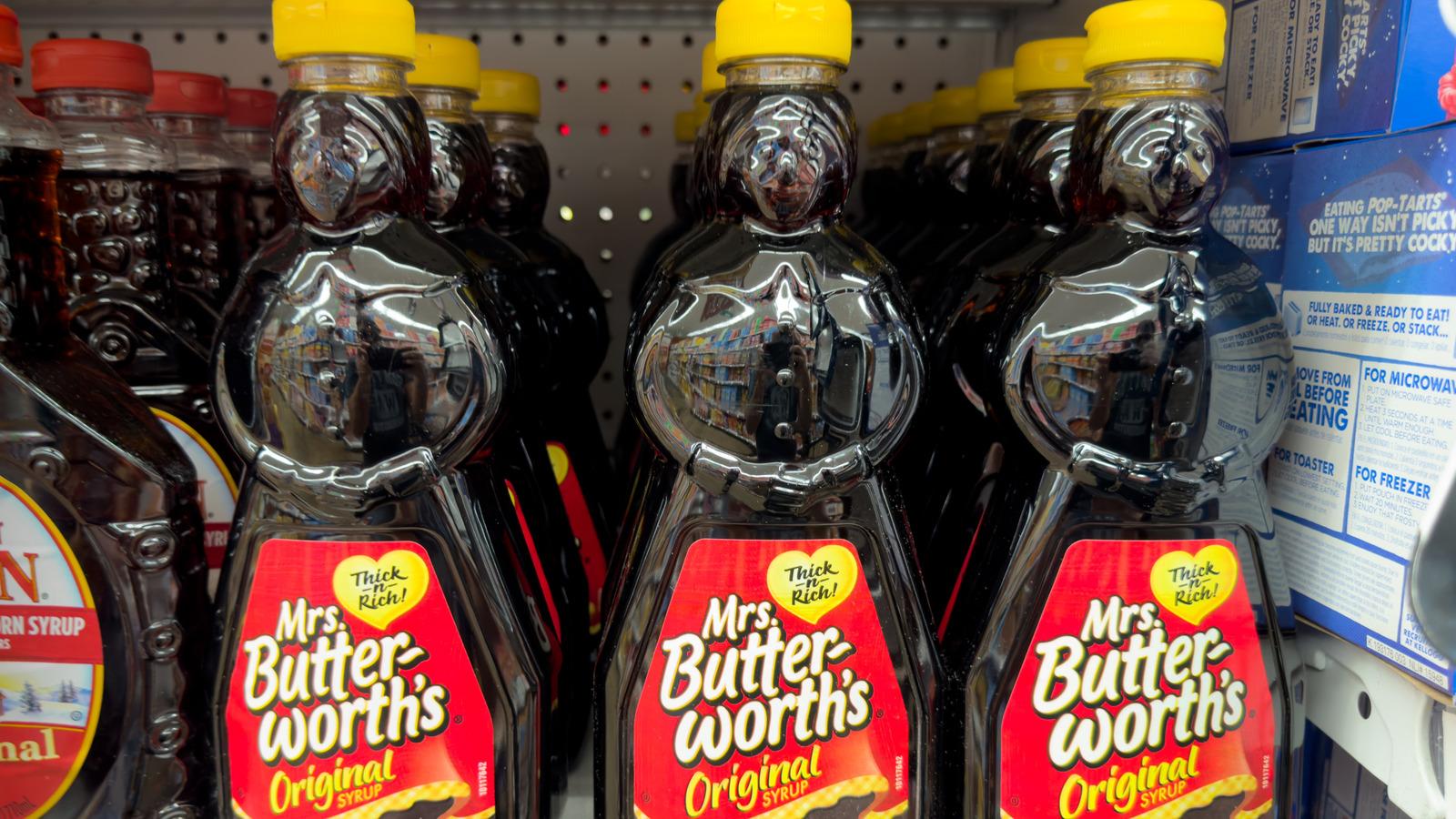
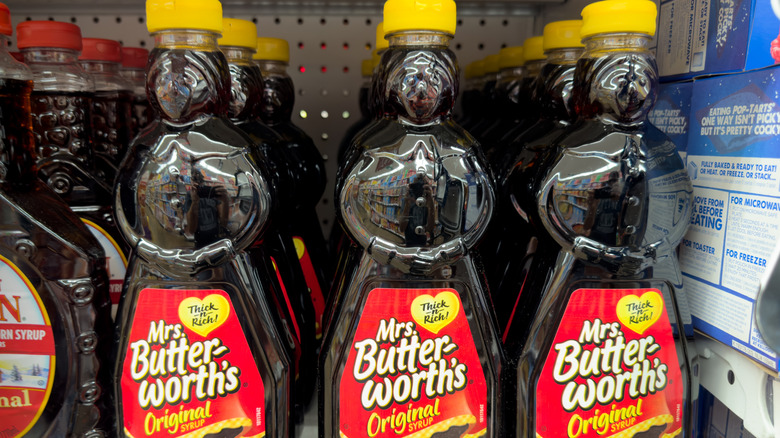
Mrs. Butterworth's pancake syrup is easily recognizable by its bottle in the shape of a woman with a pulled back bun and a wide dress. In commercials, she has the kind voice of a grandmother. So who exactly is the woman behind the bottle? Other famous food personas, such as Marie Callender and Colonel Sanders are real people, but Mrs. Butterworth isn't.
Created in 1961, the unique bottle was created to give the pancake syrup, which shouldn't be confused with maple syrup, a more personal appeal. We often relate pancakes to fond childhood memories of our parents or grandparents making them on a weekend morning, and Mrs. Butterworth leans into that. Even though she isn't real, she does have a first name. In 2009, Pinnacle Foods, a past parent company of the brand, held a contest for fans to choose and vote on the name. "She" was reintroduced as Mrs. Joy Butterworth.
While Mrs. Joy Butterworth isn't a real person, Cleveland reported that she was said to be inspired by actress Thelma "Butterfly" McQueen, who played the role of Scarlett O'Hara's maid, Prissy, in the 1939 movie "Gone with the Wind."
The Mrs Butterworth debate
shaonkhalid/Shutterstock
Mrs. Butterworth has been a subject of controversy for the bottle design and features, as some argue her image and voice evokes a stereotype of black women, particularly as the household servant. Thelma McQueen shared that she hated playing the role of Prissy, as it reinforced racial stereotypes — so if the bottle was modeled after her character, that concern makes a lot of sense. If Mrs. Butterworth was designed to be a black woman, an issue also lies with the fact that early commercials used a white woman for her voice.
In 2020, ConAgra Foods made the following statement in a press release on its website, "The Mrs. Butterworth's brand, including its syrup packaging, is intended to evoke the images of a loving grandmother. We stand in solidarity with our Black and Brown communities and we can see that our packaging may be interpreted in a way that is wholly inconsistent with our values." This occurred around the same time that the Aunt Jemima character was being reexamined for also being a racial stereotype and ended up changing its name.
Not everyone sees Mrs. Butterworth as a racial stereotype; on a subReddit, R/ChangemyView, the original poster wrote, "I've watched a bunch of old Mrs. Buttersworth commercials on Youtube to see if my memory is just bad but she really does seem to me to be an elderly white woman, which is why I am confused on how she is caught-up in this mess about racist brand imaging." The thread is a 50/50 split, of some agreeing, and others arguing that she is clearly modeled after a stereotype. As of 2026, the Mrs. Butterworth bottle remains the same.

 Arabic
 French
 Spanish
 Portuguese
 Deutsch
 Turkish
 Dutch
Dutch
 Italiano
 Russian
 Romaian
 Portuguese (Brazil)
 Greek
Greek