


Alle12/Getty Images
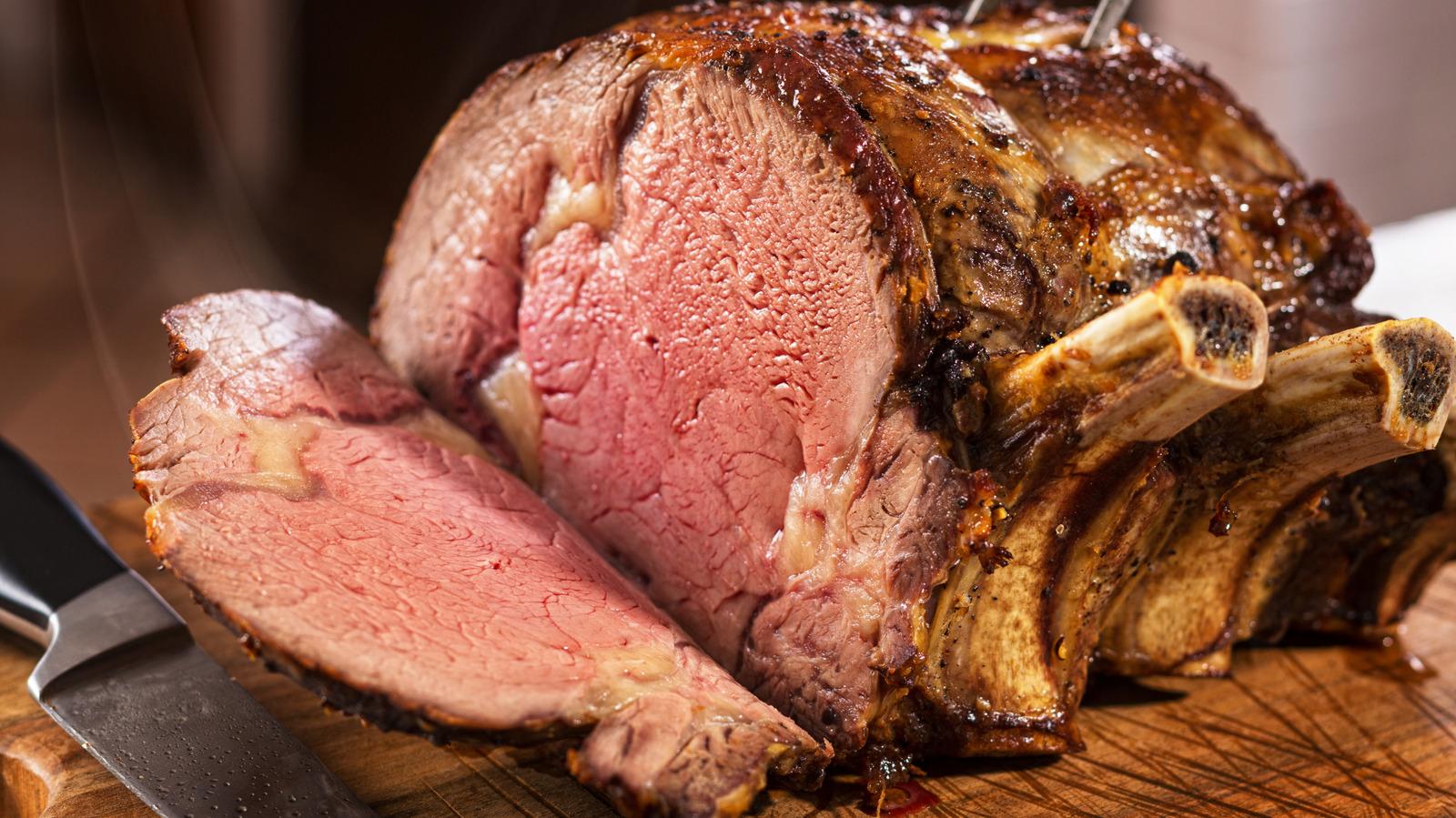
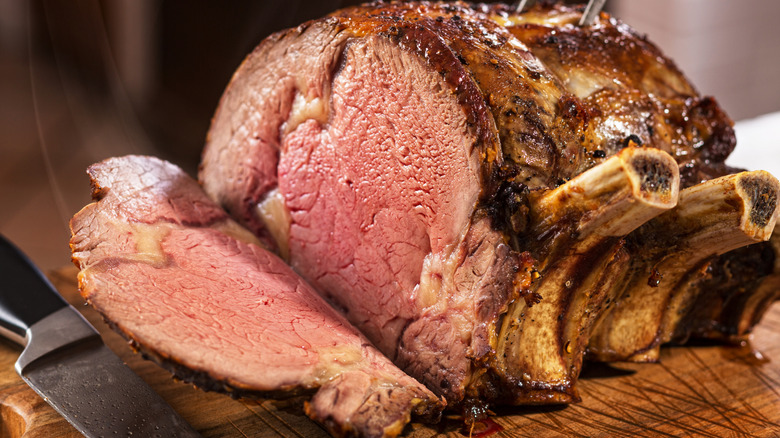
Whether you're planning a holiday meal or an elaborate family celebration, prime rib is often a go-to choice. In fact, some meat experts estimate that it's so popular during the holidays that about 33 million pounds of prime rib are sold over the festive period. After all, this delicious cut of beef is often well-marbled throughout, giving it its trademark tenderness and juiciness. When done right, the end result is a mouthwatering, luxurious mouthfeel in every bite.
In fact, there's no doubt that prime rib is an impressive choice that makes a statement at the center of the table — as long as it's cooked appropriately. Unfortunately, though, it's not uncommon for home cooks to make mistakes with its preparation. And when they do, they miss out on that deep, beefy flavor and tender texture for which prime rib is known. Instead, their roast is often improperly seasoned, cooked too long, or not allowed to rest. When this happens, it can quickly become dry, leathery, and tasteless.
Fortunately, all you need to master cooking prime rib to perfection is to know what not to do. Here, Maricel Gentile, chef and owner of Maricel's Kitchen, and Amy Casey, a private chef and owner of Amy Casey Cooks, share the 12 most common mistakes home cooks make when preparing prime rib and what can be done to avoid making the same. This way, when your special meal is plated, you'll be able to serve a prime rib you can be proud of.
Choosing lean cuts or uneven pieces of meat
Lori Long McConnell/Shutterstock
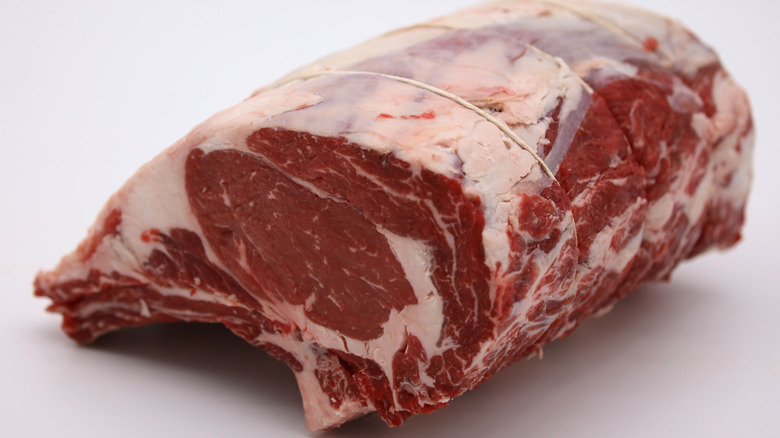
The first step in preparing a flavorful prime rib is selecting the right cut of meat. But according to chef Maricel Gentile, people often mistakenly choose lean cuts or uneven pieces, which "leads to dry or inconsistent results." Instead, she suggests looking for good marbling and a consistent fat cap.
"It pays to get to know your butcher when buying a prime rib," adds chef Amy Casey. "He can point you toward the well-marbled roasts and trim off any excess fat." For unseasoned home cooks, Casey says it can also be difficult to know what size prime rib to buy. "The largest roasts have six rib bones and can weigh 12 to 16 pounds. That is one big roast! ... A good rule of thumb is to estimate two generous servings per bone. This means that a four-bone prime rib roast is about seven to eight pounds and will serve eight people."
While this style of roast is also available boneless, Casey prefers buying prime rib with the ribs attached. "This will yield the most juicy and flavorful slow-roasted prime rib. You want the roast to have a nice fat cap and be well marbled."
Failing to let the prime rib come to room temperature before cooking
Jjpoole/Getty Images
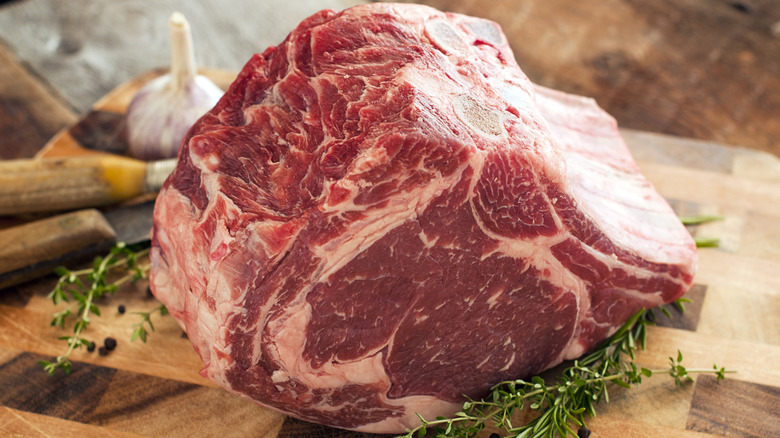
Most people don't realize that prime rib, or standing rib roast as it's sometimes called, needs to be as close to room temperature as possible before you start cooking it. In fact, some people recommend letting it sit on the counter for as long as four hours before cooking, though both chef Maricel Gentile and chef Amy Casey say you might only need about two hours.
If you skip this step, though, it will take your roast even longer to cook, which could throw off your entire schedule and result in an unevenly cooked piece of meat. "Putting it straight from the fridge into the oven ... leads to uneven cooking, where the center lags behind, and the outside overcooks," says Gentile.
Once you're ready to put it in the oven, Casey suggests placing the roast bone on its side in a roasting pan, allowing the bones to serve as a roasting rack. Then you can insert the temperature probe into the center of the roast and set it to the temperature of your choice.
Under seasoning the prime rib
KBrimager-Bowles/Shutterstock
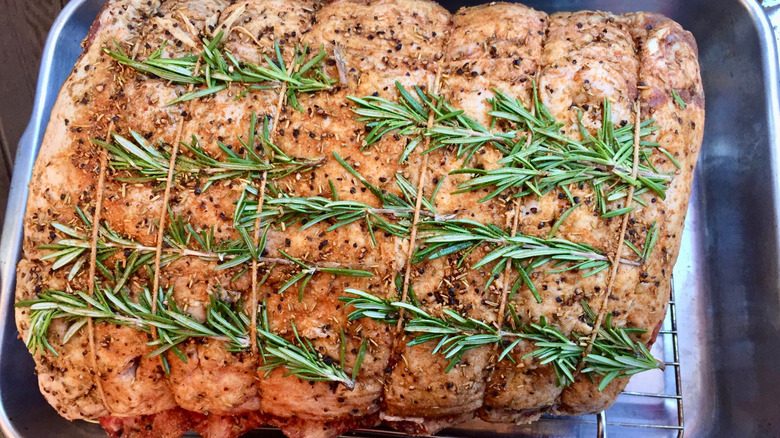
Prime rib is a large cut of meat that can weigh as much as 22 pounds if you buy a full-size roast. Therefore, you need to be generous with your seasonings or risk a large, flavorless cut of beef at the center of your table.
Unfortunately, this is where most people tend to go wrong, says chef Amy Casey. "People tend to skimp on the seasonings," she explains. "This will affect the crust of the prime rib [and] it won't be as deep golden brown and flavorful if it's under-seasoned."
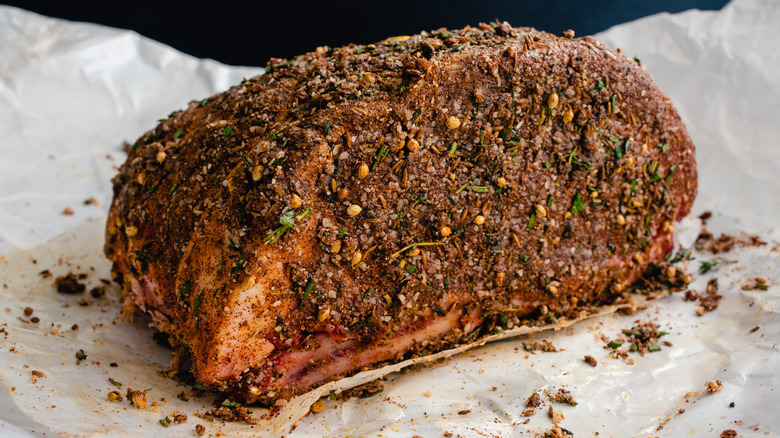
Seasoning also "brings out the beefy flavor" of the interior, she says. If done correctly, it can penetrate the prime rib. But people often fail to season the entire roast, she says, or they go light on the seasoning, leading to a "dull-tasting prime rib." She recommends using a rub of salted butter, chopped garlic, chopped fresh rosemary, thyme, and parsley, kosher salt, and freshly ground pepper. "The rub should be slathered over the entire prime rib," she says.
Not letting the oven preheat
carlos larrechi/Shutterstock
When you have a lot going on in prepping for a big meal, it's easy to forget to preheat your oven. But chef Amy Casey says this is a step you don't want to miss. Not only does preheating help your roast cook consistently, but it also helps it reach the desired color and doneness. In fact, Casey says that without preheating, "the outer layer tends to be gray in color and overcooked."
Preheating ensures your roast receives consistent heat from start to finish, which ultimately ensures proper browning and a consistent cook. Plus, putting a room temperature roast into a cold oven could cause the oven to take even longer to reach the desired temperature.
So, make sure you allow enough time to get your oven warmed up and ready to go, especially because it can take anywhere from 12 to 20 minutes for most ovens to preheat. Just to be safe, most experts recommend allowing for 20 minutes or more of preheating to ensure your oven is adequately warmed up.
Cooking the prime rib at too high a temperature
Miladin Pusicic/Getty Images
One of the biggest mistakes people make when cooking prime rib is cooking it at a high temperature from the start, says chef Maricel Gentile. "That pushes the outside to overcook while the center stays underdone, so you lose that even, pink edge-to-edge result."
Instead, she says the best cooking method for prime rib is a low-and-slow roast, followed by a high-heat finish. "Start at 225 to 250 degrees Fahrenheit until the internal temperature is close to your target, then finish at 475 to 500 degrees Fahrenheit to build a crust."
Some chefs refer to this method as a reverse sear, which involves cooking low at first and then finishing hot. Gentile says this method gives you even doneness and a more noticeable crust. It can also ensure you get a tender cut of meat. "Searing first can create a thick outer layer that overcooks during the long roast," she says.
Covering your prime rib while cooking it
Stenko Vlad/Shutterstock
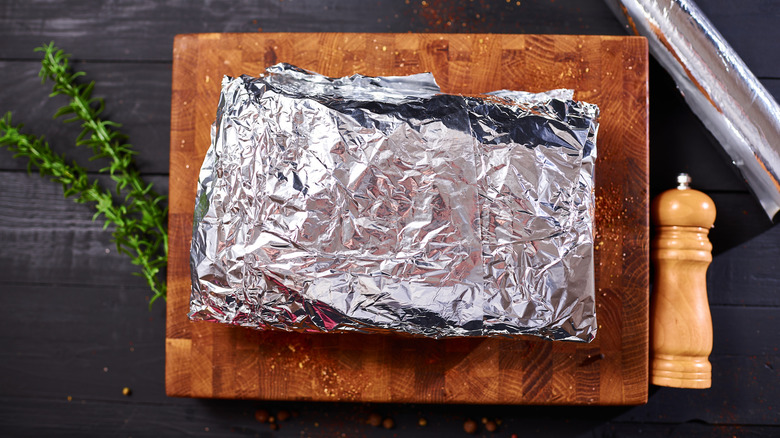
Some people think that covering a prime rib with foil will help it cook faster, but that's simply not true. Instead, chef Amy Casey says that it can impact the quality of your final product. Why? "It traps in the steam and prevents the delicious, deep brown crust from forming." This doesn't just change the way the meat looks. "The result is a less flavorful and unappetizing-looking prime rib," says Casey.
It's the dry heat that helps the crust to form, adds chef Maricel Gentile. "Covering traps steam,
and that softens the exterior," she says, leaving you with a "gray, soft surface." That said, Gentile says if you have an uneven cut of meat, you may need to use a "loose foil tent" over the thinner end. "This slows down its cooking while the thicker side continues," she says. She adds just one caveat. "Do not wrap tightly, [as] you still want airflow."
Relying on time instead of temperature when cooking
eyematter/Shutterstock
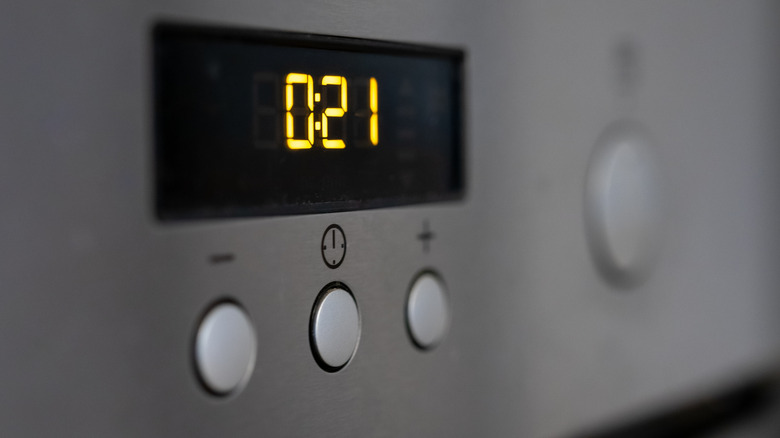
Preparing a prime rib that's properly cooked requires you to monitor the temperature and time it appropriately, says chef Maricel Gentile. In fact, some cooking experts stress that a meat thermometer is the only 100% foolproof way to ensure your roast has reached the desired doneness. "People rely on time instead of using a thermometer, and they do not plan for how long it really takes to cook and rest," says Gentile. "Prime rib is not about guessing, it is about precision."
She suggests planning for about 30 to 35 minutes of cooking per pound at 225 to 250 degrees Fahrenheit. Then she suggests allowing at least 20 to 30 minutes of resting time once it comes out of the oven. "That resting time is not optional," she says. "It lets the juices redistribute and finishes the cooking through carryover heat."
For a medium-rare, Gentile says you should pull your roast out at 120 to 125 degrees Fahrenheit and let it rest to 130 to 135 degrees Fahrenheit. "People wait too long and pull it at the final temperature, not accounting for carryover cooking," she says. "That pushes it into medium or well, and you lose tenderness and moisture."
Failing to account for carryover cooking
monofaction/Shutterstock
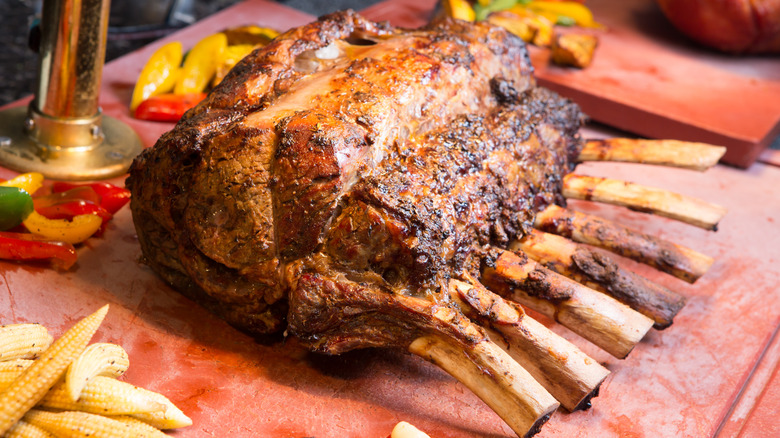
When cooking prime rib, chef Amy Casey claims that many people will cook it to the desired temperature and forget that it will finish cooking while it's resting. This is considered carryover cooking, and you need to account for it or risk overcooking your prime rib.
To avoid having an overcooked roast, Casey suggests taking it out of the oven when it's roughly 5 degrees Fahrenheit below your desired temperature. "It needs time to rest so the juices redistribute throughout the roast," she says.
As the prime rib sits on your counter, it will continue to cook. For how long exactly depends on your personal preferences. "The best temperature to cook a prime rib is the one that is to your liking," Casey says. "Rare prime rib has a deep, rich beefy flavor that's juicy and tender. Prime rib that's cooked to [be] more well done has a firmer texture that tastes more roasted and is less juicy and rich."
Rushing the preparation of your prime rib
Candice Bell/Shutterstock
Prime rib is a dish that you really should plan and execute over a few days, or even a week, says chef Maricel Gentile. She suggests taking your time and avoiding rushing through the process. "[Prime rib] is a special menu item that everyone will enjoy," she says, "and the time [and] care you put into it will really show."
To start, Gentile suggests dry brining the prime rib for about 24 to 48 hours before you plan to cook it. This involves salting your roast early and generously and leaving it uncovered in your refrigerator, she says. You need to allow salt time to penetrate and build flavor. "People either skip this step or use too little salt, or try to salt it just before it goes in the oven, which leaves the meat bland," she says.
When preparing your prime rib, Gentile suggests planning to spend about two to three days total from start to finish. That includes the 24 to 48 hours for dry brining, two hours or more to bring it to room temperature, about 30 to 35 minutes per pound for cooking, plus 20 to 30 minutes of resting time, she says. Each step affects texture, flavor, or crust, she says. But things can go awry if you rush. "For a good, flavorful result, the solution is simple: prep, plan, control your temperature, season early, and give the meat time at every stage," Gentile explains. If you plan and execute each step properly, the result is consistent, tender, and evenly cooked, every single time.
Failing to slice against the grain or slicing the prime rib too thin
Alle12/Getty Images
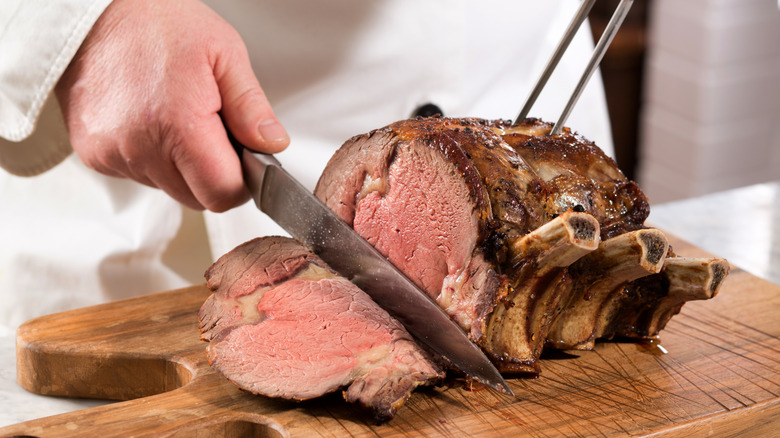
After letting your prime rib rest for about 30 minutes, you should slice it against the grain using a sharp knife, says chef Maricel Gentile. "People rush and cut too early, which releases juices," she says. "Others cut with the grain, which makes each bite feel tougher."
At the same time, you want to avoid cutting your prime rib into particularly thin slices. "You want a slice that's at least 1 inch thick," advises Amy Casey. This will result in a slice with the right amount of crust for the best flavor that's juicy and tender."
To carve the roast, Casey suggests first cutting off the bones and then cutting thick slices of the meat. Removing the bones makes it easier to slice the prime rib into slices of the right thickness. When doing so, she advises against using a dull knife." Instead of uniform and juicy slices, they'll be dry, tough, and uneven," she says. Finally, Casey recommends pouring juices from the cutting board over the meat.
Overthinking the prime rib cooking process
Nadezda Murmakova/Shutterstock
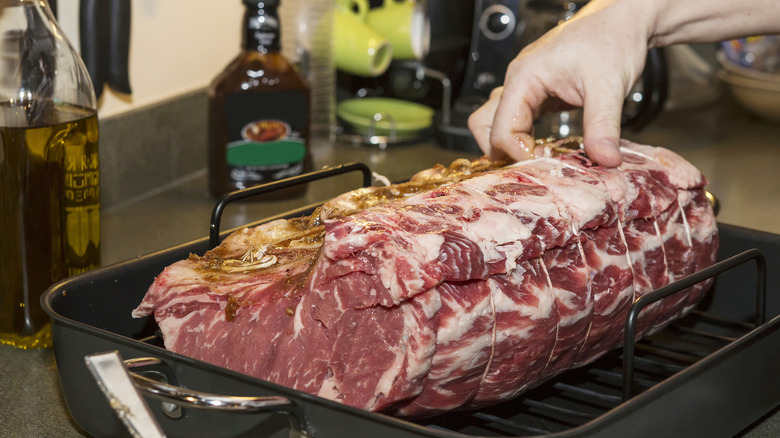
There's no doubt that cooking prime rib can feel like an intimidating process, especially because it's an expensive cut of meat and you don't want to mess it up. But the preparation and cooking process doesn't have to be nerve-racking or overwhelming.
Start by allowing yourself plenty of time and planning ahead. This will help you feel confident that you can serve a great-tasting roast. Then, stick to the recommended guidelines, and you will be fine. The key is not to dwell on the process or overcomplicate things.
"The biggest reason people cook prime rib wrong is because they're overthinking it," says Casey. "It's not like your typical roast that cooks for 15 minutes per pound." As long as you have a digital thermometer to hand — ideally a bluetooth thermometer, which can stay in the oven while the prime rib cooks — you have what you need to succeed.
Serving a thick, heavy sauce with the prime rib
Neosmart Consulting Ag/Getty Images
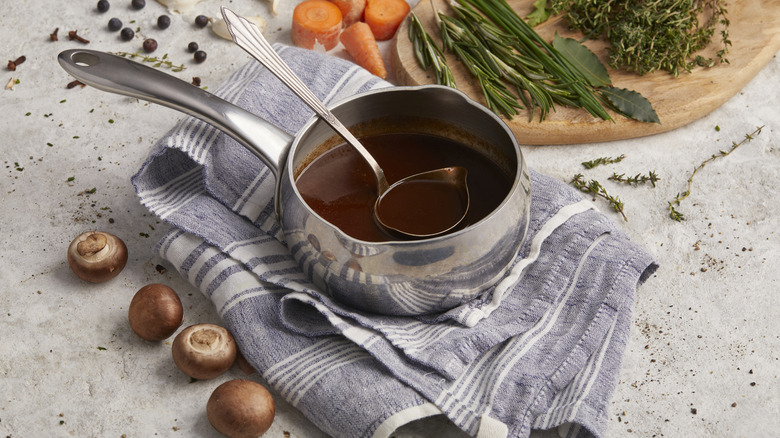
When you have a rich, luxurious cut of meat like prime rib, you want the roast to shine. So, chef Maricel Gentile suggests serving it simply, with its natural juices or with a light jus. "You can offer horseradish cream on the side, but it should support the meat, not cover it," she says. "The mistake is using heavy, thick sauces that overpower the flavor, or letting the meat sit too long and lose its warmth."
For those looking for something a little different, Gentile makes a Filipino bistek-style calamansi sauce that she served on a recent buffet at her restaurant. "It is built on citrus, soy, and aromatics, but kept very balanced so it lifts the richness of the prime rib instead of masking it," she explains. "Calamansi is a small Filipino citrus fruit, like a cross between a lemon and lime. ... The calamansi gives a clean, gentle acidity that cuts through the fat, while the soy adds just enough depth to tie it back to the beef." Gentile says that people often go wrong by using a sauce that's too heavy or too salty. "This kind of citrus-forward sauce works because it is light, controlled, and used sparingly. The goal is to enhance each bite, not change it."
As for what to serve with your prime rib, chef Amy Casey suggests pairing the prime rib with classic side dishes like mashed potatoes, creamed spinach, or a simple salad. As for wine, she suggests pairing the meat with a bold Cabernet Sauvignon or Merlot. "Finish the meal with a molten chocolate cake or slice of creamy cheesecake," she adds.

 Arabic
 French
 Spanish
 Portuguese
 Deutsch
 Turkish
 Dutch
Dutch
 Italiano
 Russian
 Romaian
 Portuguese (Brazil)
 Greek
Greek