


Kristi Blokhin/Shutterstock
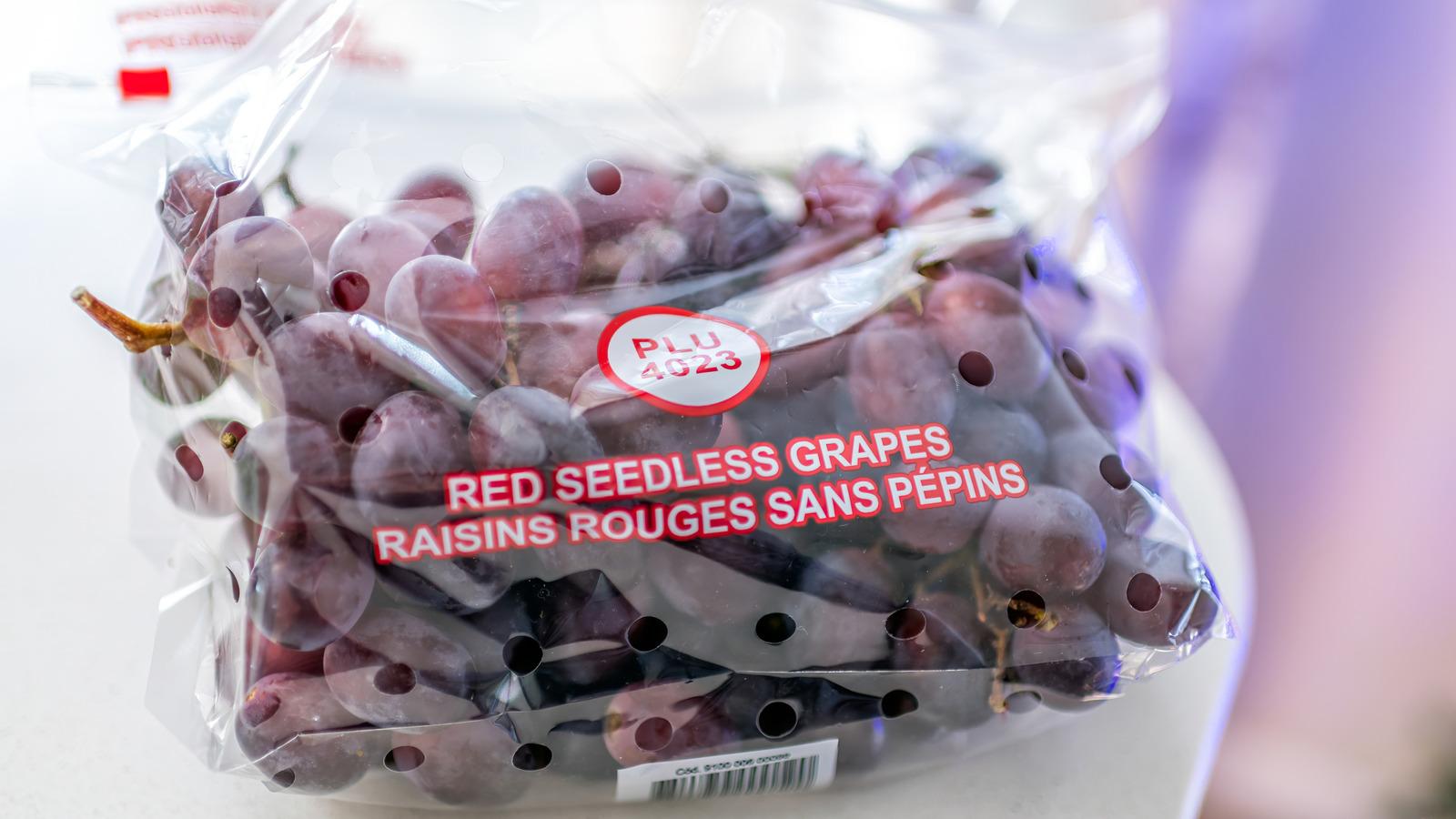
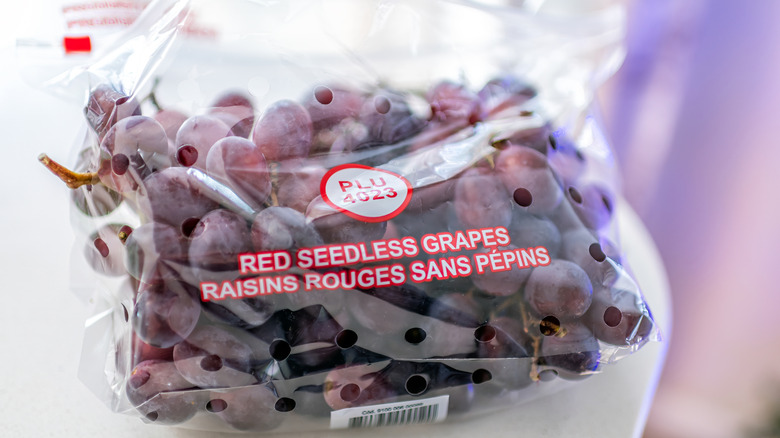
Fruits come packaged in a variety of ways. Some have their own sufficient exterior (oranges, apples), berries almost always come in plastic clamshells, and grapes are sold in a plastic bag with holes. Those holes are not a random design choice. They allow grapes to breathe and keep them fresh longer.
After being harvested, grapes continue to respire, releasing moisture and gases such as ethylene and carbon dioxide. Respiration changes unripe fruit, like green bananas or hard peaches, into something sweet that can be eaten. However, grapes no longer ripen after they are harvested, so this respiration is not a benefit. Without airflow, released moisture can get trapped. Fruit sitting in moisture is almost never a good thing: It's the perfect environment for mold growth.
The plastic clamshells that grapes sometimes come in also have plenty of holes for this same reason. A completely sealed bag or box would turn into a mini greenhouse filled with slimy, spoiled grapes. One of the mistakes people make when buying grapes is not checking their firmness or if there are any brown spots present. These thin, open bags provide easy access to check their texture and appearance.
Storage tips for grapes that prevent spoilage
Veronika Dul/Getty Images
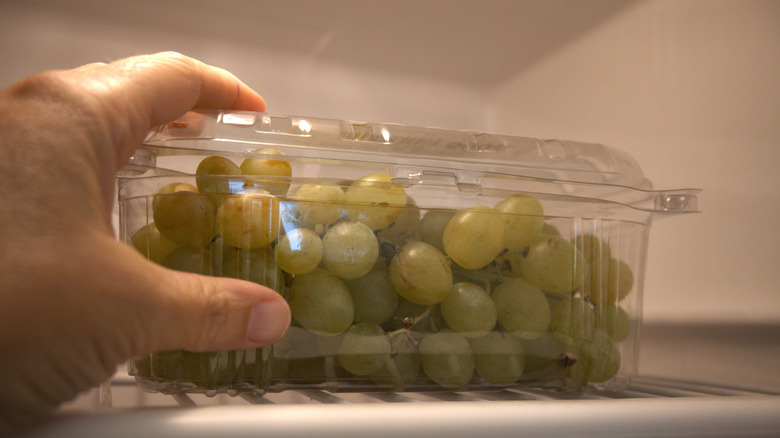
Once you bring grapes home, their storage is your responsibility. You can keep them in the vented bag or clamshell they were sold in so that they can continue to breathe. If you want to transfer them, be sure the container you use has holes (like a colander, for example). It might be tempting to throw grapes in a glass or plastic Tupperware, but this will block airflow and shorten their shelf life. Keep grapes in the crisper drawer of the fridge, which has been adjusted for low humidity and permits more airflow throughout.
Wash grapes right before you eat them. If water is introduced to stored fruit and doesn't completely dry, moisture caught between the individual fruits can lead to mold growth. The most effective way to wash grapes is to rinse for about 20 seconds in cold water. If you want to pre-wash the grapes, cleaning them in a large bowl of water with ¼ cup of white vinegar and draining well is ideal for reducing spoilage.
Stored correctly, grapes should last for around two weeks. Fresh grapes should be firm and plump, so if they become soft, wrinkled, or squishy, this is a sign that they're going bad. Remove any that start to get brown or have a fuzzy white mold. If your grapes are approaching the end of their life but are unspoiled, reduce food waste by freezing them for a tasty frozen treat, like viral candy-coated frozen grapes.

 English
 Arabic
 French
 Spanish
 Portuguese
 Deutsch
 Turkish
 Dutch
Dutch
 Italiano
 Russian
 Portuguese (Brazil)
 Greek
Greek