


Hemera Technologies/Getty Images
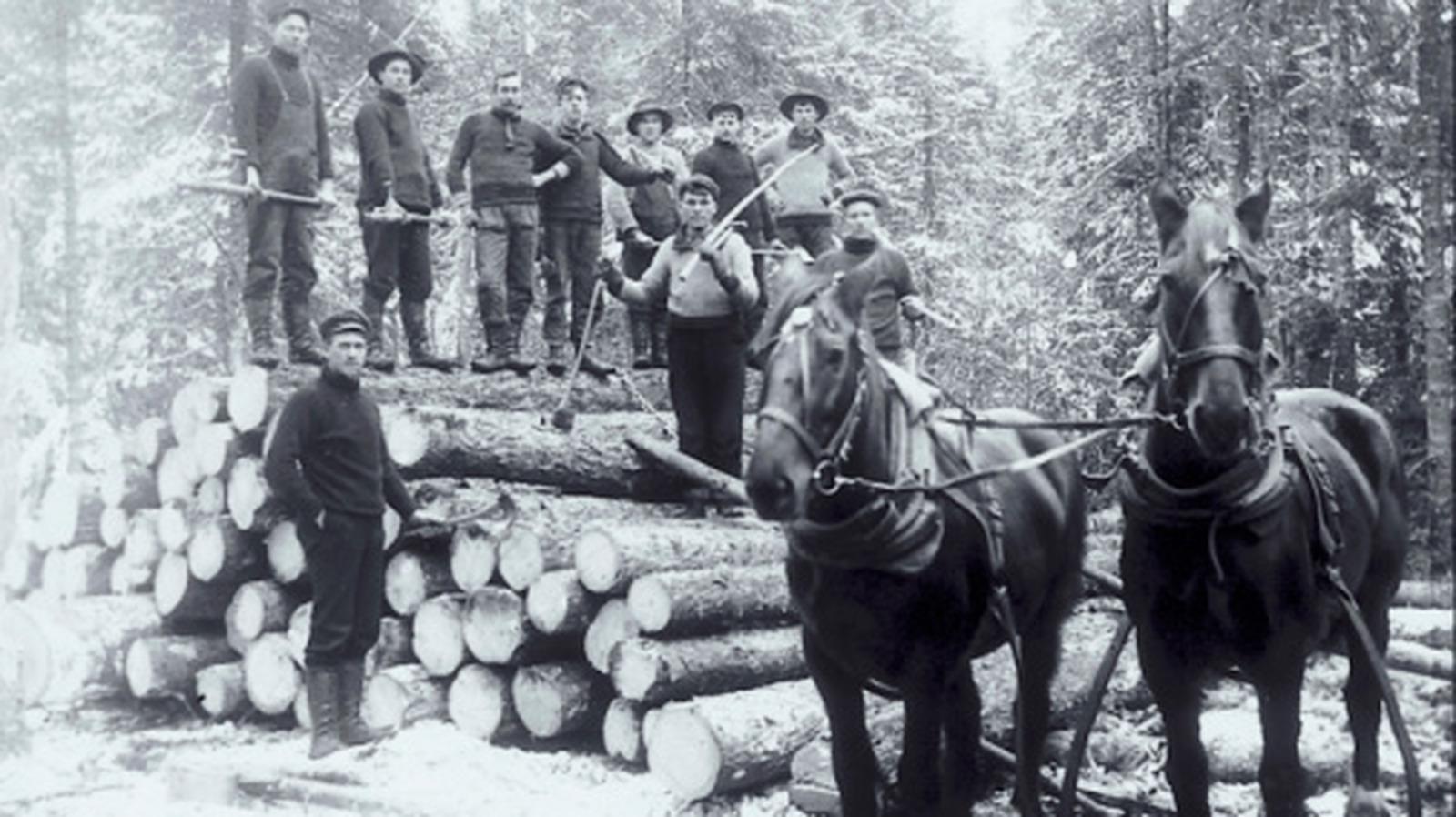
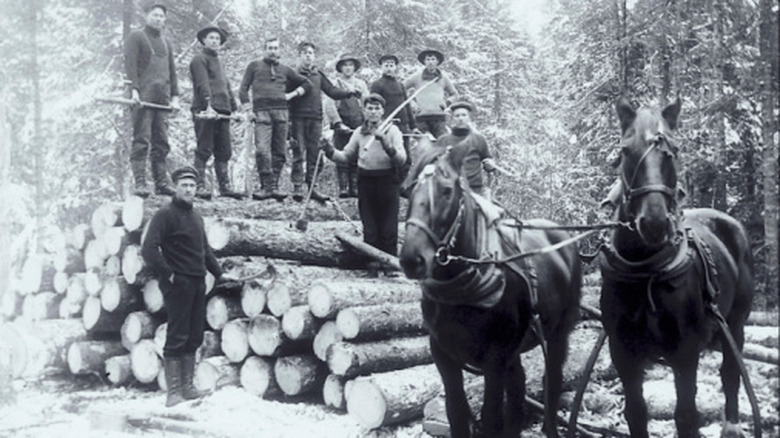
The work of a lumberjack has never been easy, particularly long ago in the 19th century. During these times, hand saws and axes were the only tools men had to work with when chopping down trees that sometimes weighed nearly 10,000 pounds. Such physical labor required lots of calories, so meals were hearty and often loaded with protein and energy-building carbohydrates. Beans were served often since they were filling, plus dried beans weren't perishable. One dish in particular that became synonymous with lumberjack cuisine was called bean-hole beans.
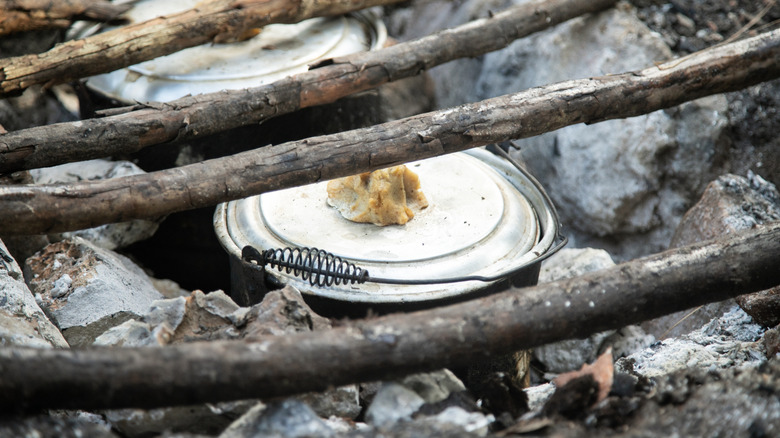
These beans were essentially baked beans cooked underground. After digging a hole that would fit the bean pot, the pit was lined with rocks. A fire was then built in the bottom until it turned into a bed of hot coals. Dried beans that were soaked overnight were put in a sturdy pot along with flavorings like salt pork (which should not be confused with bacon), onions, and molasses. The pot would then be placed in the bean hole and covered with dirt, which would turn it into an oven of sorts. After being cooked all night, the beans were ready to be unearthed and eaten the next day. Since these pits were used on a daily basis, they were often protected with a permanent wooden structure where camp cooks would keep a continuous supply of beans cooking.
Lumber work was seasonal work; the majority of it took place in the fall and winter, when weather was cold, snowy, and wet. Bean holes made cooking this staple food possible without the need to constantly protect or maintain cooking fire, especially when up against winter weather elements.
Native Americans were the creators of bean-hole beans
Lecker Studio/Shutterstock
As much as lumberjacks used this bean-hole method of cooking, they were not the ones responsible for creating it. Native Americans had perfected this type of slow cooking long before loggers discovered its usefulness. Instead of cast iron cookware, tribes such as the Penobscot tribe in Maine buried clay pots full of dried beans, bear fat, and maple syrup in coal-heated underground pits for cooking.
The demand for lumber began as soon as European settlers came to Jamestown in the 17th century. New England, especially Maine, was a hub for the logging industry due to its dense forests. As the nation rapidly grew, so did the need for timber, and logging spread all the way to the Pacific Northwest. Naturally, bean-hole beans went along with the industry.
Cooking exclusively outdoors isn't something many Americans do anymore, not even amongst lumberjacks, as lumber camps are mostly nonexistent, so making authentic, homemade bean-hole beans is certainly an undertaking that requires the right equipment and space. But it can be done if you're willing to dig a big, hot hole in your yard and you have a good baked bean recipe. But if you'd rather not, you may be able to seek them out at places that prepare the dish. Some New England-based churches, museums, fairs, and festivals have been known to make bean-hole beans for the public, who can sometimes watch the bean pot being unearthed.

 English
 Arabic
 French
 Spanish
 Portuguese
 Deutsch
 Turkish
 Dutch
Dutch
 Russian
 Romaian
 Portuguese (Brazil)
 Greek
Greek