


Kevin Winter/Getty Images
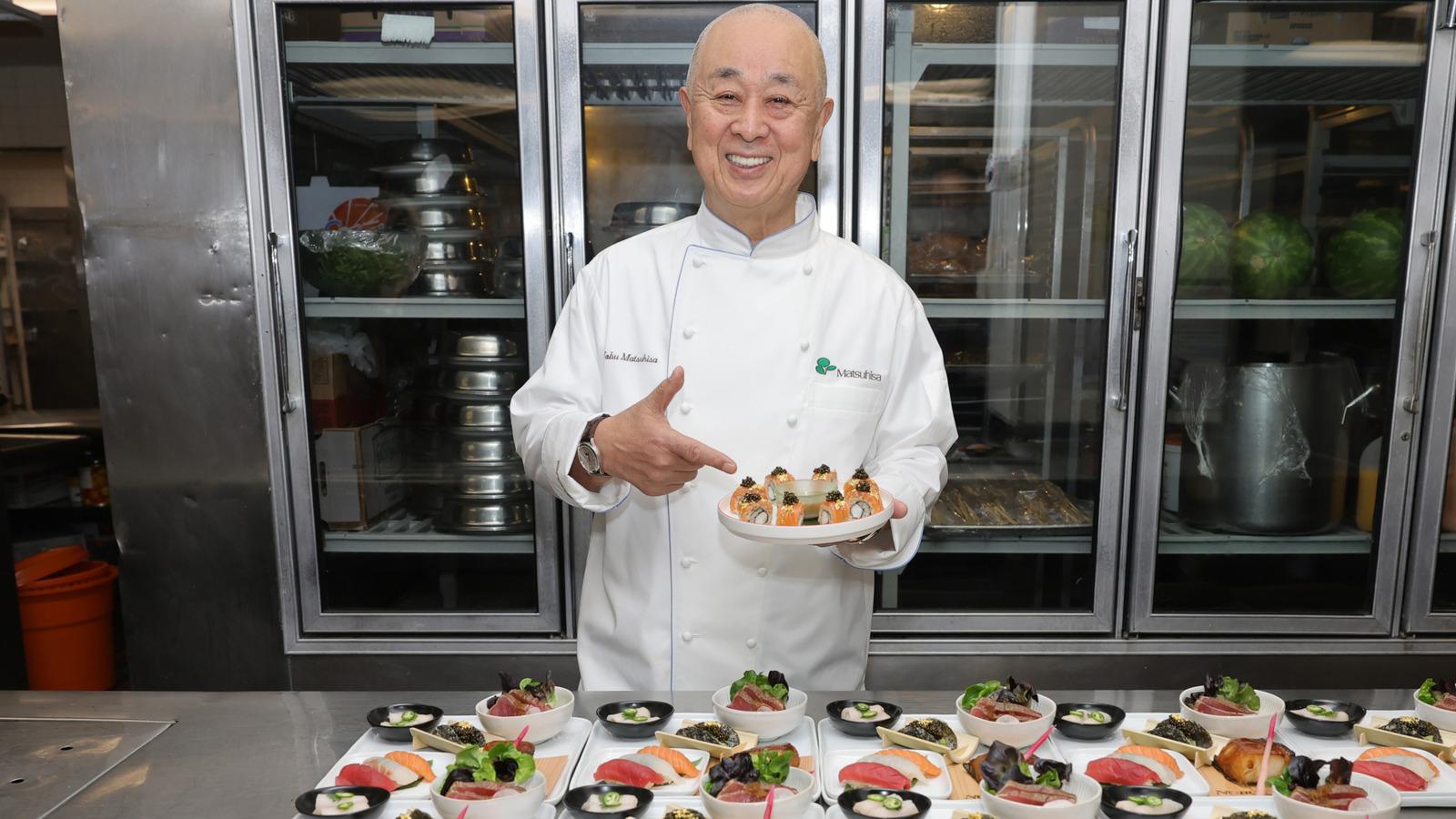
Nobu is synonymous with fine sushi. The global chain of nearly 60 restaurants is one of the best Japanese restaurants in the United States, and named after its founder, chef Nobu Matsuhisa. In the United States alone, the Nobu restaurants sold over $230 million worth of sushi in 2024. Clearly, Nobu and his culinary teams are doing something right. Here's the good news: Nobu has a specific method for making sushi rice, and it's very easily replicated at home.
He calls it the 4-2-1 rule, and it dictates the seasoning for the sushi rice. Sushi rice is both a type of rice and a method of preparation: You can buy sushi rice, which is a medium or short grain Japanese rice, but it still needs to be seasoned to taste like what you might get at a sushi restaurant. That's where Nobu's 4-2-1 trick comes in. Use "four parts rice vinegar (red rice vinegar, if available), two parts sweetener, and one part salt," he told Food & Wine. Nobu recommended using monk fruit sweetener, which is available at some supermarkets, but said that sugar will work too.
Nobu explained that this mixture should be heated until the sugar and salt dissolve, and added that a piece of kombu will impart a deeper flavor. (Kombu is a type of seaweed that's used to season stock and other Japanese dishes.) But don't forget to take out the kombu before mixing the seasoned vinegar with the rice.
Rice is essential and here's how to season it like Nobu
Yuuji/Getty Images
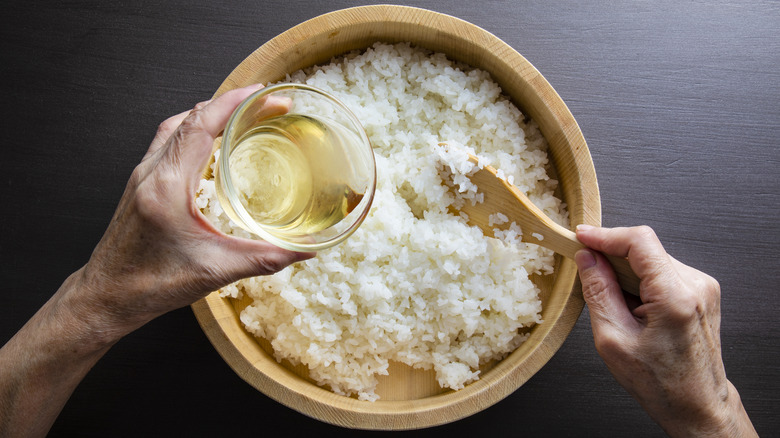
Rice is an extremely important part of the sushi. (Masaharu Morimoto, who once was the executive chef of the original Nobu restaurant and now runs his own chain, told Mashed, "The rice is more important than the fish.") And that's why it's important to use the right kind of rice, because regular white rice would simply fall apart since it doesn't have the adhesion qualities of sushi rice. So once you've cooked your traditional sushi rice, it's time to season it.
Don't mix your seasoned vinegar in with the rice immediately after cooking it (and, importantly, don't cook the rice in the seasoned vinegar, just use plain water). Instead, avoid making a common mistake and let the rice cool for about 10 to 15 minutes before stirring the vinegar in with the rice. The vinegar should also be cooled before you mix it in.
If you're looking to replicate Nobu's recipe exactly, his preferred rice might not be so easy to find locally. He told our sister site Tasting Table that his restaurants use a brand of rice called Kitsu Mizuho, which is all but impossible to source here in the United States. But his method for making delicious sushi rice will help turn any recipe into a dish worthy of the Nobu name.

 Arabic
 French
 Spanish
 Portuguese
 Deutsch
 Turkish
 Dutch
Dutch
 Italiano
 Russian
 Romaian
 Portuguese (Brazil)
 Greek
Greek