


monticello/Shutterstock
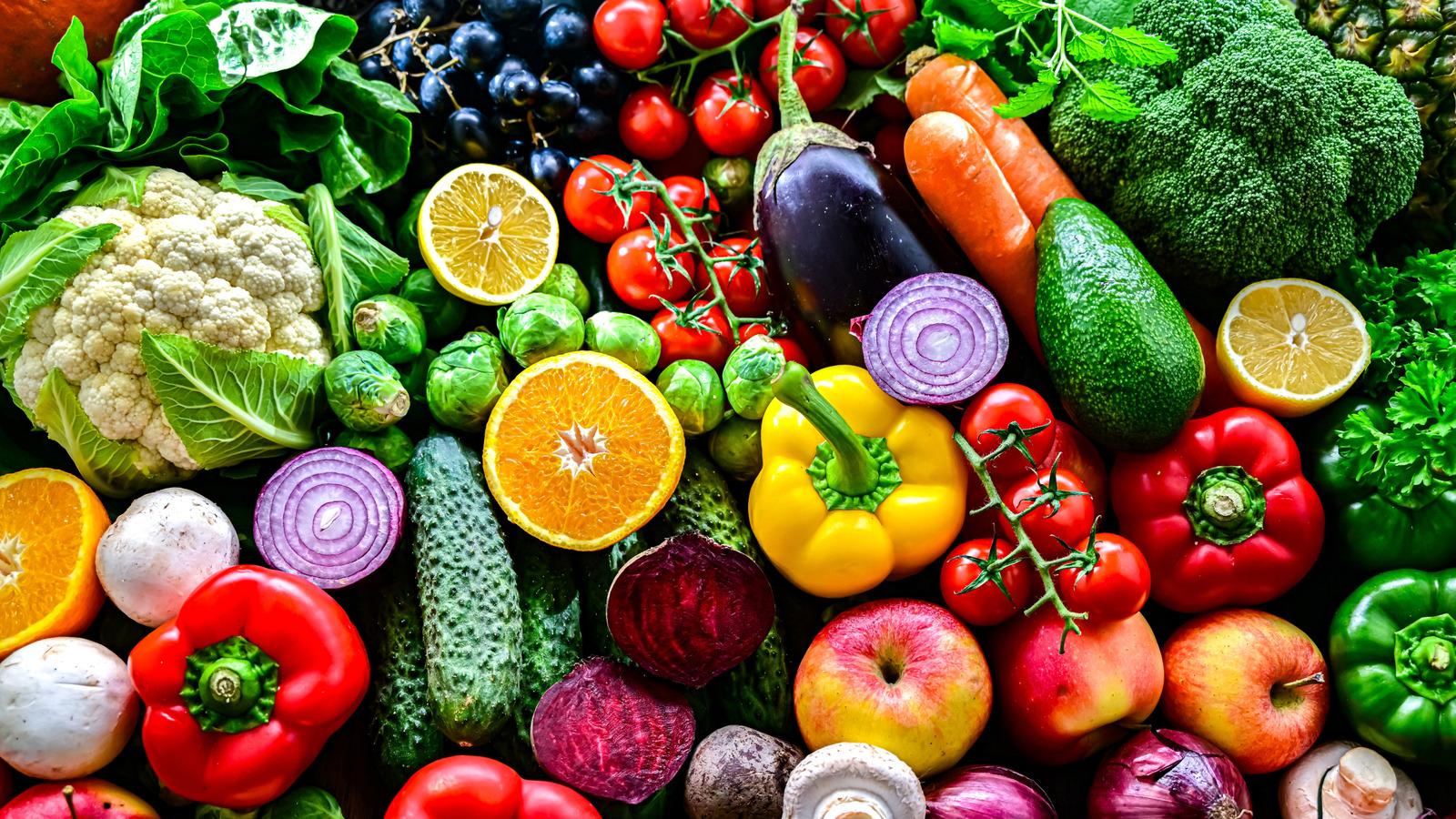
It's common knowledge that fruits and vegetables have enormous health benefits. You may have heard the "five a day" guideline (eat five servings of fruit and vegetables every day), which is backed by a 2021 study that showed this consumption recommendation "[was] associated with lower mortality" via the American Heart Association. But what exactly are the health benefits you're gaining to help you live longer? Well, it really depends on the type of produce you're eating, so it's important to have a diverse diet to cover your bases. From staying hydrated, to getting a proper dose of fiber and vitamins, and even lowering your cancer risk, see our list of the list of the fruits and veggies to add to your shopping cart, as well as how they'll improve your overall wellbeing.
Produce with a high water content helps keep you hydrated
Xia Jin/Getty Images
Most Americans don't drink enough water daily. The Mayo Clinic says that most people need 11.5 to 15.5 cups of water a day (from all sources, including drinking water), though that number varies based on a variety of factors. A staggering 75% of Americans drink just 2.5 cups of water a day (per Kettering Health). If you're lagging filling up your water cup each day, you can also get your intake from produce with a high water content.
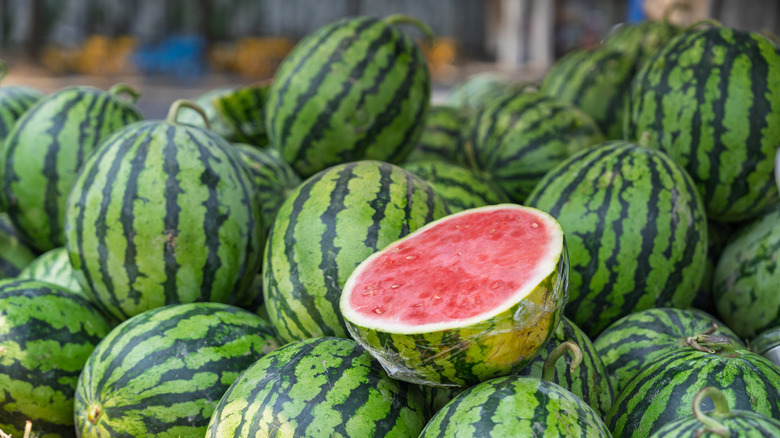
Watermelon is probably the most obvious fruit example. In fact, it's 92% water. But it's not the only fruit or vegetable that helps you stay hydrated. Strawberries, citrus, pineapples, mangos, and kiwis are all excellent fruits for hydration. As for vegetables, you can bet on tomatoes, celery, cucumbers, broccoli, and zucchini helping you to get closer to your daily water consumption goals. For maximum hydration benefit, though, they all should be eaten raw.
Staying hydrated keeps you healthy and sharp in more ways than you might realize. It helps with digestion, reduces the likelihood of kidney stones, reduces joint pain, and assists in building muscle tone. Water increases metabolism, too, and can actually help with weight loss.
Leafy greens are packed with vitamins
Mirror-images/Getty Images
Multivitamins and other supplements are big business, and half of Americans take one daily. Per Johns Hopkins, that's over $12 billion spent annually. And while it's true we need to make sure to get enough of the necessary vitamins and minerals — how we get them matters, too. All that money might be better spent on nutrient-dense foods including fruits and vegetables, Johns Hopkins says.
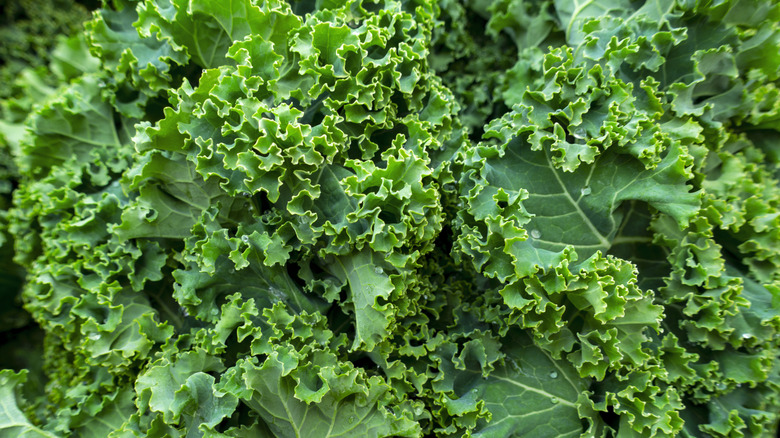
Lots of produce is high in various vitamins, but there are certain so-called superfoods that punch above their weight in terms of vitamin content. Dark leafy green vegetables are exceptionally good for that. Vitamins A, C, E, and K are abundant in greens like kale and spinach, while broccoli and bok choy also have B vitamins. The darker the green, the more nutritionally dense it is, so reach for a vegetable like collard greens or mustard greens for bigger benefits instead of something like iceberg lettuce. In fact, this sweet kale salad recipe hits all the notes in the vitamin department.
Folate, which is found in some dark greens, is good for your heart and can even prevent certain birth defects, per the USDA. Meanwhile, the vitamin K found in these greens reduces the risk of osteoporosis and inflammatory diseases. That effect is compounded by the fact that many leafy greens have a high calcium content, too, which is good for bones.
Most Americans lack fiber, a nutrient found in most produce
Fcafotodigital/Getty Images
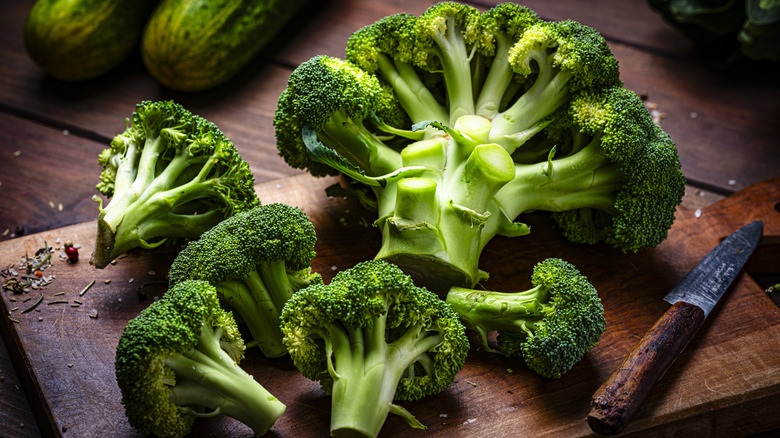
Almost all Americans get less fiber from their diet than they should. The statistics are startling: 5% of men and 9% of women get the amount of fiber they need, according to the American Society for Nutrition. Most Americans only eat about half the amount of fiber they should, but fruits and vegetables are a great way of increasing your intake.
Artichokes, green peas, broccoli, and cauliflower have particularly high fiber contents. On the fruit side of things, raspberries are a good source of fiber, along with pears, apples, bananas, and oranges. When a fruit or vegetable has an edible peel or skin, such as an apple or a potato, you should eat the skin too to get the most fiber. But before you take a bite, make sure it's thoroughly rinsed with water only (don't use soap or other cleaning products).
There are two main types of fiber: soluble, which dissolves in water, and insoluble, which doesn't. Soluble fiber is typically found in foods like beans and fruits, and helps lower cholesterol and blood sugar while slowing down digestion. Insoluble fiber helps move food through the digestive system and reduces constipation, and it's found in foods like whole grains and vegetables. Most produce contains both soluble and insoluble fiber, and both are necessary.
These colors are best for your heart
topimages/Shutterstock
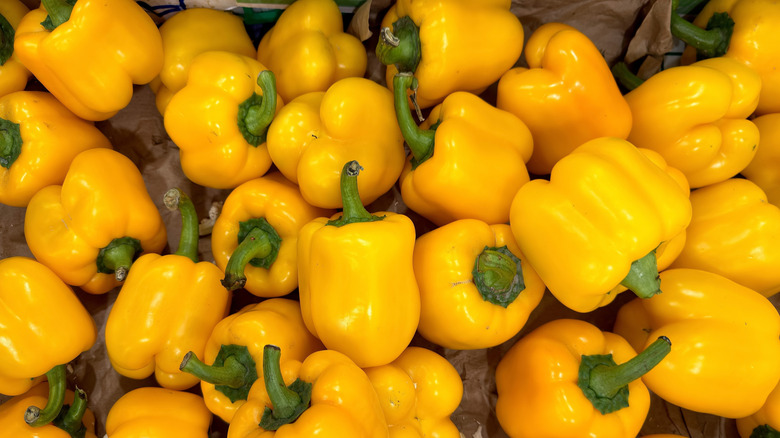
Almost every fruit or vegetable has significant health benefits, but they also almost all have different benefits. One of the surprising ways to tell what benefits a fruit or vegetable might have is by its color. In fact, red, orange, and yellow produce tends to have similar benefits that relate to heart health.
Carotenoids are a type of antioxidant. Carotenoids are particularly good at battling free radicals, unstable molecules in your body that can lead to various forms of illness. They also act as a natural pigment what makes red food red naturally, like strawberries, raspberries, tomatoes, beets, red peppers, and red onions. Red foods are rich in lycopene, a particular type of carotenoid that reduces the risk of heart disease. Meanwhile, yellow and orange foods like carrots, sweet potatoes, bananas, mangos, and peaches have beta cryptoxanthin, another carotenoid that may also help prevent heart disease.
No food prevents cancer, but fruits and vegetables lower your risk
Prostock-studio/Getty Images
Approximately 90% of all cancer cases can be attributed to environmental or lifestyle factors, not inherent genetic defects, according to a 2008 study. That means a good diet can help reduce the chance of getting cancer, though it can't prevent it entirely.
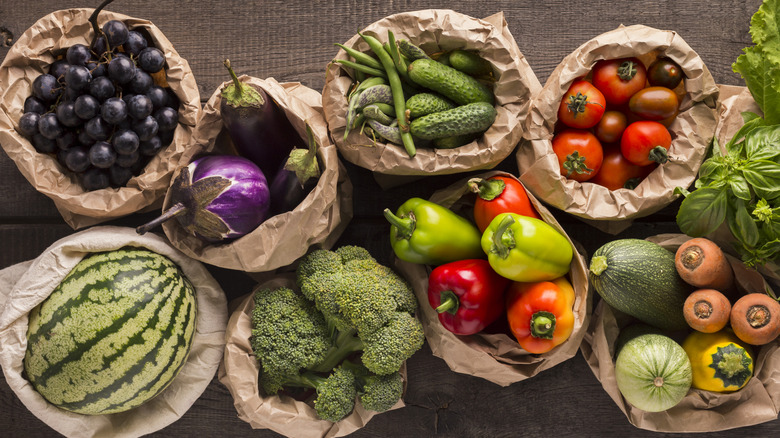
Cancer specialists studied the relationship between fruit and vegetable consumption and breast cancer over a 30-year period. The results, published in the International Journal of Cancer in 2018, suggested that "higher intake of fruits and vegetables, and specifically cruciferous and yellow/orange vegetables, may reduce the risk of breast cancer."
Why is that? The authors of the study point out that fruits and vegetables are rich in fiber, vitamins C and E, and carotenoids, which are all naturally anti-carcinogenic. While that study only looked at breast cancer risk, other research shows that most brightly-colored fruits and vegetables carry similar benefits in reducing cancer risk through phytochemicals such as antioxidants. Research suggests these actually work best in combinations of healthy foods — so eating two different types of vegetables will give you more health benefits than the same amount of just one type.

 English
 Arabic
 French
 Portuguese
 Deutsch
 Turkish
 Dutch
Dutch
 Italiano
 Russian
 Romaian
 Portuguese (Brazil)
 Greek
Greek