



Bettmann/Getty Images
We may receive a commission on purchases made from links.
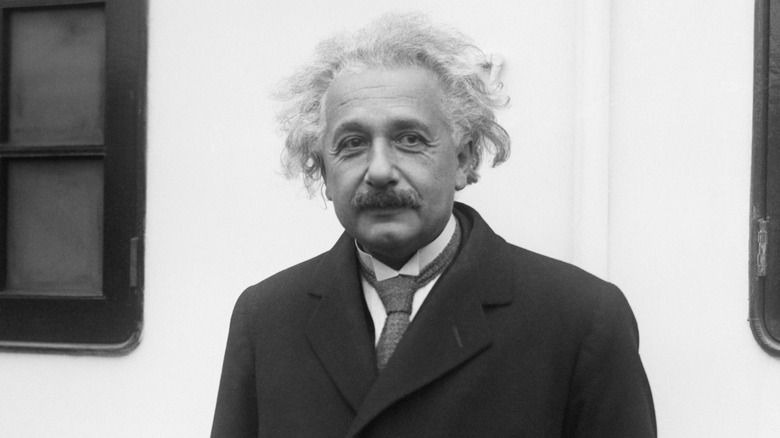
It's easy to picture the late, great Albert Einstein spending his time crouched over books, writing out formulas on chalkboards, and teaching in lecture halls. But the developer of the theory of relativity was also like a lot of us; he took time out for rest and relaxation, he sharpened his hobbies (Einstein played the violin), and he indulged in his favorite foods, which were by no means fancy. In fact, if there was one thing he couldn't get enough of, it was mushrooms.
Herta Waldow was Einstein's housekeeper when he and his family lived in Berlin from 1927 to 1933. She was interviewed extensively about the physicist's daily routines and what it was like to work for him; her answers were eventually published in the book, "Einstein at Home." Waldow explained, "He loved mushrooms...he would probably have eaten mushrooms three times a day." She also noted that her boss was quite fond of porcini mushrooms, which he would personally forage (along with chestnuts) during walks in the forests in Caputh, Germany. Einstein had a summer house in this town, so he spent quite a lot of time here. The house still exists and has been transformed into a museum for tourists.
Einstein adored porcini mushrooms
Kristina Kokhanova/Getty Images
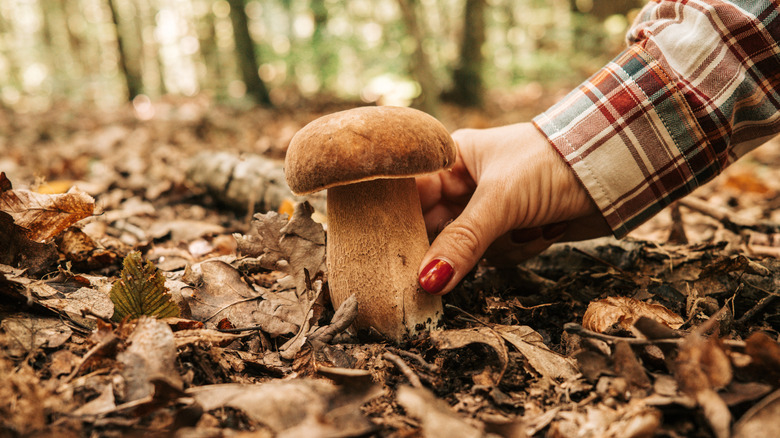
Porcini mushrooms, the kind that Albert Einstein preferred, are considered one of the best mushroom varietals in the world by connoisseurs. Known for their large size, meaty texture, and earthy, nutty flavor, they are highly prized and often found in dried form since they are perishable and rare in fresh form. Porcini mushrooms even once appeared in a feast that Lidia Bastianich made for the Pope.
It is presumable that Einstein had at least some basic knowledge of foraging, which is necessary if you want to hunt for mushrooms and not die. He likely found his German porcinis near pine, chestnut, spruce, or oak trees, where they thrive. And he would have needed to be aware of toxic mushrooms that resembled porcinis. Porcini mushrooms don't have gills on the underside, but rather a yellow, spongy appearance. Also, when it comes to these mushrooms, red spots are a warning sign that they shouldn't be harvested.
He was also quite fond of eggs. We don't know if he ate them along with mushrooms, but a porcini omelette would have been an absolute genius meal (no pun intended). Later in life, Einstein ate a largely vegetarian diet, and these mushrooms would have been wonderful to have on hand, as they mimic meat in texture and have a good amount of protein.

 Arabic
 French
 Spanish
 Portuguese
 Deutsch
 Turkish
 Dutch
Dutch
 Italiano
 Russian
 Romaian
 Portuguese (Brazil)
 Greek
Greek