


Hnvisual/Getty Images
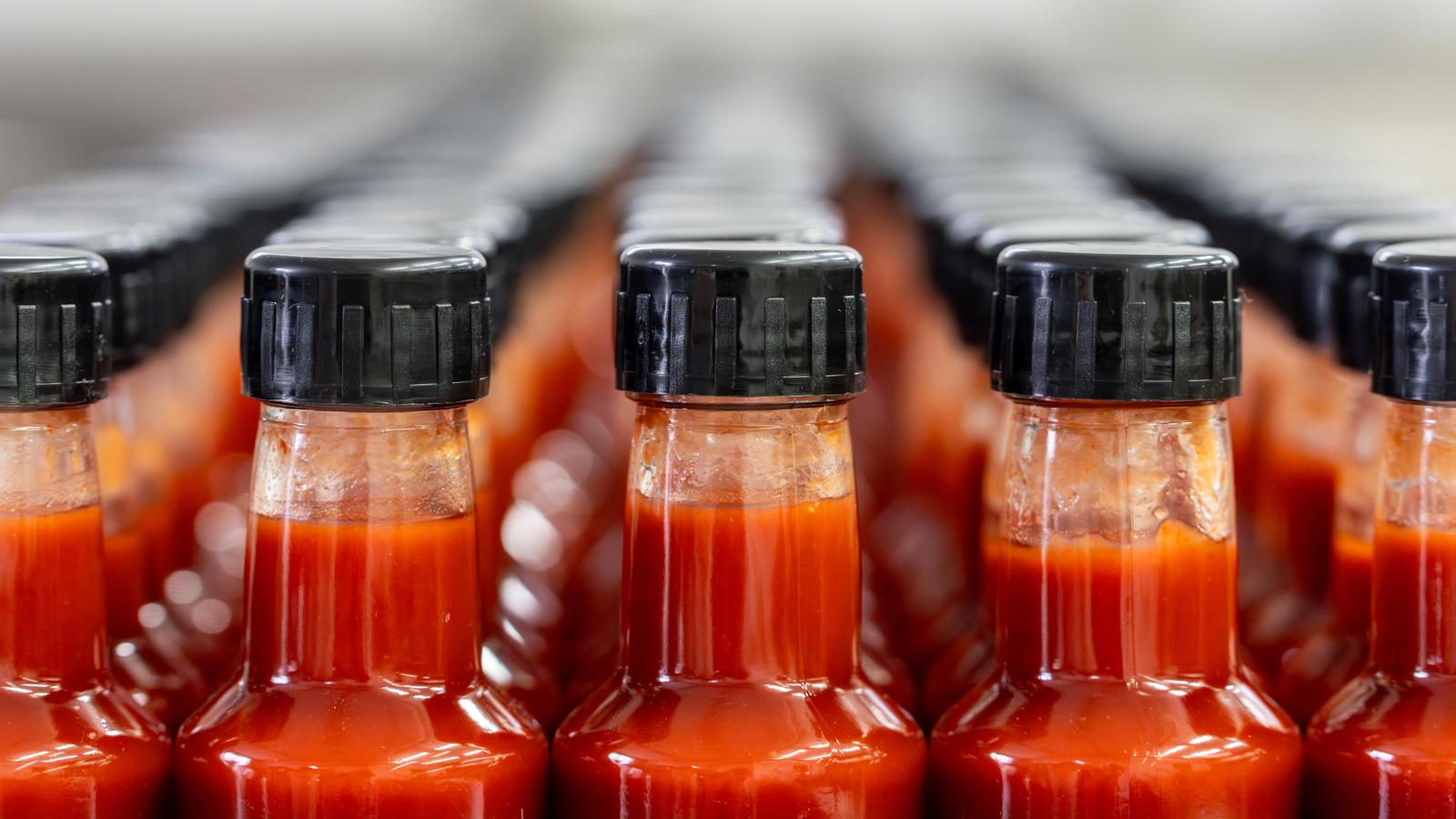
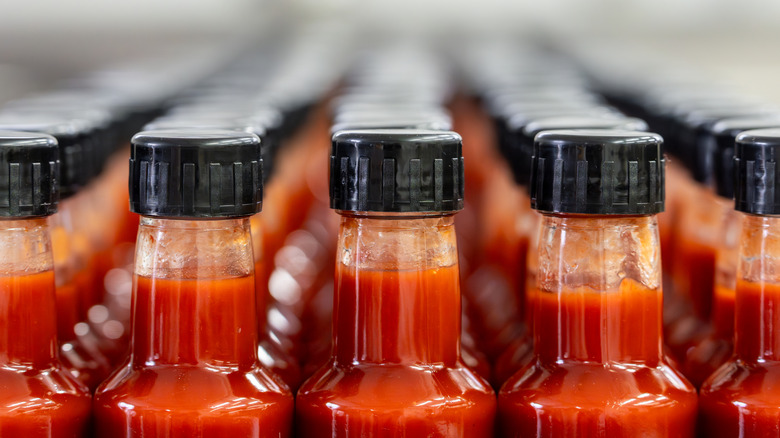
People everywhere understand the eternal struggle of trying to nudge just one more thing into the fridge: raw produce, leftover meals, or yet another bottle of an interesting condiment that you just had to try. Luckily, there are many foods that you do not actually need to refrigerate. You can leave some things out on the counter safely for a few days, depending on the item. But what about hot sauce?
The shorter answer is that hot sauce is one of the condiments you do not need to refrigerate. Most commercially available hot sauce brands contain significant amounts of acid and salt, which are natural preservatives. The acid, often in the form of vinegar, not only makes the hot sauce last longer, but also gives that signature hot sauce tang to balance the spiciness. A great example of this is the classic Tabasco Pepper Sauce. According to Does It Go Bad?, Tabasco sauces generally last up to six months outside the fridge after opening, and attributes this to the aforementioned vinegar and salt, plus the addition of fermented Tabasco peppers.
That said, different manufacturers have their own recommendations. This is often stated on the packaging with a "best by" date, which indicates how long they can guarantee their product stays at optimum quality. The maker of Cholula Hot Sauce recommends that its product be consumed within six months of opening. Additionally, some manufacturers, like sriracha maker Huy Fong Foods, also include specific preservatives like potassium sorbate and sodium bisulfite to help extend shelf life.
When does hot sauce need to go in the fridge and how can you tell if it's gone bad?
New Africa/Shutterstock
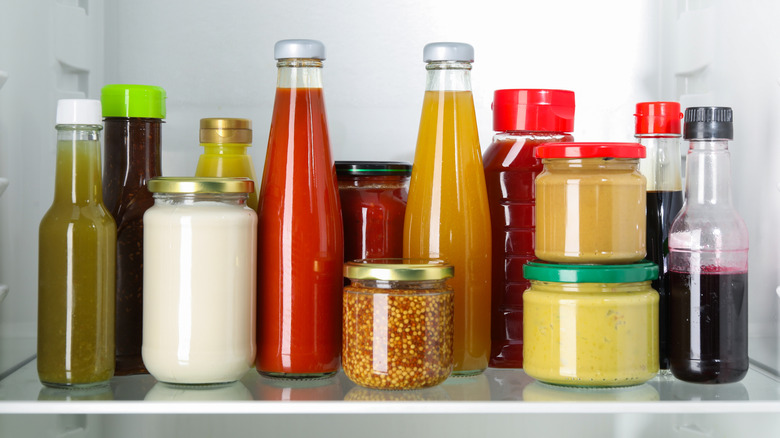
However, the full answer to the refrigeration question is a little more nuanced. There are several other questions that need to be answered first. For example, what are the other ingredients in the hot sauce? Yes, most hot sauces contain vinegar, salt, and chilies. But some brands might also include cooked fruit or vegetables, and even dairy components. These ingredients do not last as long without refrigeration, so be sure to check the label for the manufacturer's recommendations, as they would have their own fermentation and sterilization processes.
How about homemade hot sauce, like this spicy green hot sauce recipe? Some darkening in color due to oxidation is to be expected, along with mild separation of liquids from solids, especially if it has been left for some weeks. But if there is mold, or if it smells or tastes rotten, you should throw it out immediately.
There are also practical considerations. If you are a hot sauce fiend and can go through a bottle a week, refrigeration is probably not necessary. If you bought a large bottle, you can keep the main vessel in the fridge while decanting smaller amounts into a bottle to keep on the counter. Just remember that no matter the origin of manufacture or method of storage, you need to rely on your senses to tell if the hot sauce is still good for consumption.

 English
 Arabic
 French
 Spanish
 Deutsch
 Turkish
 Dutch
Dutch
 Italiano
 Russian
 Romaian
 Portuguese (Brazil)
 Greek
Greek