


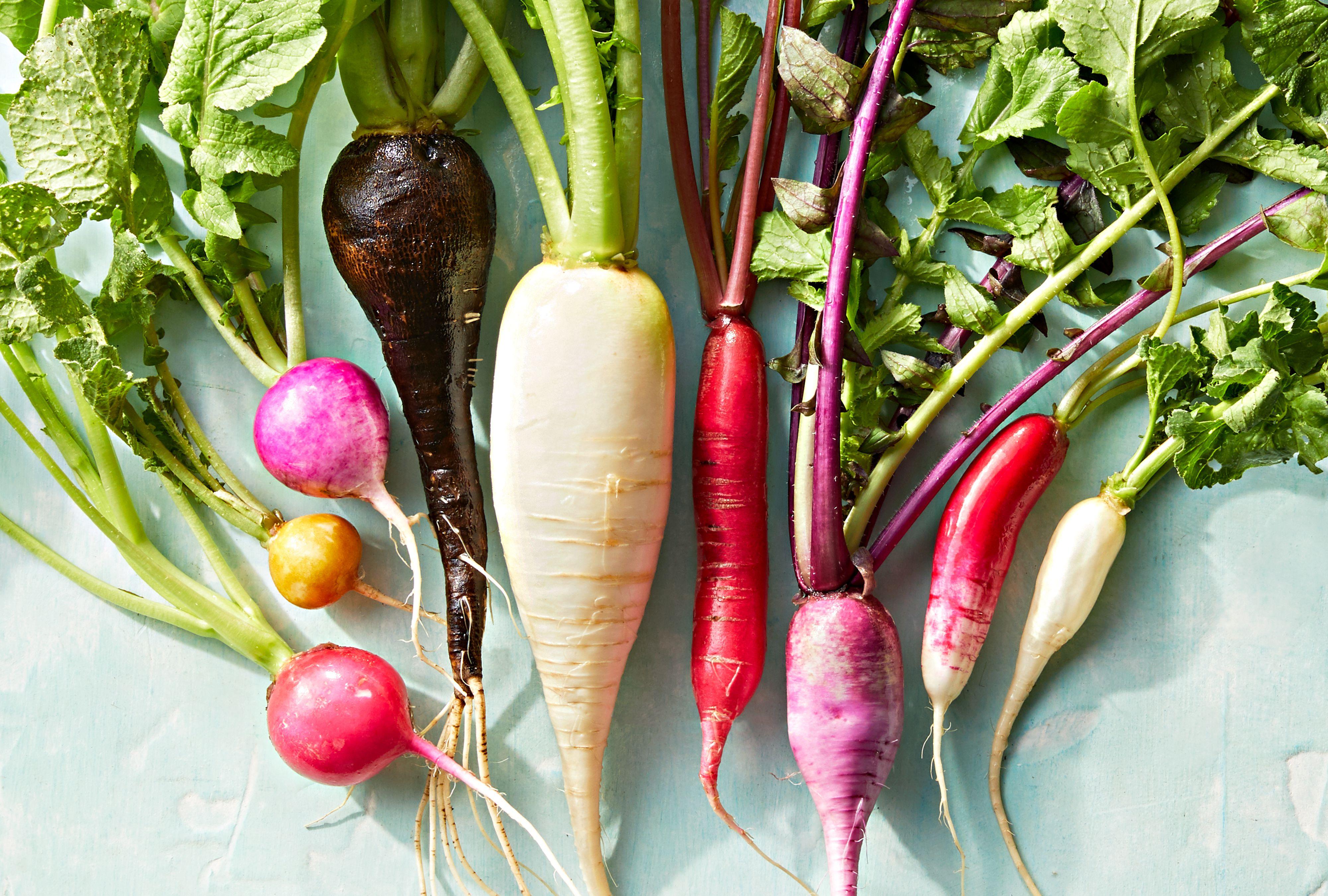
If you’re craving a reminder of the magic of Mother Nature, dip a clean, freshly-picked spring radish into some Irish butter. Top with a sprinkle of flaky sea salt, then devour.
Often thought of as just a sidekick or salad addition, peak-season fresh radishes are a thing of beauty on their own. Of course, you can also celebrate them in recipes that range from sautés to roasts to showstopping sandwiches. Ranging from mild to spicy, these crunchy root vegetables are versatile and beautiful, packing a big punch of fresh zippiness into each bite.
To help you make the most of every last root veggie in your radish haul, we’re sharing all about how to store radishes. Then to demonstrate the adaptable nature of this often-overlooked vegetable, we’re passing along our best radish recipes to put them to delicious use.
How to Choose Radishes
Radish varieties vary widely, from long, slender, and red French Breakfast to white, oblong Alpine to ruby-hued, round Sora. Depending on the type and the climate in which they’re planted, fresh radishes are typically available from April through October in many parts of the U.S. Both the leaves and the roots are edible.
When looking for radishes to harvest from your vegetable garden or to add to your basket at the grocery store or farmers market, seek out radishes with brightly colored leaves and roots. Those roots should be firm, crack-free, and shouldn’t give to pressure when gently squeezed.
Now that you have your fresh veggies, it’s time to master how to store radishes. Regardless of the radish type, Sarah Brekke, M.S., Better Homes & Gardens Test Kitchen brand manager, says the following steps will keep them crisp for as long as possible.
- Using a damp paper towel, wipe any dirt from the radishes' surfaces. Since excess moisture can speed up spoilage, and extra surface area exposure can lead to dryness, wait on the deep-clean and slicing steps.
- Trim off the greens and stems, if present. (Clean and use the greens ASAP in salads, soups, stews, pesto, or sautés.)
- Wrap the radishes in a clean, lightly-moistened paper towel, then place them in a zip-top plastic bag.
- Store anywhere in your refrigerator, such as the crisper drawer, and use within 5 to 7 days.
“Just before using, rinse the radishes thoroughly under cool running water, then slice or cut as desired,” Brekke adds.
Test Kitchen Tip: To potentially extend storage to 2 weeks, place your wiped-clean, trimmed radishes in a jar filled with water, Brekke suggests.
The Best Way to Keep Radishes Fresher Longer in the Fridge
Storing radishes in a zip-top bag or a mason jar is a wise move to maximize their fresh shelf life. If you need more time than a week or two, consider making quick-pickled radishes.
Most agricultural extension services advise against water-bath or pressure-canning pickled radishes, so stick with refrigerator pickles in this scenario.
Here’s a primer on how to make quick-pickled radishes, which should be safe to eat for up to 3 to 4 weeks:
- Using a damp paper towel, wipe any dirt from the radishes' surfaces.
- Trim off the greens and stems, if present. Thinly slice 1 pound of fresh radishes, or cut round small radishes into quarters.
- Divide these between two clean wide-mouth pint (16-ounce) mason jars.
In a medium, non-reactive saucepan, heat 1 cup white or apple cider vinegar, 1 cup water, 1 tablespoon sugar (honey or maple syrup also works), and 2 teaspoons kosher salt. Stir until the sweetener and salt have fully dissolved, then carefully pour the brine over the radishes, discarding any excess. Equally divide 2 teaspoons of your desired spices (such as dill seeds, cumin seeds, peppercorns, mustard seeds, or crushed red pepper flakes) between the two jars, let cool to room temperature, then add the lids and refrigerate overnight before enjoying on tacos, burgers, in salads, or on charcuterie boards.
Related
Can You Freeze Radishes?
Radishes can be frozen, but because they are mostly made of water, the texture when thawed won’t be the same,” Brekke admits. “They will be somewhat mushy” when you put frozen radishes to use in recipes.
For the best results, we suggest blanching the vegetables first. Here’s how to freeze radishes the Test Kitchen way:
- Heat a pot of water to a boil.
- Remove the radish leaves, then clean and trim the radishes, and then cut them into slices or cubes.
- Fill a large, clean bowl with ice water.
- Cook the cleaned and cut radishes in boiling water for 2 to 3 minutes.
- Use a slotted spoon to remove the veggies from the boiling water, then immediately plunge the radishes into the ice water to halt the cooking process.
- Drain in a colander, then arrange on a paper towel-lined tray to cool off and dry.
- Pat the radishes dry, then transfer them to a parchment-lined pan to flash-freeze for about 1 hour. Transfer the radish pieces to a zip-top freezer bag, label and date it, and aim to use it in cooked radish recipes (such as sheet pan roasts or skillet side dishes) within 3 months.
How Long Do Radishes Last?
Let your schedule and meal plan guide you in selecting the best way to store radishes. Here’s a review of how long these root vegetables last when stored following the methods above:
- Refrigerated radishes: About 1 week
- Refrigerator pickles: 3 to 4 weeks
- Frozen radishes: About 3 months
If your radishes appear discolored, develop cracks, have soft spots, or emit a sour odor, discard or compost them.
The Best Ways to Enjoy Radishes
Besides enjoying radishes in their natural glory with butter, we also adore adding them to crudité platters to use as a vehicle for recipes like Poolside Ranch Dip, Caramelized Onion Dip, Hummus, or Cottage Cheese Dill Dip.
If you prefer to let the radishes be even more of a star, feature them on open-faced Cucumber Tea Sandwiches or in this showy Rainbow Salad. Or put those briny beauties to good use in this Deviled Egg and Pickled Vegetable Salad. Everyone will be rooting for seconds.

 Arabic
 French
 Spanish
 Portuguese
 Deutsch
 Turkish
 Dutch
Dutch
 Italiano
 Russian
 Romaian
 Portuguese (Brazil)
 Greek
Greek