


JulianneDeWitt/Mashed
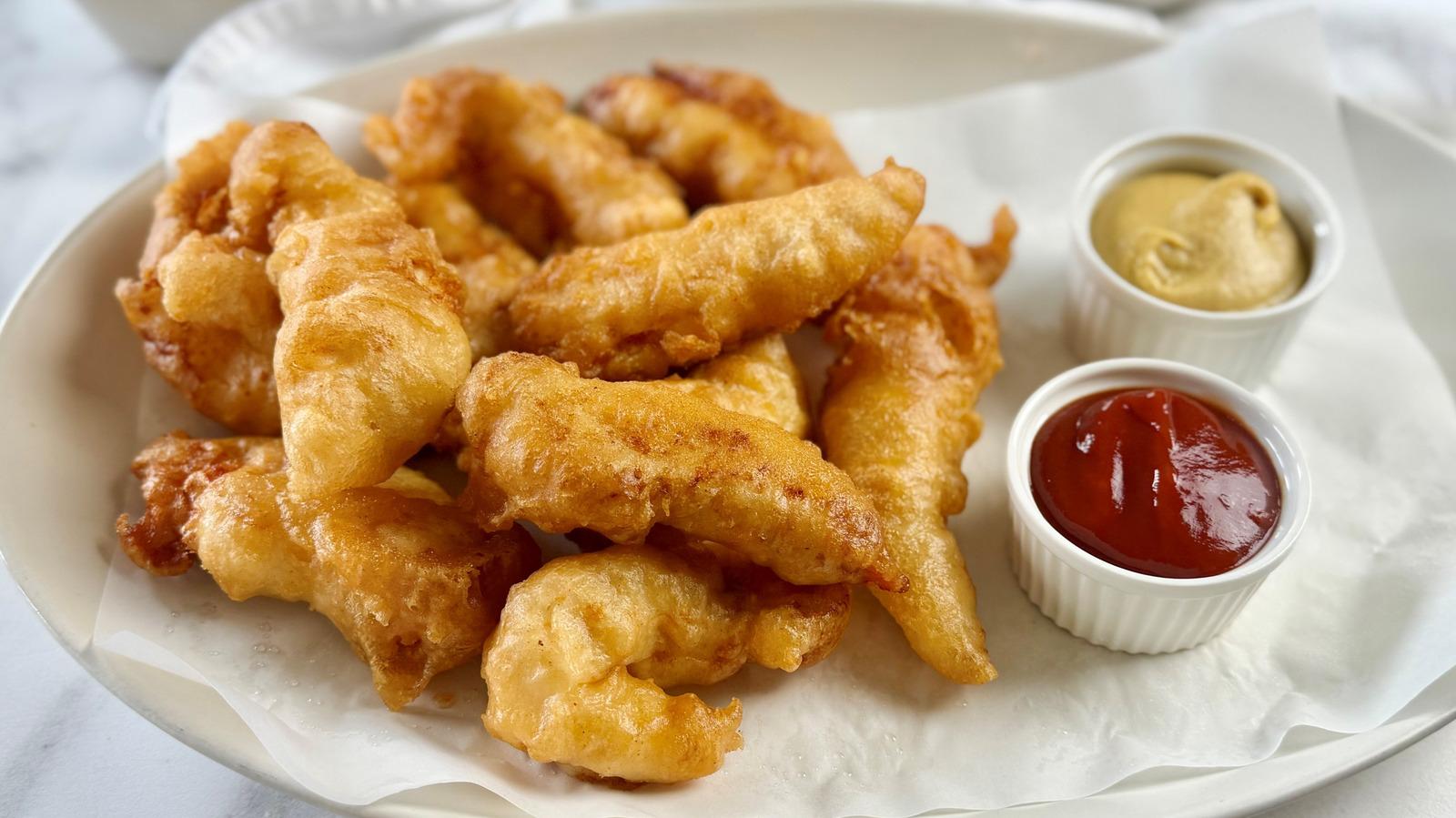
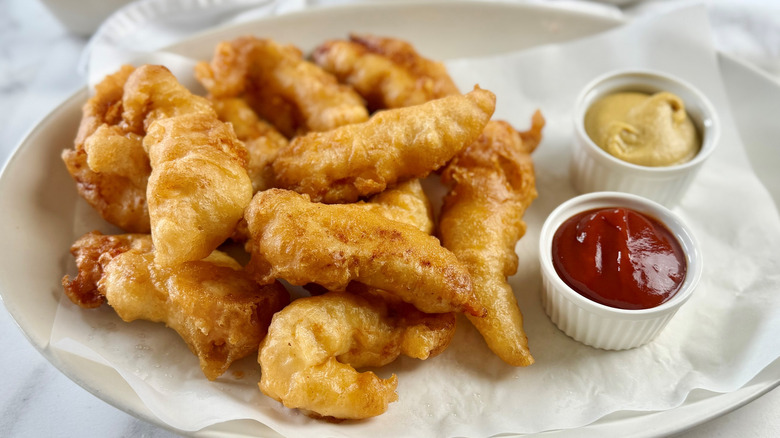
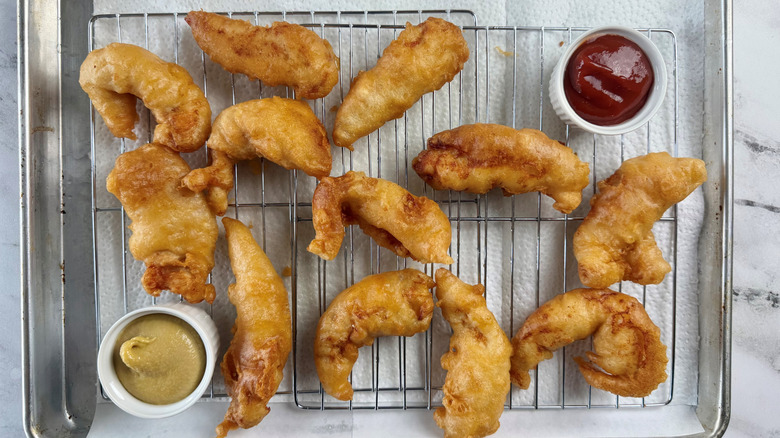
Long John Silver's, a chain named after one of literature's most notorious pirates, boasts one of the most extensive fish menus in fast food. Fried fish, grilled fish, shrimp, fish tacos ... it goes way beyond offering a simple fishwich. Even so, the restaurant has something for landlubbers, too — chicken tenders, or, as some call them, "planks." They are the perfect combination of tender and crunchy, they're full of flavor from a seasoned batter, and we recreate them perfectly in our copycat recipe, thanks to a few well-chosen ingredients.
"These chicken planks are golden and crispy on the outside and feature a light batter that fries up quickly while leaving the chicken tender and juicy," says developer Julianne De Witt. Her secret? As she revealed to us, "Cold club soda adds bubbles to the batter, making it airy and light." The one-two punch of cornstarch and baking powder also helps the chicken coating to crisp up as it fries. These chicken tenders taste great when fresh out of the fryer, served with your favorite sauces, but they're also excellent for meal prepping as they can last for up to four days in the fridge or be frozen for as long as necessary. Leftovers can then be repurposed into dishes such as salads, rice bowls, or burritos.
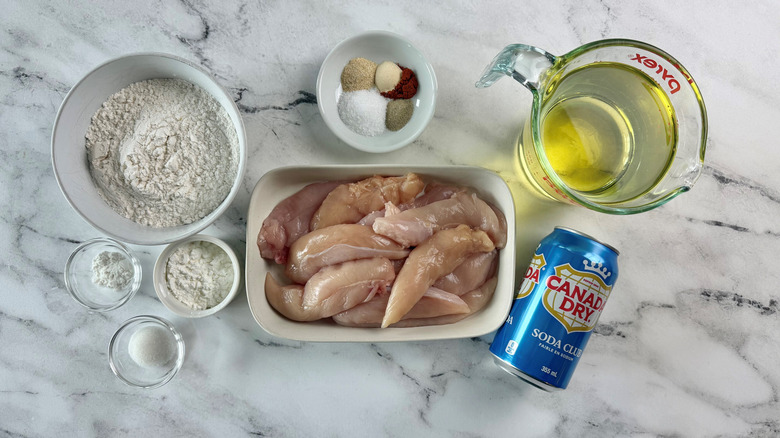
Collect the ingredients for copycat Long John Silver's Chicken Planks
Julianne De Witt/Mashed
The batter is made from flour, cornstarch, baking powder, garlic powder, onion powder, paprika, sugar, salt, white pepper, and club soda. You'll also need chicken tenders for dipping (thin-sliced chicken breast can be used as well), plus some cooking oil for frying. Canola is a good choice, but vegetable or another neutral-tasting, high-smoke-point oil will also work.
Step 1: Warm the oil
Julianne De Witt/Mashed
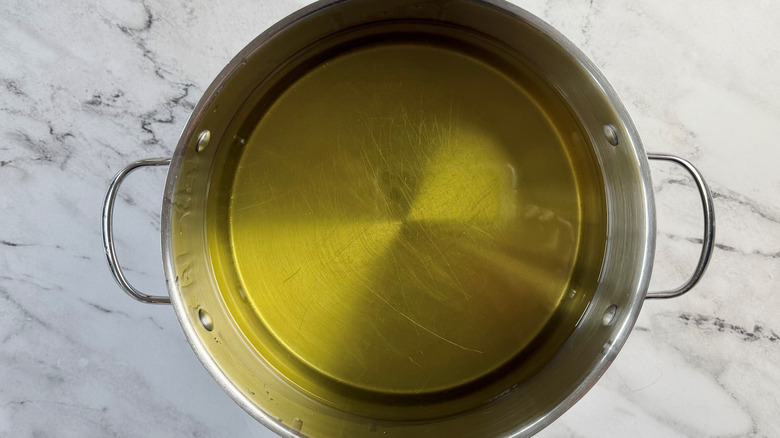
Pour enough canola oil into a large, heavy pot to reach about 2–3 inches deep. Heat the oil over medium-high heat until it reaches 350 F.
Step 2: Combine the dry ingredients
Julianne De Witt/Mashed
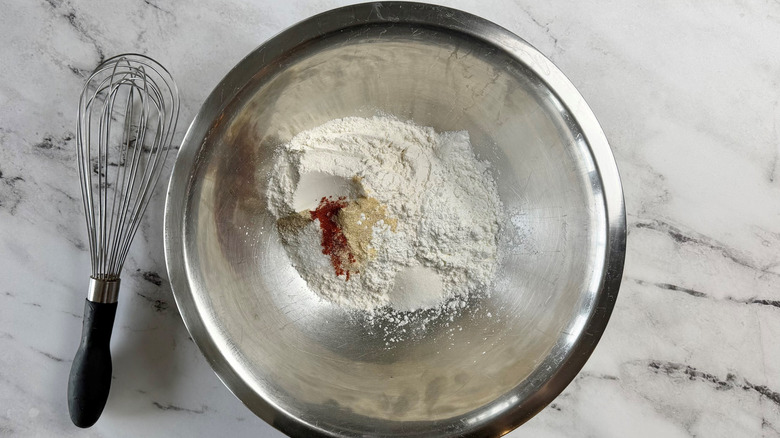
Make the batter by whisking the flour, cornstarch, baking powder, garlic powder, onion powder, paprika, sugar, salt, and white pepper.
Step 3: Add the soda
Julianne De Witt/Mashed
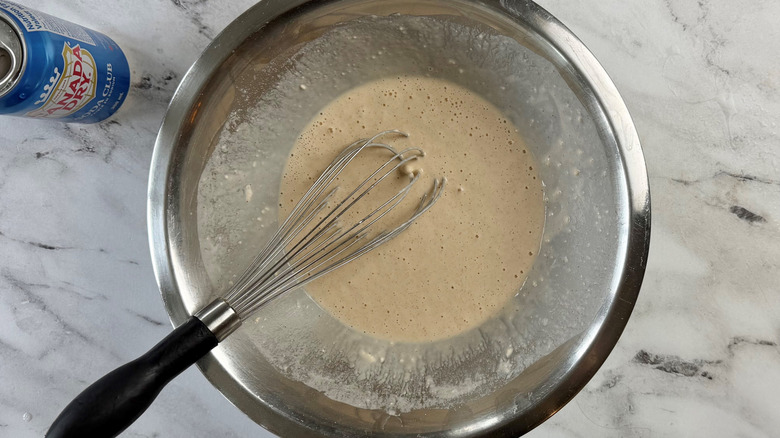
Slowly pour in the club soda and whisk. Do not overmix, some lumps are fine.
Step 4: Batter the chicken
Julianne De Witt/Mashed
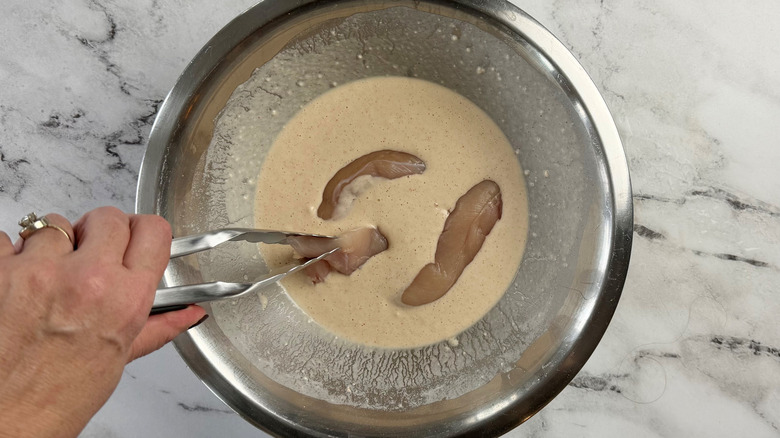
Working in batches of 4, dip the tenders into the batter.
Step 5: Put the chicken in the oil
Julianne De Witt/Mashed
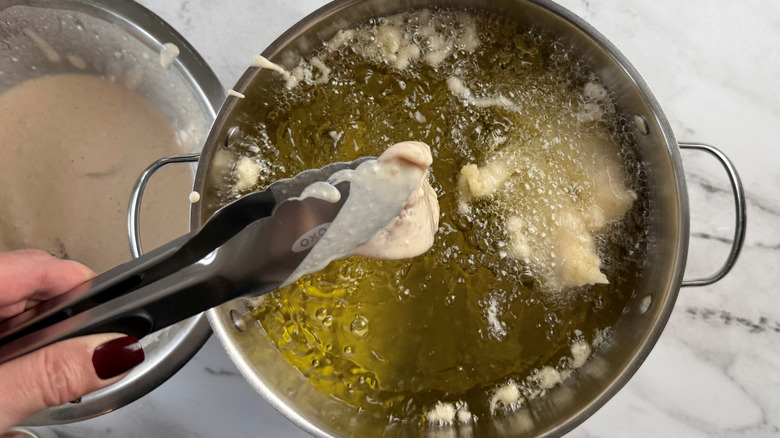
Allow any excess batter to drip off before carefully lowering the chicken tenders into the hot oil, making sure they are separated and not touching.
Step 6: Cook the first batch of chicken
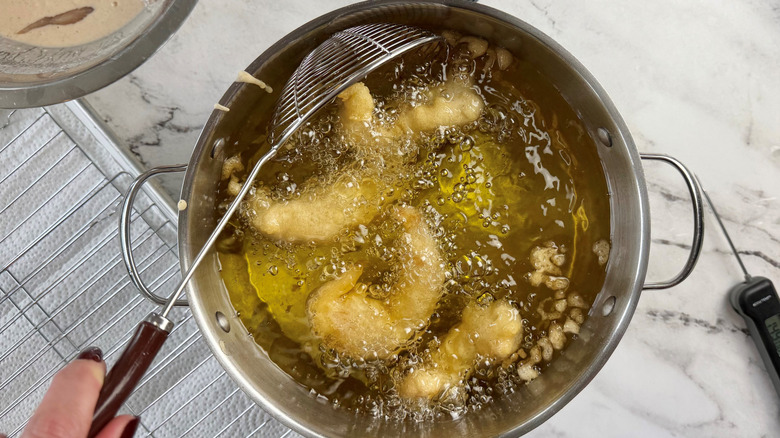
Julianne De Witt/Mashed
Fry for 4 to 6 minutes, turning occasionally, until the tenders are golden brown on both sides.
Step 7: Drain the chicken
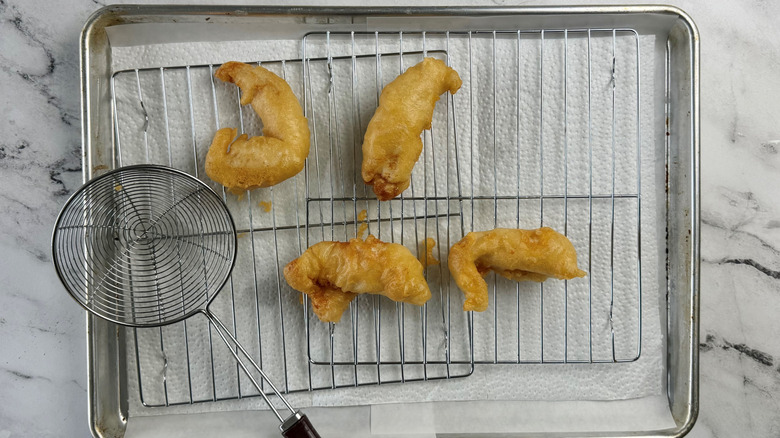
Julianne De Witt/Mashed
Remove the tenders with a slotted spoon and drain them on a rack-lined baking sheet.
Step 8: Cook the rest of the chicken
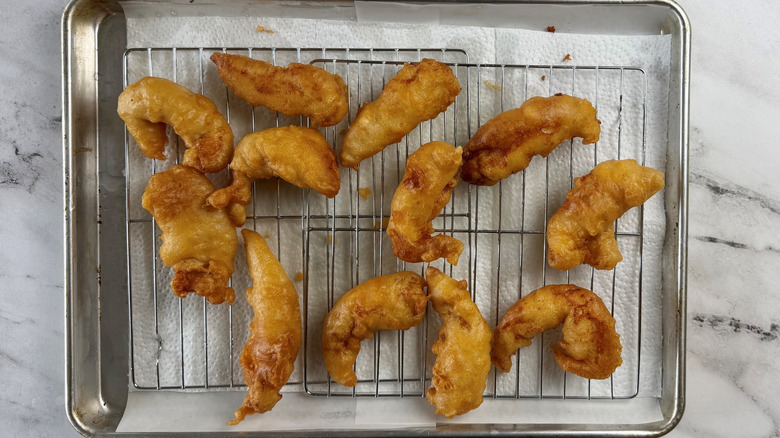
Julianne De Witt/Mashed
Repeat the previous steps with the remaining chicken. Serve immediately with your favorite dipping sauces.
How can I serve these chicken tenders?
Copycat Long John Silver's Chicken Planks Recipe
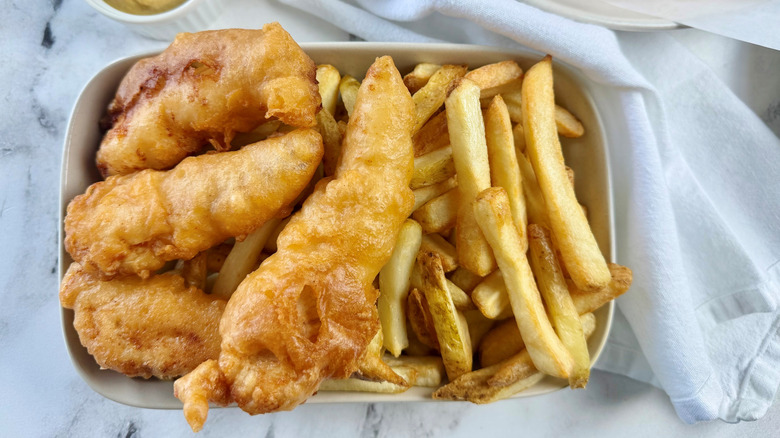
Our copycat Long John Silver's chicken planks are crispy on the outside and feature a light batter that fries up quickly and leaves the chicken tender.
- Canola oil, for deep frying
- 1 ¼ cups flour
- 2 ½ tablespoons cornstarch
- ½ teaspoon baking powder
- ½ teaspoon garlic powder
- ½ teaspoon onion powder
- ½ teaspoon paprika
- 1 teaspoon sugar
- 2 teaspoons kosher salt
- ¼ teaspoon white pepper
- 1 ¼ cup cold club soda
- 1 pound chicken tenders
- Pour enough canola oil into a large, heavy pot to reach about 2–3 inches deep. Heat the oil over medium-high heat until it reaches 350 F.
- Make the batter by whisking the flour, cornstarch, baking powder, garlic powder, onion powder, paprika, sugar, salt, and white pepper.
- Slowly pour in the club soda and whisk. Do not overmix, some lumps are fine.
- Working in batches of 4, dip the tenders into the batter.
- Allow any excess batter to drip off before carefully lowering the chicken tenders into the hot oil, making sure they are separated and not touching.
- Fry for 4 to 6 minutes, turning occasionally, until the tenders are golden brown on both sides.
- Remove the tenders with a slotted spoon and drain them on a rack-lined baking sheet.
- Repeat the previous steps with the remaining chicken. Serve immediately with your favorite dipping sauces.
| Calories per Serving | 781 |
| Total Fat | 53.8 g |
| Saturated Fat | 6.4 g |
| Trans Fat | 0.1 g |
| Cholesterol | 46.5 mg |
| Total Carbohydrates | 53.4 g |
| Dietary Fiber | 2.6 g |
| Total Sugars | 1.6 g |
| Sodium | 627.2 mg |
| Protein | 20.9 g |
The information shown is Edamam’s estimate based on available ingredients and preparation. It should not be considered a substitute for a professional nutritionist’s advice.

What are some tips for making this recipe?
Julianne De Witt/Mashed
One way to ensure that your chicken tenders come out nice and crispy is to leave a few lumps in the batter. If you stir it until it's completely smooth, it won't fry up quite as crunchy. You'll also need to make sure that each piece of chicken only has a light coating of batter — the step where you let the excess drip off is meant to address this. Too much batter means the end product will be too doughy.
As always, whenever you are deep-frying, it's important to maintain a consistent temperature, so using a deep-fry thermometer is highly recommended. If you let the oil cool off, the batter will absorb too much of it as it cooks, resulting in greasy chicken. If it gets too hot, you'll wind up with burnt chicken at best, or a potential fire hazard if things get out of hand. You should also avoid overcrowding the pan with too many tenders at once. Doing so will not only cause the oil temperature to drop but may also result in the tenders sticking together.
When the chicken is done cooking, the best way to drain it is on a wire rack as the recipe directions recommend. If you simply plop the tenders down on a paper towel, the coating may become soggy.
Why does the soda need to be cold?
Club soda, seltzer, soda water, or whatever youcall carbonated water, it's a must-have ingredient for making the batter for these chicken tenders. Besides being bubbly, though, it also needs to be cold to have maximum impact. One of the main reasons is that the carbonation will start to dissipate as soon as you open the bottle or can, but colder soda water will keep its bubbles longer.
Yet another benefit of adding chilled liquid to the batter is that it prevents excess gluten from developing, and too much gluten would make the chicken coating chewy rather than crispy. Cold soda helps to keep the batter cold as well. When the cold-battered chicken hits the hot oil, this will "shock" it so that it sets up fast and becomes extra-crunchy. The reason this recipe calls for you to heat the oil before you make the batter is so the batter will still be cold and carbonated when the chicken is ready to fry. The soda itself should be added right before chicken-dipping commences, and for best results, it should be refrigerated unopened until that time.

 English
 Arabic
 French
 Spanish
 Portuguese
 Deutsch
 Turkish
 Dutch
Dutch
 Italiano
 Russian
 Portuguese (Brazil)
 Greek
Greek