


Trevor Srednick/Getty Images
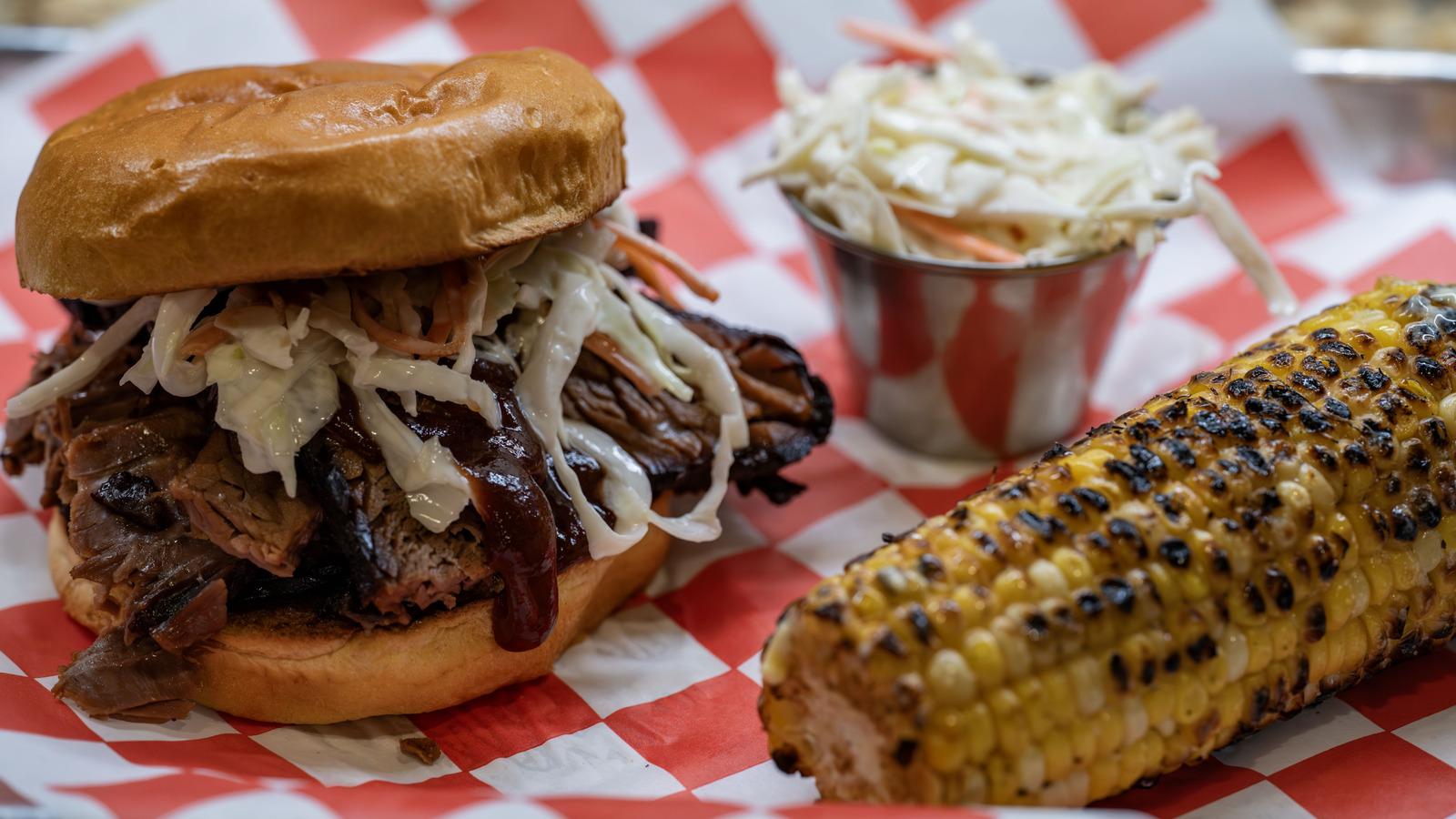
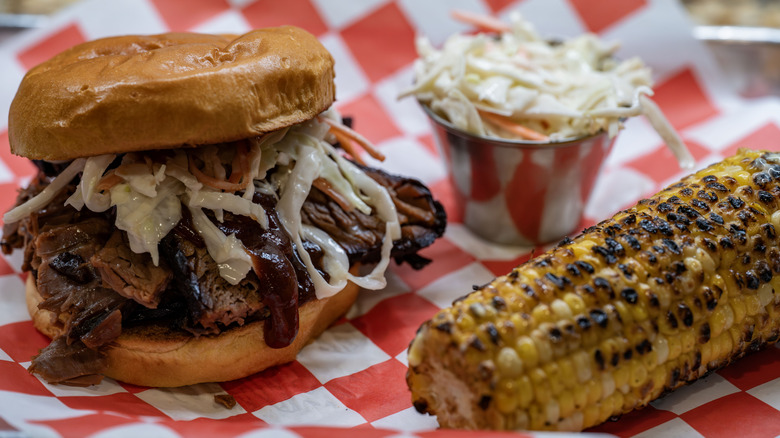
The staple barbecue sandwich we know and love today (with its four distinct varieties: Carolina, Texas, Memphis, and Kansas City) was developed in a southern region of the U.S. known as the "barbecue belt." The barbecue craze spread across the nation during the backyard entertainment boom of the 1950's (coinciding with the creation of the buoy-inspired Weber grill). Soon, restaurants cashed in on the phenomenon, and the industry grew. According to Industry Business Information Systems, the U.S. currently has 15,450 barbecue restaurants — an increase of 2.6% from 2023 to 2024. But behind the scenes, some of our favorite, most well-known chains — such as Dickey's Barbecue Pit, Smokey Bones, and Ray Ray's Hog Pit — are struggling.
Barbecue restaurants require dedicated training, specialized equipment, and long hours to operate successfully. In a thread providing advice to a poster who was considering opening up a barbecue business, one Redditor explained, "Hours are long for any restaurant, but for bbq, it can be 24 hours. People want fresh food, not leftovers, so you start your briskets at 2 am to be ready for dinner or the night before to be ready for lunch." Perhaps this has something to do with why parent corporations are choosing to redirect funds to other (non-barbecue) restaurant chains, and why smaller regional owners are choosing to run lean — operating with fewer locations. We're taking a look at these three once-popular barbecue chains and examining what led to their present-day struggles.
Dickey's Barbecue Pit

Jon Kraft/Shutterstock
Dickey's Barbecue Pit has had a tough go in recent years, with evidence of internal conflict dating back to 2017 through 2024. Our examination of why the U.S.'s biggest barbecue chain is struggling led to the discovery of possible trouble in paradise — specifically, strained relations between the corporation (Dickey's Capital Group) and its franchisees. As reported in Restaurant Business Magazine (RBM), several Dickey's franchisees have declared bankruptcy and brought lawsuits claiming that first-year operating costs were not properly represented to them. RBM reported that during its fiscal year 2024 Dickey's closed 97 locations while opening 12, resulting in a net closure of 85 restaurants. Dickey's ended fiscal year 2024 with 366 U.S. locations (continuing on a steady decline from its peak — 564 locations — in 2017). Sales were also down by 18.1% for Dickey's in 2024, as reported by Nation's Restaurant News.
According to Dickey's, the company started to make a turnaround in 2025. Dickey's website noted it opened 46 new locations between January and August of 2025, and was on track to grow for the year. "The reality is that Dickey's closures were part of a difficult but necessary process to right the ship; a process many of its competitors are still struggling to complete," the website stated. But reports in December 2025 claimed franchise operators were again unhappy — this time with Dickey's marketing and free item strategies that were impacting their margins, according to Restaurant Dive.
Smokey Bones
Eric Glenn/Shutterstock
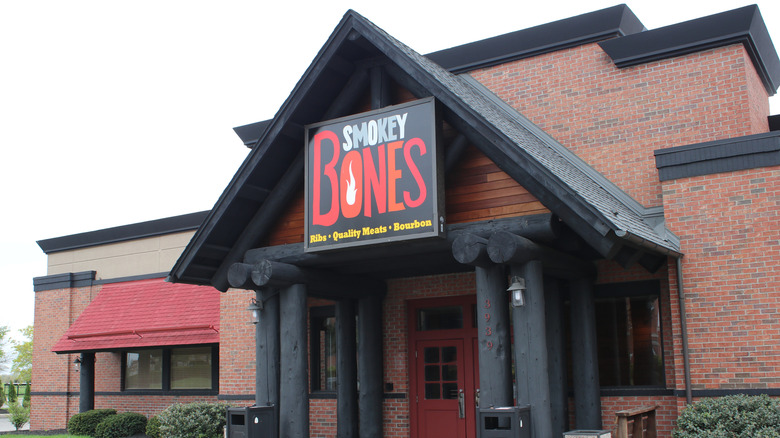
We hate to see a restaurant close its doors under any circumstances, but when a barbecue restaurant that takes the time to smoke its pork for 11 hours over hickory every night is forced to shut down, we call that a travesty. The 11-hour overnight prep is just one of 12 little-known facts about the Smokey Bones barbecue chain that we think are worth noting. If the Smokey Bones restaurant in your neighborhood is still serving up barbecue platters, consider yourself lucky, as many of the chain locations have recently started to close due to financial hardships within the corporate structure.
After filing for Chapter 11 bankruptcy in January 2026, Smokey Bones' parent company, FAT Brands, announced it would close 14 locations of Smokey Bones Barbecue in eight states. The company said it intended to allocate its resources to another chain, Twin Peaks (sports bars), according to TheStreet. FAT Brands also indicated it would close some of its other chain stores — two Johnny Rockets and five Yalla Mediterranean restaurants. In a FAT Brands press release, CEO Andy Weiderhorn explained the decision to file for bankruptcy and restructure the organization, noting, "The chapter 11 process will provide us with the opportunity to strengthen our capital structure to support our concepts and ensure they remain at the forefront of their sectors."
Ray Ray's Hog Pit
Regional chains are also being swept up in the national decline of the barbecue restaurant industry. Hit especially hard are the South and the Midwest, where an Ohio chain recently closed almost half of its locations. Smoke Ring LLC, which operates Ray Ray's Hog Pit in the suburban Columbus area, filed for Chapter 11 bankruptcy in December 2025. Prior to filing, the company reportedly closed two of its stationary trailer locations (Johnstown and Marion) and a mobile food truck (Linworth).
In an Instagram post that opened with the phrase, "BACK TO OUR ROOTS," the owner of Ray Ray's explained the decision to close the three locations while four remained open: Maxtown, Clintonville, Granville, and Land Grant. "We want to put our full energy into the locations you know and love, continuing to create the flavors, experiences, and memories that make our bbq special," the post stated. Comments on the post were mixed, with some customers expressing frustrations at the locations' closing and suggesting the chain's prices were too high for the food style and concept. Other commenters showed support and solidarity. One comment from another local establishment, Mama Mimi's Take N' Bake Pizza, said, "Small food businesses are struggling and making those choices isn't easy. Support the local guys get out of your car, house and spend your money where your neighbors work."

 English
 Arabic
 French
 Spanish
 Portuguese
 Deutsch
 Turkish
 Dutch
Dutch
 Russian
 Romaian
 Portuguese (Brazil)
 Greek
Greek