


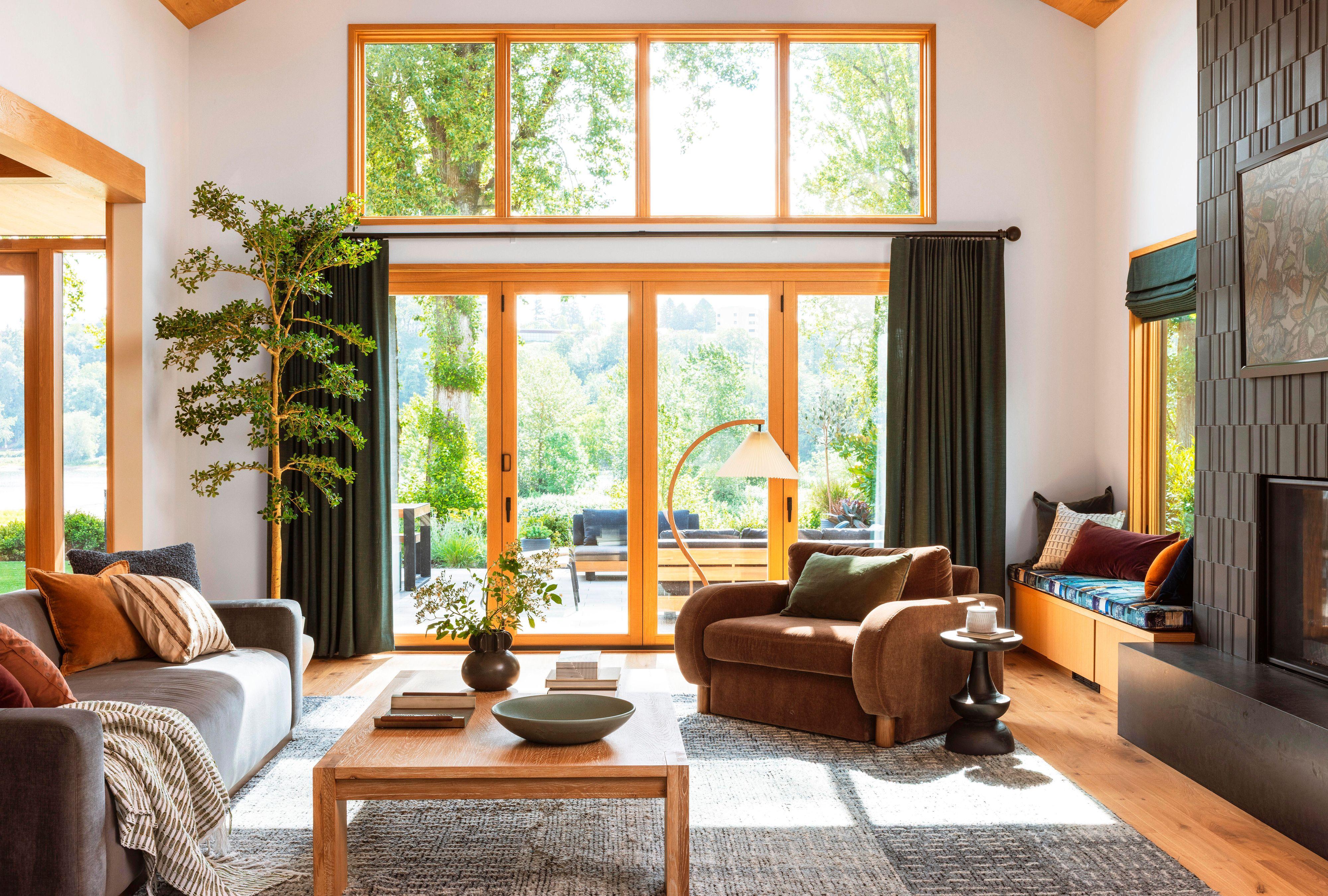
Like a delicious meal and a beautiful tablescape, effortless conversation is a hallmark of a great gathering. But unlike the lighting, music, menu, and planned activities, conversation is not something you can easily control–but you can help encourage it by how you lay out a room.
“The layout of a space is the unsung hero of successful conversations,” says John Hare, principal designer with V&R Interiors and Core Design. “Thoughtfully designed areas not only facilitate engagement but also create an inviting atmosphere that encourages guests to connect," says Hare.
"When a room is thoughtfully arranged, conversation happens naturally,” agrees Mary Best, the designer behind Mary Best Designs. “Layout is everything, it’s what makes a space feel welcoming instead of awkward. You can have beautiful furnishings, but if people can’t comfortably face each other or move through the space with ease, it loses that sense of connection.”
Check out these simple ideas for furnishings and arrangements that will help you create an entertaining-friendly room layout.
- John Hare is the principal designer with V&R Interiors in Santa Fe and Core Design in San Antonio.
- Mary Best is the designer behind Mary Best Designs in Milwaukee.
- Amie Freling-Brown is an artist and designer at Meme Hill Studio in Rochester, New York.
1. Don’t Place Everything Against the Walls
Resist the urge to position furniture against the walls. “This is probably the biggest mistake I see people make,” says Amie Freling-Brown of Meme Hill Studio, noting that it can feel like people are having to shout across the room to one another when furniture is pushed against the room’s perimeter. “It’s amazing how much warmer and more inviting a room feels when furniture 'talks' to each other instead of the walls,” Freling-Brown says.
“Instead, let [furniture] ‘float’ in the space,” says Best. “To create a layout that truly facilitates conversation, start by anchoring the room with a coffee table and arranging your seating around it, ideally about 18 inches apart,” advises Best. “This setup creates a cozy, inviting area that naturally brings people together and makes conversation flow easily.”
Related
2. Organize Intimate Seating Arrangements
As you’re floating furniture, look for opportunities to create groupings. “The specific arrangement of seating can significantly impact how guests interact with one another,” says Hare. “By organizing seating into smaller, intimate clusters, you create an environment that fosters personal connections and engaging dialogue.” Hare adds that this strategy will help eliminate the distant feeling that can exist in larger spaces or within more formal layouts.
For added success, Hare recommends incorporating a range of seating heights in your conversation areas. “Mixing various types of seating, such as armchairs, benches, and poufs, introduces an inviting and dynamic element to the layout, making it more approachable and engaging for guests,” Hare says.
Brie Williams
3. Rely on Rugs
Rugs play an important role in the function and look of conversation-friendly room layouts. "Utilize area rugs to visually delineate conversation zones,” says Hare. “This technique adds a cozy touch and signals to guests that these are designated gathering spots.”
Freling-Brown also recommends using rugs to delineate conversation zones, emphasizing the importance of choosing the right size. When it’s too small, floating furniture and intended conversation spaces may look untethered or even difficult to identify or navigate; too large, it loses the gathering effect. “Ideally, the front legs of all your main seating pieces should sit on the rug,” says Freling-Brown. “A good and appropriately sized rug grounds the furniture, defines the space, and makes the whole area feel pulled together.”
4. Focus on Creating Flow and Accessibility
Sharing an end table between two perpendicular sofas may be convenient for daily living, but that closed corner keeps people from easily flowing through the space.“I always walk through a space before finalizing the layout to make sure the flow feels natural,” Freling-Brown says. “When you’re entertaining, no one wants to squeeze between chairs or bump into furniture just to get to the kitchen.” Your entertaining space needs to allow for movement into and around conversations.
“When guests can move around freely, they are more likely to engage with others and participate in conversations rather than feel confined to one area,” says Hare. “A layout that promotes flow enhances the overall social atmosphere and encourages mingling.” Hare recommends 2-3 feet of distance for clear pathways that facilitate easy movement.
Hare also reminds us that guests should be able to easily navigate to amenities such as food and drink stations. “Position refreshments near seating areas but not directly within them to allow guests to grab snacks and drinks without interrupting ongoing conversations,” Hare recommends.
David Tsay
5. Incorporate Versatile Furniture
Outfitting your entertaining space with movable and multi-functional furniture makes it easier for you to transition layouts for hosting. “Selecting furniture that can change its form or function enhances the adaptability of the space, making it suitable for various social scenarios,” says Hare. It also allows the layout to evolve during the gathering: “Whether through the arrival of more guests or the transition to different activities—having adaptable furniture allows for quick rearrangements to accommodate the needs of the moment.”
“Add a few lightweight accent chairs, ottomans, or benches that can double as extra seating when you’re entertaining,” advises Best. “These pieces can be tucked under a console table or along a wall when not in use, then easily pulled into the mix as needed," says Best. Hare also recommends modular sofas because they can be reconfigured, and nesting tables, which can be condensed when not needed.
6. Choose a Round Dining Table
In the dining room, Best recommends round tables. "It naturally invites conversation,” says Best. “Everyone can see each other, and there’s no ‘head of the table,’ so it feels more relaxed and social.” In addition, Best likes round tables because they’re better for traffic when entertaining. “Especially in smaller spaces, there are no sharp corners to navigate,” she adds.
Marta Xochilt Perez | Designer: Michelle Adams
Additional Design Considerations for Enhancing Conversation
Layout is a significant factor in creating a great hosting space, but there's more you can do to elevate your space. Hare recommends these interior design tips to help build a conversation-friendly room.
- Lighting choices: “Soft, warm lighting creates a cozy and inviting environment that encourages relaxation and conversation,” says Hare. “Using dimmers or a variety of light sources, such as floor and table lamps, can help achieve a pleasant ambiance that enhances the overall experience.”
- Acoustic elements: “Incorporating soft furnishings, such as curtains, cushions, and carpets, can help absorb sound and reduce noise levels,” says Hare, noting that a quiet environment makes it easier for guests to converse without raising their voices.
- Personal touches: Interesting artwork and unique items in your space can also be conversation starters. “Strategically placing interesting objects within view invites guests to engage with one another, sharing stories and experiences related to what they see,” says Hare.

 English
 Arabic
 French
 Spanish
 Portuguese
 Deutsch
 Turkish
 Italiano
 Russian
 Romaian
 Portuguese (Brazil)
 Greek
Greek