


Growing up, my Mom was renowned—in our family and among her co-workers—as the queen of all things rolls and muffins. Mom’s sticky pecan rolls are the stuff of legends and have made dozens of holiday mornings sweeter, and her bran muffins were a staple in my brown bag lunches throughout grade school. She was a pro at many morning pastries, and passed along her passion for all of these recipes to me. But one thing we never savored or strived to make is something I didn’t realize was so ubiquitous until I started to travel internationally: scones. Sure, I had seen them on select bakery menus for years. However, I had no idea the mass appeal—and appetite—for scones until my late 20s.
Ever since my first trip to Europe, I’ve been on a mission to recreate something similar to the scone I savored there. As of yet, though, I’ve come up short. So when my editor asked me to look into Ina Garten’s Irish Scones, originally shared in 2020 leading up to St. Patrick’s Day, I gladly signed on to see if my search for the perfect homemade scone recipe could stop here.
How to Make Ina’s Irish Scones
There’s a wide world of scones out there. In America, scones are usually triangular, err on the crumbly and dense side, are loaded with mix-ins, and may be savory or sweet. (If they are sweet, American scones are frequently more akin to a cupcake than a biscuit. Recipes rarely skimp on sugar.) Over in Britain, scones are tender and flaky, round, and are usually more of a blank slate flavor-wise…although mix-ins may make an appearance. British scones are begging to be dressed up with jam, salted butter, and/or clotted cream. Irish scones are similar to British ones, just usually with a little less sugar and leavening than their UK counterparts, resulting in shorter round and flaky treats. Here, scones often come paired with Irish butter (naturally), jam, or clotted or whipped cream.
Here’s how to make Ina Garten’s Irish Scones:
- Make the dough. In a large bowl, combine all-purpose flour, sugar, baking powder, and salt. In a liquid measuring cup, mix cold heavy cream and lightly beaten eggs. Using a hand mixer or stand mixer fitted with a paddle attachment, add diced cold unsalted butter to the dry ingredients and mix on low. Once the butter pieces are about the size of peas, pour in the cream mixture. Mix until just blended. Toss dried currants with a dusting of all-purpose flour, and mix them only until the dried fruit is evenly distributed. (It’s okay if the dough is sticky and still has lumps of butter.)
- Shape the scones. Dust a clean surface with flour, top with the dough, and using clean hands, knead the dough to ensure no flour pockets remain. Flour a rolling pin and roll the dough to about ¾-inch thickness. Cut into 3-inch circles.
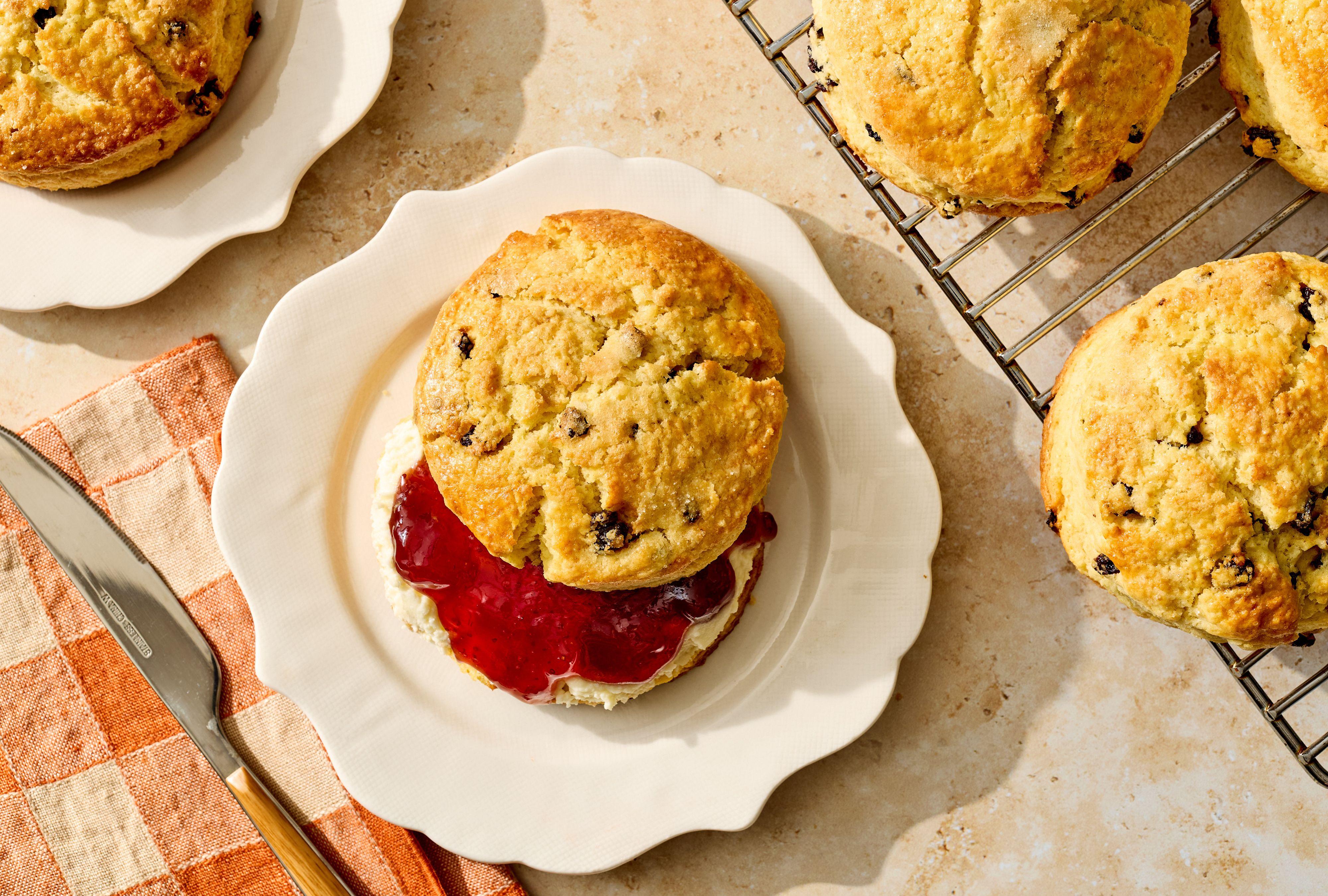
- Bake and enjoy. Place the scones on a parchment paper-lined sheet pan, brush with egg wash, and sprinkle with sugar. Bake at 400° F for 20 to 25 minutes, or until the center is baked and the top is golden. Serve warm with clotted cream and strawberry jam.
Tips for Making Scones
For Ina’s Irish Scones or any similar recipes, here are a few helpful tips and tricks I learned during my initial research, throughout my hands-on trial, and from our Test Kitchen.
- Don’t overwork the dough. If you’ve ever made bread, it can be tempting to keep the mixer on for an extended period of time or knead the dough over and over again. Try to resist the urge. Scones are one baked good that benefits from a light hand. Overworking the dough tends to develop more gluten than we’d like here, leading to chewy, dry, or tough scones. This also can warm up the fat. Speaking of which…
- Keep everything cold. Similar to making biscuits and pie dough, cold dairy products (here, butter and heavy cream) ensure that pockets of butter can remain in the dough. As the butter melts in the oven, the moisture in the butter evaporates, creating pockets of steam that yield flaky, tender results. If the dough for any of these fat- and flour-based pastries gets too warm, the finished product can turn out denser, flatter, and harder than anticipated. Start with cold butter and cream for best results, Ina advises. And if you have a little wiggle room in your prep window, consider refrigerating or freezing the dough for 15 to 30 minutes before baking, a la our friends at Southern Living. Even a short amount of chill time will make a notable difference in helping the scones rise to the occasion and maintain their shape as they bake.
- Mix up your mix-ins. If you don’t have—or don’t love—currants, “you can substitute the same amount of raisins, dried cranberries, chopped pecans, or anything delicious,” Ina confirms. Or omit the bonus ingredients entirely and try these scones on their own in their lofty, delicate, and delicious glory.
- No cream? No problem. Heavy cream isn’t a staple in every household. If you find yourself without a carton, it might be tempting to swap in whole, 2%, 1%, or skim milk. Each of these alternatives work, but you’ll end up with noticeably less rich and potentially tougher scones. As a heavy cream replacement, try King Arthur Baking’s trick: For every 1 cup of heavy cream, mix ½ cup whole milk with ½ cup melted butter to mimic heavy cream's fat content. Or swap in 1 cup buttermilk.
The Verdict on Ina Garten’s Irish Scones
Even before sampling my first bite, I was lured in by Ina’s Irish Scones and their slightly crunchy, tan exterior. Once I broke one open to inspect the inside, I was delighted to find a soft, moist, and fluffy interior. After tasting a piece—and quickly polishing off an entire scone sans-toppings—I can confirm these are tender, flaky, and just sweet enough, just like the scones I recall falling in love with in Europe. If you've been convinced by one too many coffee shop pastry case items that scones bear some resemblance to hockey pucks, this Ina Garten recipe will likely inspire you to revise that reputation. She suggests whipping up Irish Scones for St. Patrick's Day, but I think they'd be a fitting treat any time of year.
Quite possibly the sweetest news? These Irish Scones look and taste bakery-quality, yet they only ask for about 30 minutes of hands-on time and a handful of staples many of us have in stock at all times. (Well, save for the optional dried currants and perhaps the heavy cream.)
Now that I know Ina rocks at scone recipes, too, I look forward to trying the Chocolate Pecan Scones from her 2018 release Cook Like a Pro, as well as the English Cream Scones Ina whipped up to welcome Emily Blunt during an episode of Be My Guest. Now that I’ve experienced Ina’s Irish Scones, my money is on the fact that they’ll all be my cup of tea.

 English
 Arabic
 French
 Spanish
 Portuguese
 Deutsch
 Turkish
 Dutch
Dutch
 Italiano
 Russian
 Romaian
 Portuguese (Brazil)