


Fcafotodigital/Getty Images
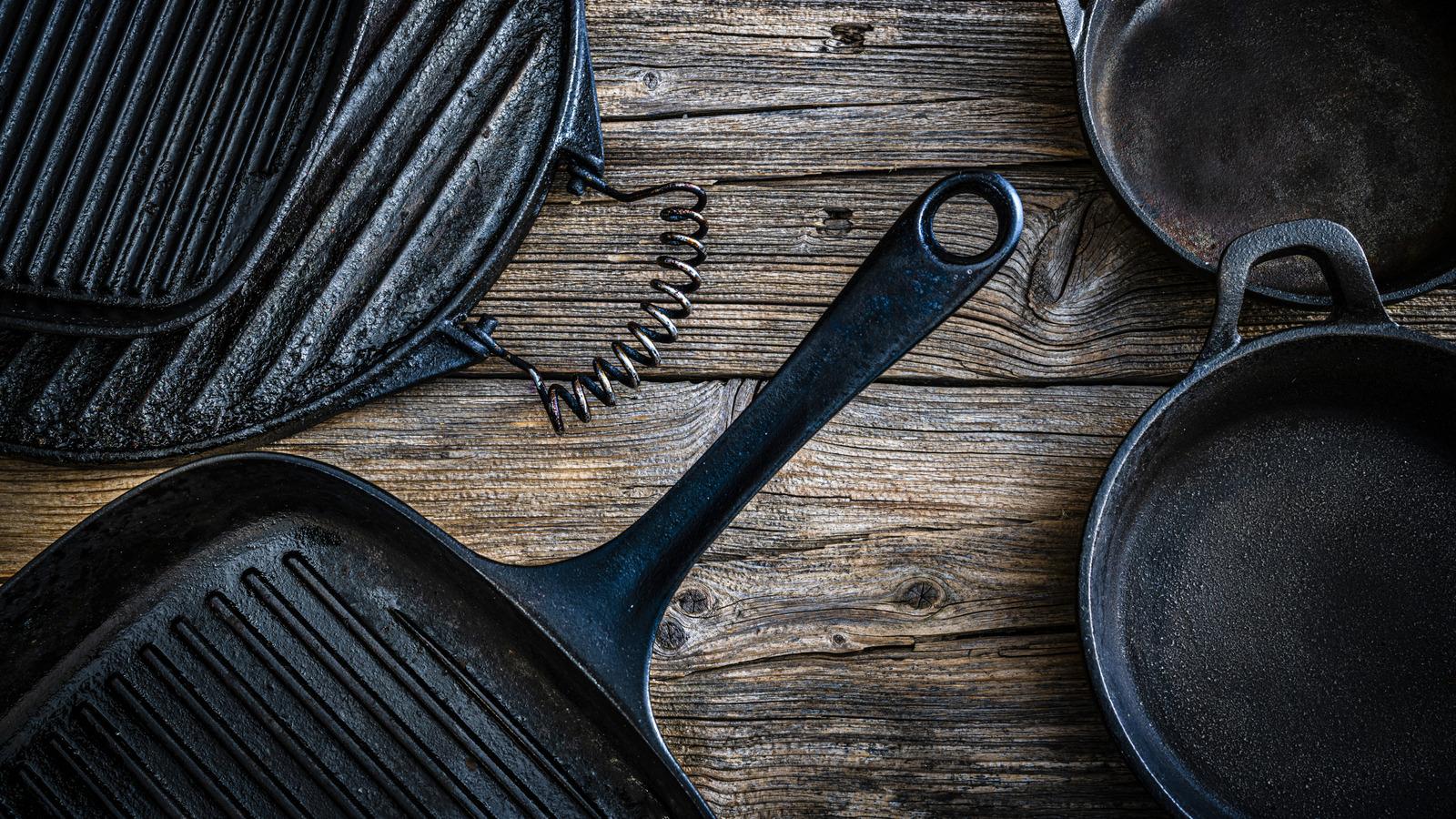
You can find cast iron cookware in many modern kitchens, but these rugged items have a history dating back to Ancient China. Despite their longevity, myths and misinformation about cast iron abound. For instance, using a metal utensil won't ravage the pan, and this cookware can be cleaned with soap without compromising the seasoning. Likewise, cast iron isn't just for stovetop cooking. Cast iron cookware can be placed in the oven without any concerns about damaging it. In fact, cast iron skillets are ideal for roasting a chicken, as their outstanding heat retention helps create a delectably crispy outer texture.
To truly appreciate how tough cast iron is, you must understand how this robust cookware is made. According to Lodge Cast Iron, America's oldest cast iron manufacturer, the cookware is made from a mix of pig iron, steel, and other materials, which are heated to an intense 2,000 degrees Fahrenheit. The melted metal is poured into molds, where it hardens into skillets, Dutch ovens, and other items. Cast iron offers an impressive heat tolerance, able to withstand temperatures up to 650 degrees Fahrenheit without issue. In addition to stovetop and oven cooking, cast iron can also be used on outdoor grills.
Tips for oven-cooking with cast iron
Q88/Shutterstock
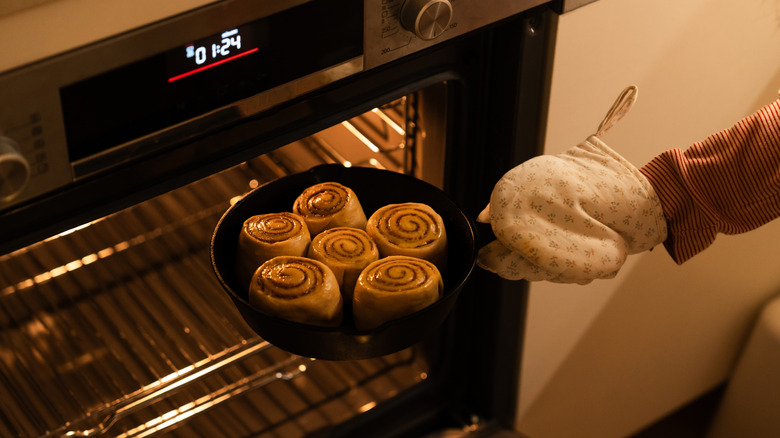
While the resilience of cast iron skillets is unparalleled when it comes to cookware, the human body is more vulnerable to the elements. You must use caution when taking the skillet out of the oven. The metal handle will be extremely hot, so always use a durable oven mitt to grab and lift the pan. Cast iron can also be very heavy, which might necessitate a second mitt for grabbing the side handle if your skillet has one. Also, be sure to remove any silicone grips from the handle before placing it in the oven to avoid a major mess.
Speaking of extreme temperatures, high heat can potentially undo the outcome of your meticulous cast iron seasoning process. While the material has an exceptionally high heat tolerance, exposing the skillet to temperatures in excess of 500 degrees Fahrenheit for lengthy periods of time can negatively affect the seasoning layer of your pan. You can always re-season it, but you may want to use another type of oven-safe cookware instead if you're planning on an extended cooking session.

 Arabic
 French
 Spanish
 Portuguese
 Deutsch
 Turkish
 Dutch
Dutch
 Italiano
 Russian
 Romaian
 Portuguese (Brazil)
 Greek
Greek