


Taras Grebinets/Getty Images
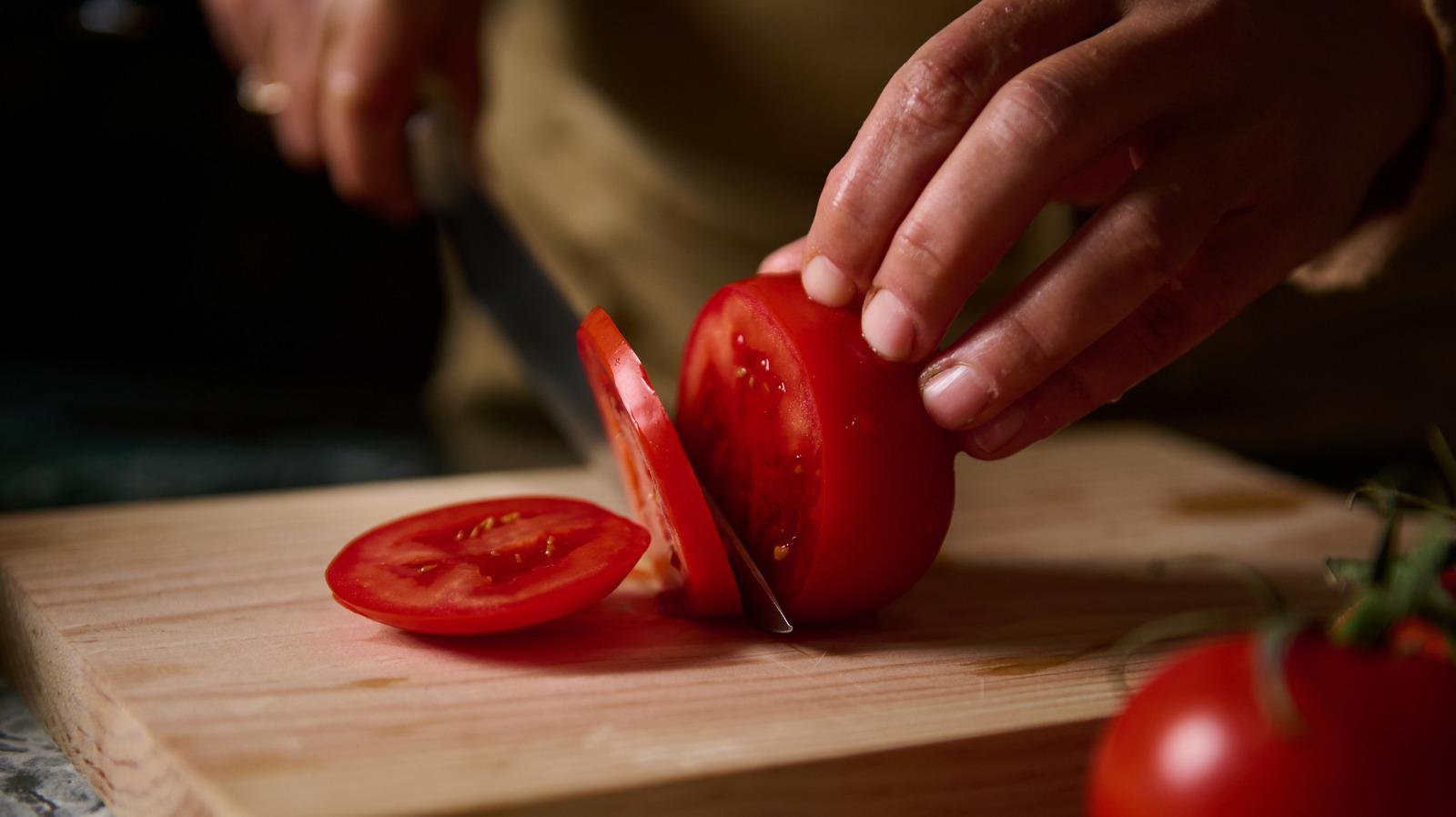
Tomatoes can be beautiful, shiny, and a glowing red, but sometimes, looks can be deceiving. Although their appearance signals that they're going to taste delicious, too often modern-day tomatoes have no flavor and a disappointing, mushy interior. While you look back fondly on the sweetness and supple texture of tomatoes you ate in the past, you might also wonder why they don't taste the same anymore. According to Science, it's because flavor-enhancing genes are now less present in the crop.
Horticultural scientists studied the genome sequences of nearly 400 types of tomatoes and determined that there are 13 chemical compounds most likely to determine if a tomato will taste good or not. The reason these compounds are not as available as we'd like them to be is that commercial crops are bred specifically for higher yields and bigger sizes, not flavor. Large, sturdy tomatoes are more durable, making them easier to ship. This is a benefit to producers and suppliers who don't want to lose money on damaged fruits.
Large tomatoes' lack of flavor can be disguised by other ingredients. Their shortcomings might be forgiven in a creamy tomato basil soup, but subpar tomatoes won't function well where texture and taste matter, like in an avocado tomato salad, for instance. The good thing is, now that these compounds have been identified, they can be prioritized during the breeding process to bring back the flavorful tomatoes you may remember.
Chemical compounds and temperature have a big influence on tomato flavor
Valentynvolkov/Getty Images
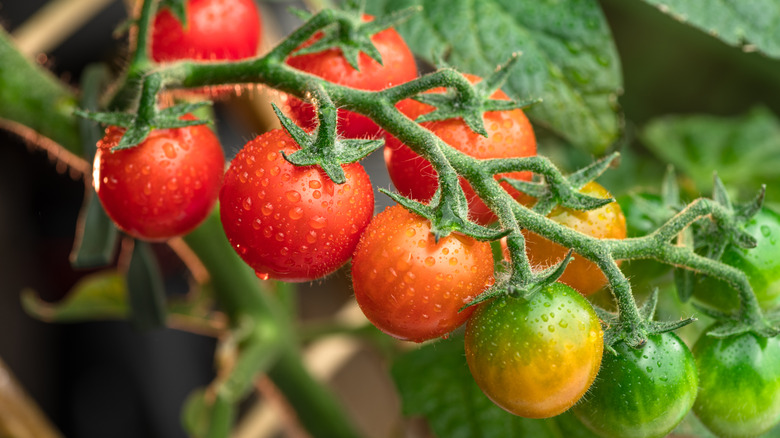
You might have noticed this yourself — the large tomato varieties commonly found in grocery stores, like beefsteak and Roma, are the ones that are most often flavorless. Smaller types, like cherry tomatoes, tend to be more flavorful, and according to Live Science, this is because smaller tomatoes contain more sugar. More delicate varieties, such as heirloom tomatoes, are not bred just for size, but for flavor. Heirlooms are typically found in local markets, as they are more fragile to transport.
A common tip you may have heard is that you should never store tomatoes in the fridge – and this is true, due to the effect of refrigeration on chemical compounds. NewScientist explains that the enzymes that produce the chemical compounds responsible for making tomatoes taste good diminish when exposed to cold. In addition to refrigerated tomatoes tasting quite bland, their texture becomes mealy.
Until commercial growers prioritize flavor over size and yield, stick with locally grown heirlooms or small tomato varieties, which have the most flavor. Never store tomatoes in the fridge, and if you get stuck with a bland one, consider pairing it with pesto, mozzarella, or other ingredients that enhance a tomato's taste.

 Arabic
 French
 Spanish
 Portuguese
 Deutsch
 Turkish
 Dutch
Dutch
 Italiano
 Russian
 Romaian
 Portuguese (Brazil)
 Greek
Greek