


Don Cravens/Getty Images
We may receive a commission on purchases made from links.
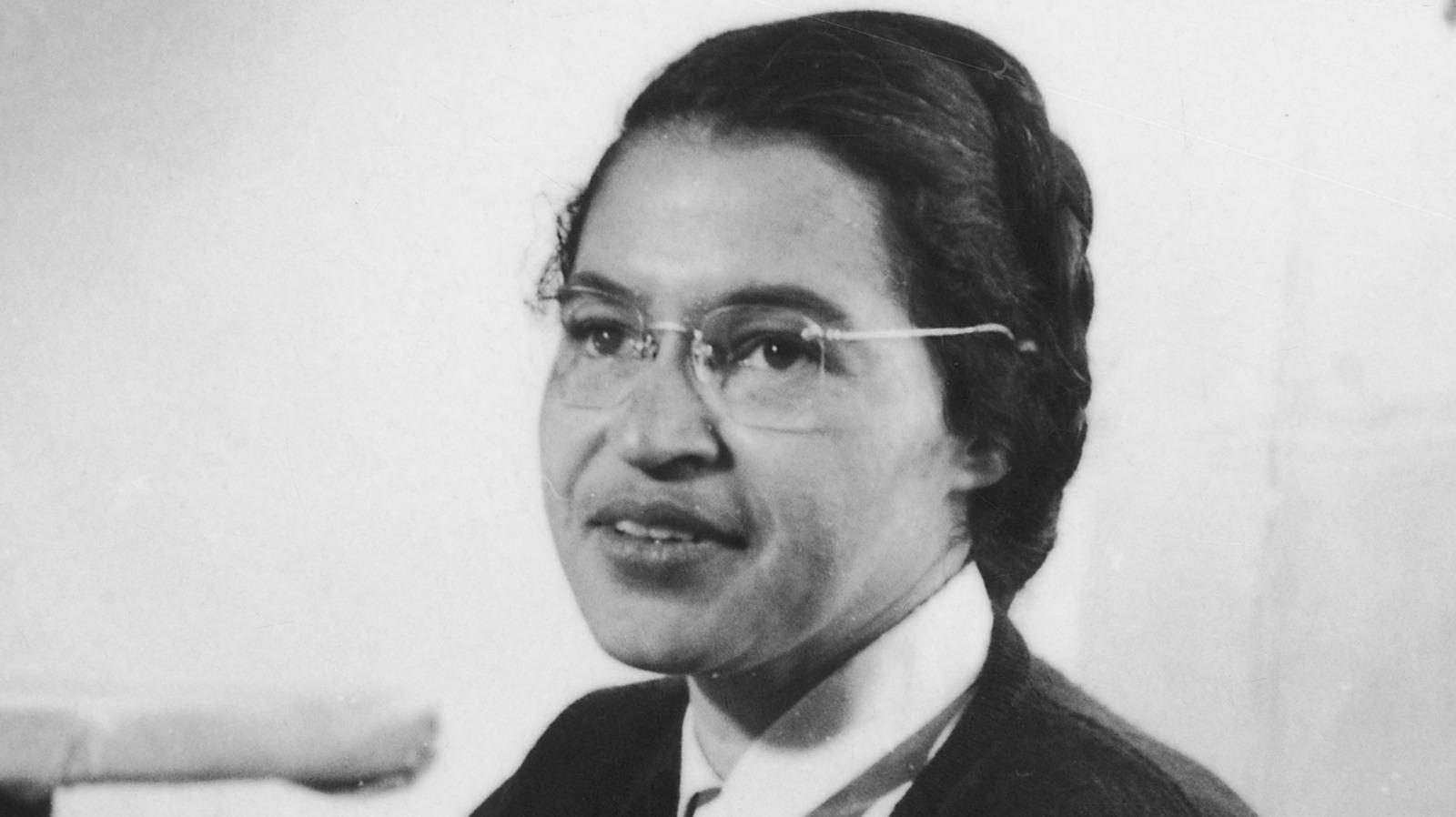
Most famous people throughout history are known only for their grand acts. Rosa Parks, of course, is best remembered for her refusal to give up her seat to a white passenger on a Montgomery bus in 1955, a key moment in the Civil Rights Movement. Beyond that, the majority of us know few details about her life. For example, what did she eat for breakfast? Thanks to a photo from the Library of Congress, it's possible to follow her unique pancake recipe, which includes the addition of peanut butter.
Parks' recipe, called "Featherlite Pancakes," was scribbled on the back of a bank deposit envelope. As the name implies, these pancakes turn out light, tender, and fluffy. The recipe's ⅓ cup of peanut butter might seem like it would weigh the texture down, but the fat adds a richness to the batter. An important step is melting the peanut butter (which can be done in the microwave) before incorporating it. This thins out the peanut butter and ensures it is well-distributed in the batter.
The rest of the recipe's ingredients are straightforward: 1 cup of flour, 2 tablespoons of baking powder, 2 tablespoons of sugar, ½ teaspoon of salt, 1 egg, 1¼ cups of milk, and 1 tablespoon of shortening or oil. The pancakes are cooked on a griddle at 275 degrees Fahrenheit.
Why did Rosa Parks put peanut butter in pancake batter?
You might have had peanut butter drizzled on top of pancakes, possibly with some sliced bananas — it's undeniably tasty, plus you get a little extra protein. Peanut butter was invented as a protein substitute, after all. Rosa Parks' niece, Deborah Ann Ross, told NPR that her aunt added peanut butter to pancakes because she simply loved the spread.
In addition to peanuts' enjoyable flavor and texture, they have strong roots in the South. The crop is grown abundantly there, and peanut butter in particular has a connection to Parks' birthplace, Tuskegee, Alabama. Tuskegee Institute is the university where George Washington Carver, a formerly enslaved agricultural scientist, developed groundbreaking innovations that helped poor farmers grow less cotton and more protein-rich, economically viable crops, like peanuts.
Thanks to Carver, peanuts became a more common food in the American diet, and he found at least 300 uses for them. Peanuts were part of Parks' environment since birth, so she probably didn't think twice about adding peanut butter to her pancake batter. While the recipe doesn't specify a brand or particular style, a Mashed survey on the best peanut butter brand revealed that most people prefer Jif, which would work well in Park's pancake recipe.

 English
 Arabic
 Spanish
 Portuguese
 Deutsch
 Turkish
 Dutch
Dutch
 Italiano
 Russian
 Romaian
 Portuguese (Brazil)
 Greek
Greek