


Matthew Horwood/Getty Images
Grocery shopping for your household may be a chore that you do not look forward to. After all, there is so much to consider in addition to "how many mouths need to be fed." You need to think about individual dietary requirements, appetite preferences, and how to save money at the grocery store, among other things. To help simplify the decision-making needed for this necessary household task, various methods have been suggested on social media. One of the more recent tips that has gone viral is the 5-4-3-2-1 shopping method. What is it?
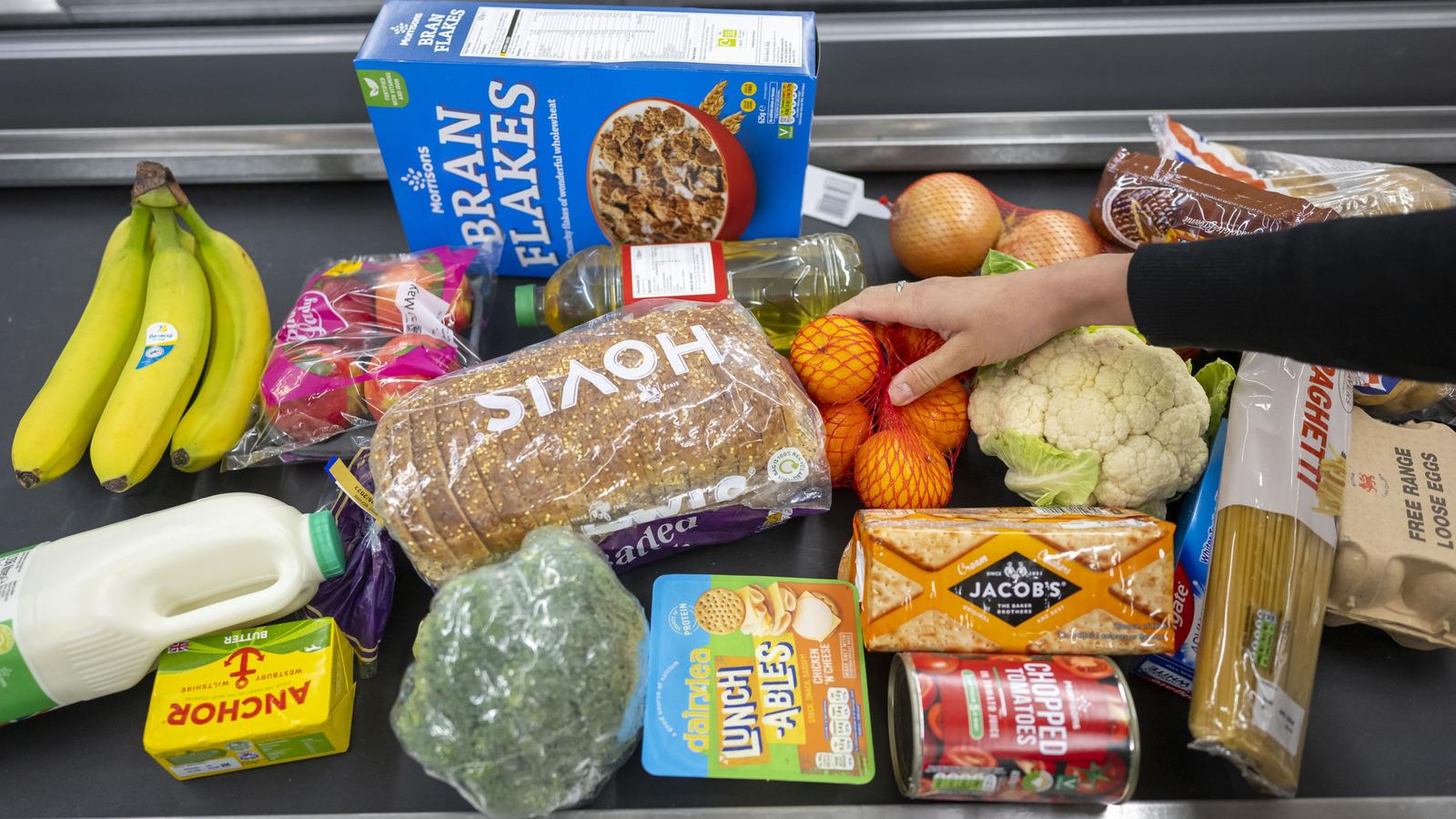
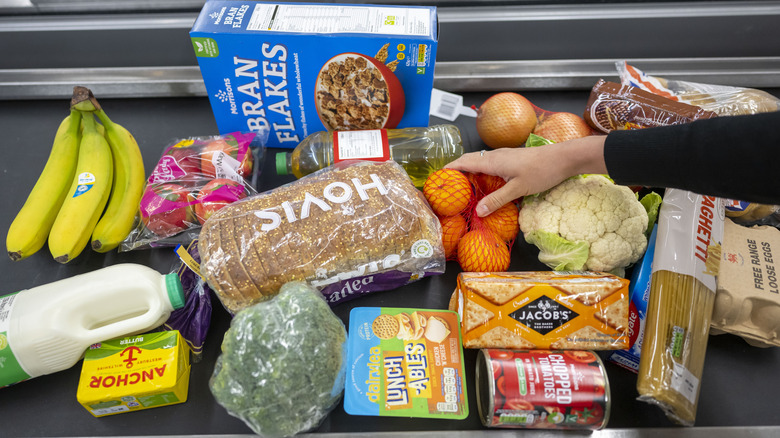
Essentially, you will assign a number to a category of food, which represents its quantity. This is assuming that your pantry already has the basics stocked, like cooking fat, salt, sugar, etc. Then, when you are shopping, you will only purchase the number of items in the category assigned to it. An example: five vegetables and fruits; four protein sources; three carbohydrate sources; two sauces, spreads, or condiments; and one sweet treat. This method appears to exclude items such as frozen and prepackaged meals, or items that may overlap into two categories.
How does this translate when shopping? You will only buy five types of vegetables and fruits (e.g., spinach, broccoli, squash, leeks, tomatoes), only four protein sources (e.g., eggs, minced beef, firm tofu, chicken thighs), and so on. Whether you write up a shopping list before heading out the door or buy on the fly based on what looks good in the store, this helps limit the number of items you get while keeping it balanced for meals.
Customize the method according to your household's needs
ViDI Studio/Shutterstock
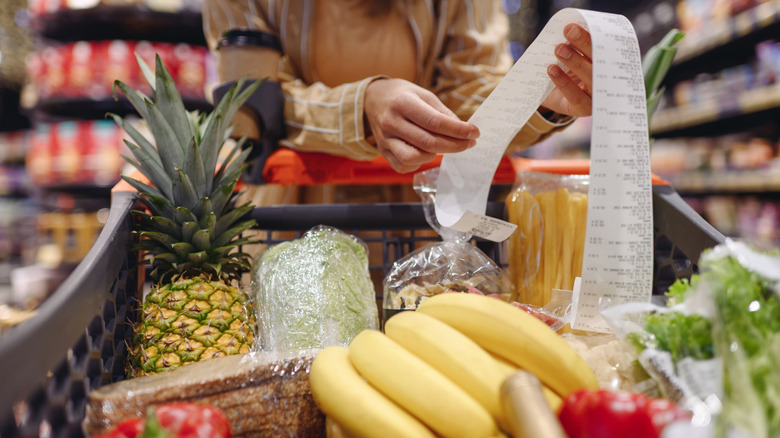
Fans of this method love how it simplifies decision-making while keeping choices healthy and on budget. You can also assign different categories to different numbers, depending on your household's needs, or scale it up for each household member. Do you have a sweet tooth that you are trying to channel into more nutritious choices? Make fruits their own category instead of pairing them with vegetables. Are you trying to cut down on starches and grains? Assign a smaller number to them.
What seems to be a consistent recommendation across the board is to keep the highest amount for vegetables and fruits, and keep more "treat"-type items at a minimum. Just remember to still be mindful when choosing items within a category. For example, a pack of chicken breasts may be a more versatile and substantial choice compared to a pack of bacon, and whole grain rice may be more healthful for your needs versus a bag of frozen French fries, despite both being carbs.
This method encourages you to come up with categories that work for you and the needs of your household. At the end of the day, if this method does not work for you, there are other ways, like the anchor grocery shopping trick, or even making a reverse shopping list.

 English
 Arabic
 French
 Spanish
 Portuguese
 Deutsch
 Turkish
 Dutch
Dutch
 Italiano
 Romaian
 Portuguese (Brazil)
 Greek
Greek