


In November 2026, A Human-Made Object Will Reach A Light-Day From Earth For First Time In History
In November 2026, A Human-Made Object Will Reach A Light-Day From Earth For First Time In History
In late 2026, a human-made object will reach a full light-day away from the Earth for the first time in human history.
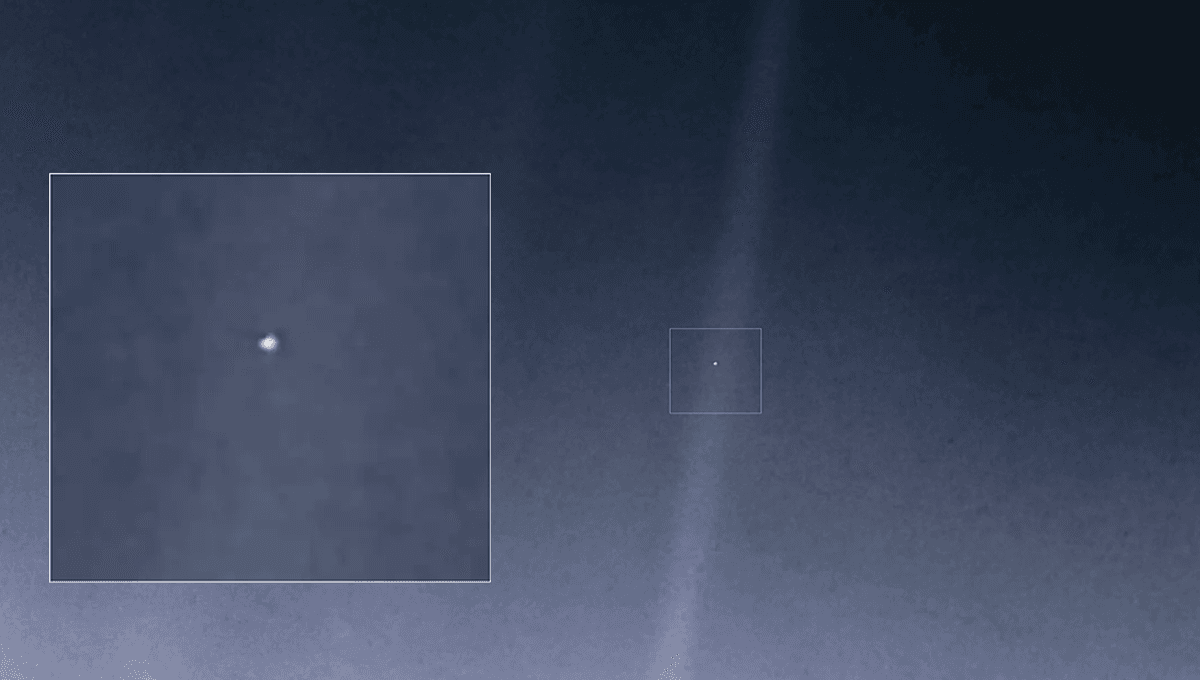
Space is big, and human-made objects are slow. The record speed any human has ever traveled was set by Apollo 10 back in 1969, and has not been broken since. The fastest human spaceflight remains 39,937.7 kilometers per hour (24,816.1 miles per hour), and at those speeds, it would take 3,730 hours to travel 1 Astronomical Unit (AU), the distance between the Earth and the Sun. At around 155 days, that's an unacceptable travel time to (e.g.) slam into the Sun. And while it takes you 155 days to get wherever it is you went, light and communications from Earth would reach you in about 8 minutes and 20 seconds, really rubbing it in how great it is to be massless. But we will get a real reminder of the vast distance and incredible speed of light in early 2027, when Voyager 1 becomes the first human-made object to reach one light-day away from the Sun. This spacecraft was launched in 1977 and has been traveling ever since. At the moment, it is around 166 AU from the Earth, having become the first spacecraft to go beyond the heliosphere, cross the heliopause, and enter interstellar space. At its current position, it takes 23 hours, 5 minutes, and 36 seconds for signals from Earth to reach the spacecraft. At its current speed of about 61,195 kilometers per hour (38,025 miles per hour), it will still take over a year to widen that light-distance to a full 24 hours. When it does reach 25.9 billion kilometers (16 billion miles) from Earth, a journey which took nearly 50 years, it will finally be the distance that light can travel in a day. According to our calculations using NASA's Eyes on the Solar System, this will occur on November 15, 2026, while the probe will reach one light-day from the Sun on January 28, 2027. After that, it will continue to journey on its course, guided by NASA until it runs out of power, likely in the early 2030s. There are a few ways you could define the edge of the Solar System – for instance, where the planets end or at the Oort cloud, the boundary of the Sun's gravitational influence, where objects may still return closer to the Sun. Though the Voyager probe has left the heliosphere, you could argue that it has not yet truly gone beyond the Solar System's edge. "Through the ages, astronomers have argued without agreeing on where the Solar System ends. One opinion is that the boundary is where the Sun’s gravity no longer dominates – a point beyond the planets and beyond the Oort Cloud," NASA explains. "This boundary is roughly about halfway to the nearest star, Proxima Centauri. Traveling at speeds of over 35,000 miles per hour, it will take the Voyagers nearly 40,000 years, and they will have traveled a distance of about two light-years to reach this rather indistinct boundary." In short, space is pretty, pretty big.

 English
 Arabic
 French
 Spanish
 Portuguese
 Deutsch
 Turkish
 Dutch
Dutch
 Italiano
 Russian
 Romaian
 Greek
Greek