


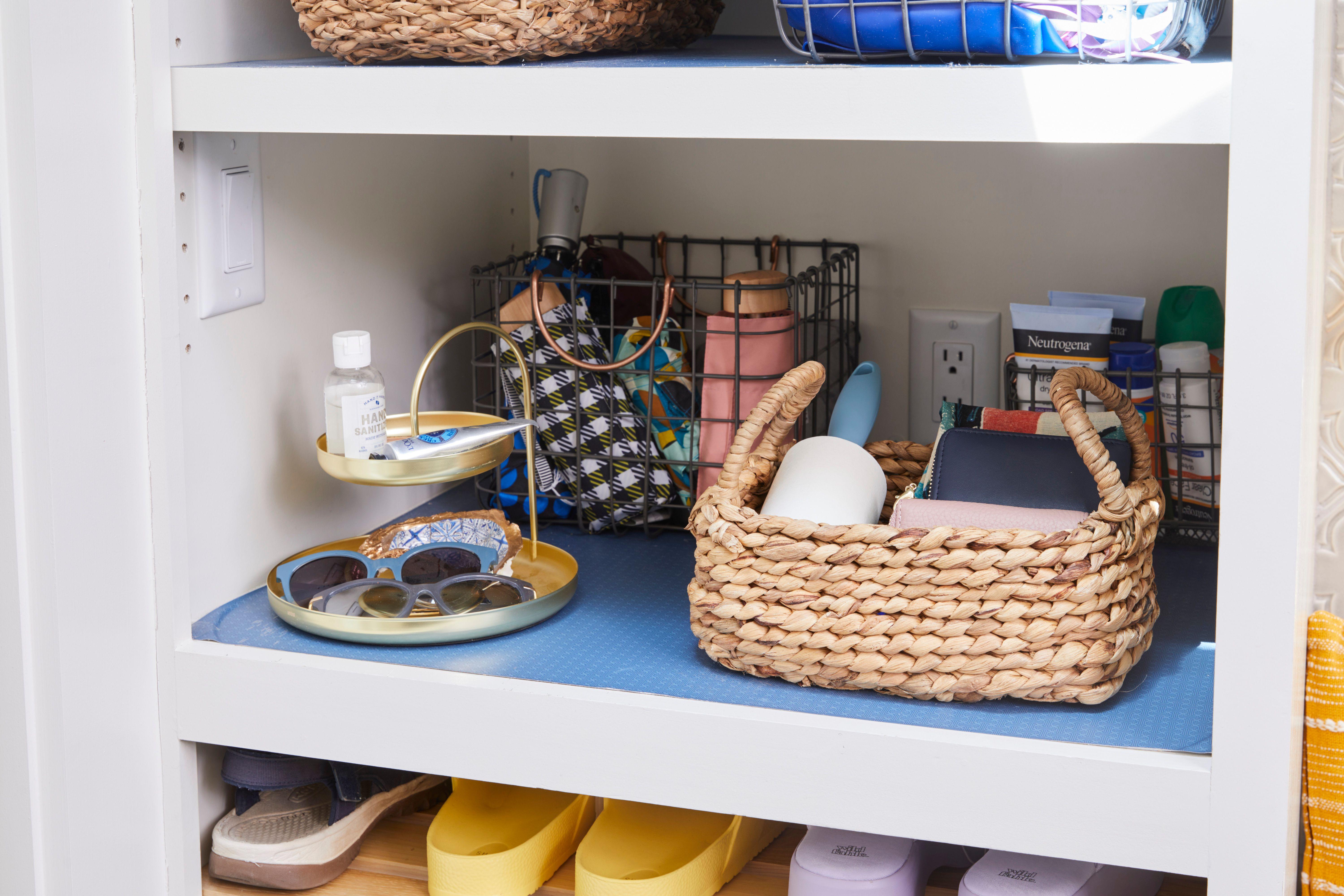
Concealing clutter behind cabinet doors might make your home feel organized at first glance, but cluttered storage spaces can quickly become overwhelming. It seems like a simple answer to isolate random kitchen utensils, unused toys, and almost-empty products in drawers to maintain a clutter-free environment. But out of sight, out of mind isn’t always the best option when decluttering your house.
One major clutter culprit? Having too many of the same items or keeping ones that are no longer usable. Take this as an opportunity to donate any unused items and recycle what you can to lighten the load of clutter on your shoulders. The perfect opportunity to declutter is hard to come by, but over time, this checklist of 15 items to pare down can help you reorganize your home, slowly but surely.
1. Mismatched Utensils
If your utensil drawer is overflowing, with forks, spoons, and knives going in all different directions, it might be time to reevaluate and organize your cutlery. It never fails: multiple sets of silverware that can’t be stacked neatly all get piled in the same drawer. Typically, only about 8 to 12 of each utensil are needed, but depending on your household size and how often you entertain, that may vary. Consider how often you wash your silverware, and pay attention to how many utensils your home actually uses in a day. Collect and donate any utensils you no longer use.
2. Books
Avid readers and nonreaders alike seem to end up with overflowing bookshelves. Take a moment and go through your bookshelf and only keep your favorite books and titles you’re actually going to read someday. All other books can be brought to your local public library, thrift store, or book buyback retailers. You can also check if your school district accepts donations as well.
3. Plastic Food Containers
When it’s time to store your dinner for leftovers, it should be easy to find the right lid for the container you want to use. If you can't match up your reusable food containers, it's probably a sign you have too many. Clear out your entire cabinet and match up lids with their corresponding bottoms. Any loose items without a pair can be recycled. Warped and stained canisters should be tossed out, and rarely used ones can be donated.
4. Glassware
Between vases, pitchers, and mismatched cups, glassware can take up a lot of space. While it might seem important to have different glasses for every type of drink and occasion, most of them gather dust. When clearing out your glassware collection, keep coordinating sets together and donate the random standoffs. Stemware and flower vases that haven’t been touched in years can also be placed in the thrift store pile. Think for a moment about which glassware you actually use consistently and which duplicates are just cluttering up your home.
5. Nearly Empty Products
Many of us end up with a collection of almost-empty products, whether it’s cosmetics or cleaning supplies, in multiple areas around our homes. Investigate your kitchen and bathroom for items shoved to the back of a cabinet or piled up in a basket and accidentally forgotten. Check expiration dates and throw out any expired products. Supplies that are still viable should be moved to the front of the cabinet for use first. If you can, combine multiples into a single container. If it’s something unopened that you haven’t touched in years or you have multiples (think: four types of wood polish for the side table you dust a few times a year), look into local charities and shelters in need of donations.
6. Old Clothes
Closets are some of the most cluttered areas in your home. Old attire intended to be worn again, as well as clothes that no longer fit or are never worn, can easily overcrowd this small space. Another clutter contender? Duplicates of the same garment. Think of all the T-shirts you’ve collected over the years, through school events, free promotions, band merch, and more. Sort and eliminate any you no longer wear. The same goes for your sock drawer; do you really need ten pairs of crew socks when you most often wear shoes that require ankle socks? Donate retired garments that are still in good condition to free up much-needed space.
Related
7. Sports Equipment
Garages can be overrun very quickly by excess sports equipment. Balls, racquets, and bats can be hard to store and come in multiples. Go through athletic gear and keep items that are used often, and donate old ones that are in working order. Decide how many of each item you actually need and dispose of the rest. If you only play tennis or baseball a few times each year, do you need an entire bin of balls? Does your child have several skateboards but only uses one? When storing, group similar items together and hang racquets and bats on the garage walls to save floor space.
8. Toys
Kids are notorious for playing with a toy for one day and never touching it again. If your child’s room overflows with stuffed animals, action figures, or other multiples, it’s time to downsize. Donate functional toys no longer played with to shelters, thrift stores, daycares, or other local organizations in need. Set up an organizational system in dressers and on shelves to keep remaining toys manageable and clutter-free.
9. Water Bottles
Water bottles can be one of the most difficult items to store. Typically, they are too tall for kitchen cabinets, but laying them down can lead to a jumbled mess. Depending on your lifestyle, you may need only one water bottle per family member. Take any remaining water bottles to your local thrift store for donation. Utilize a magazine holder to stack the remaining bottles.
10. Outdated Cords and Chargers
Every home has that one drawer where unknown or inoperative chargers end up, becoming a tangled mess. As you acquire new phones, tablets, and computers over the years, the chargers have mostly stayed the same, so you’ve likely accumulated the same cords several times over. If a charger no longer works properly, dispose of it instead of keeping it around. Cords you can no longer remember using (hello, old digital cameras) can also be purged. The remaining cords and chargers should be wrapped up and secured with a rubber band or tie.
11. Mail and Paper Items
The infamous mail pile that collects on your kitchen counter or entryway table is a recurring nightmare for many homeowners. The first step to controlling a cluttered mail mound is to only put the mail you actually need in your stack. Immediately shred items as necessary and recycle all junk mail so it doesn’t contribute to the pile. Using a labeled storage container or basket for important mail can help you stay organized. Routinely comb through expired coupons and papers that are no longer needed for records, so the heap never has a chance to grow.
12. Condiments
Having too many condiments can clutter up your fridge quickly. While having a range of options is appealing, many go untouched for months. When decluttering a refrigerator, disposing of multiples is essential. Typically, you should only need one of each kind of condiment: One barbecue, one ranch, one ketchup, and so on. Having multiple flavors and brands of the same sauce or topping can lead to a condiment pile-up. Dispose of expired items and use up any remaining duplicate bottles. To avoid a disorganized fridge, evaluate your condiment section before grocery shopping to prevent buying multiples.
13. Winter Gear
As cold weather arrives each year, hats, gloves, and scarves tend to accumulate, with nearly identical options filling bins and baskets. Usually, only one of each type of winter accessory and potentially a backup for extreme weather is needed per household member. Sort through your winter weather drawer or closet shelf and keep only your favorite or warmest attire, and donate the rest to a shelter or thrift store.
14. Small Kitchen Appliances
Small kitchen appliances like waffle makers and slow cookers can take up precious cabinet and counter space. While these machines can be helpful and fun to use, they are not easy to store. Pull out all your portable cooking devices and make a list of the ones you actually use often. Return those to a designated cabinet or drawer and give away the others. Generally, you only need one of each appliance, so donate multiples if you have them.
15. Clothes Hangers
Over the years, it's easy to accumulate a variety of hangers, whether plastic, wire, velvet, or wooden. Sort through your collection and recycle any hangers that are no longer in good shape, and check local ordinances to see which materials are accepted. Many dry cleaners also accept wire hangers that they can reuse to store garments.

 Arabic
 French
 Spanish
 Portuguese
 Deutsch
 Turkish
 Dutch
Dutch
 Italiano
 Russian
 Romaian
 Portuguese (Brazil)
 Greek
Greek