


Mercury.Line/Shutterstock
When it comes to rotisserie chickens, store-made ones often do taste better than homemade roast chickens because they're generally pre-seasoned. If you know how to choose a good one, it'll have a crispy, perfectly browned skin that's hard to get in an oven at home. It might also be tempting to assume that the biggest bird on the shelf will be the best value.
But hold on: Bigger isn't necessarily better when it comes to rotisserie chickens. Unusually large ones typically aren't as good as the standard-sized offerings. The biggest options can be unevenly cooked or lacking in flavor.
For context, most rotisserie chickens are around 2 pounds. Costco's famously large birds typically tip the scale at about 3 pounds. That's much smaller than the roasters you might find raw in the meat department, which are above 5 pounds (and even they'll lose weight while cooking as water evaporates). But one Reddit user posted about buying a nearly 6-pound, cooked rotisserie chicken from Costco. That's not the only time something like this has happened, either. A different rotisserie bird from Costco went viral with a weight over 6 pounds. When you consider how the poultry is prepared, it becomes easy to see why a large size disparity creates issues.
Why big birds can be undercooked and less flavorful
Tada Images/Shutterstock
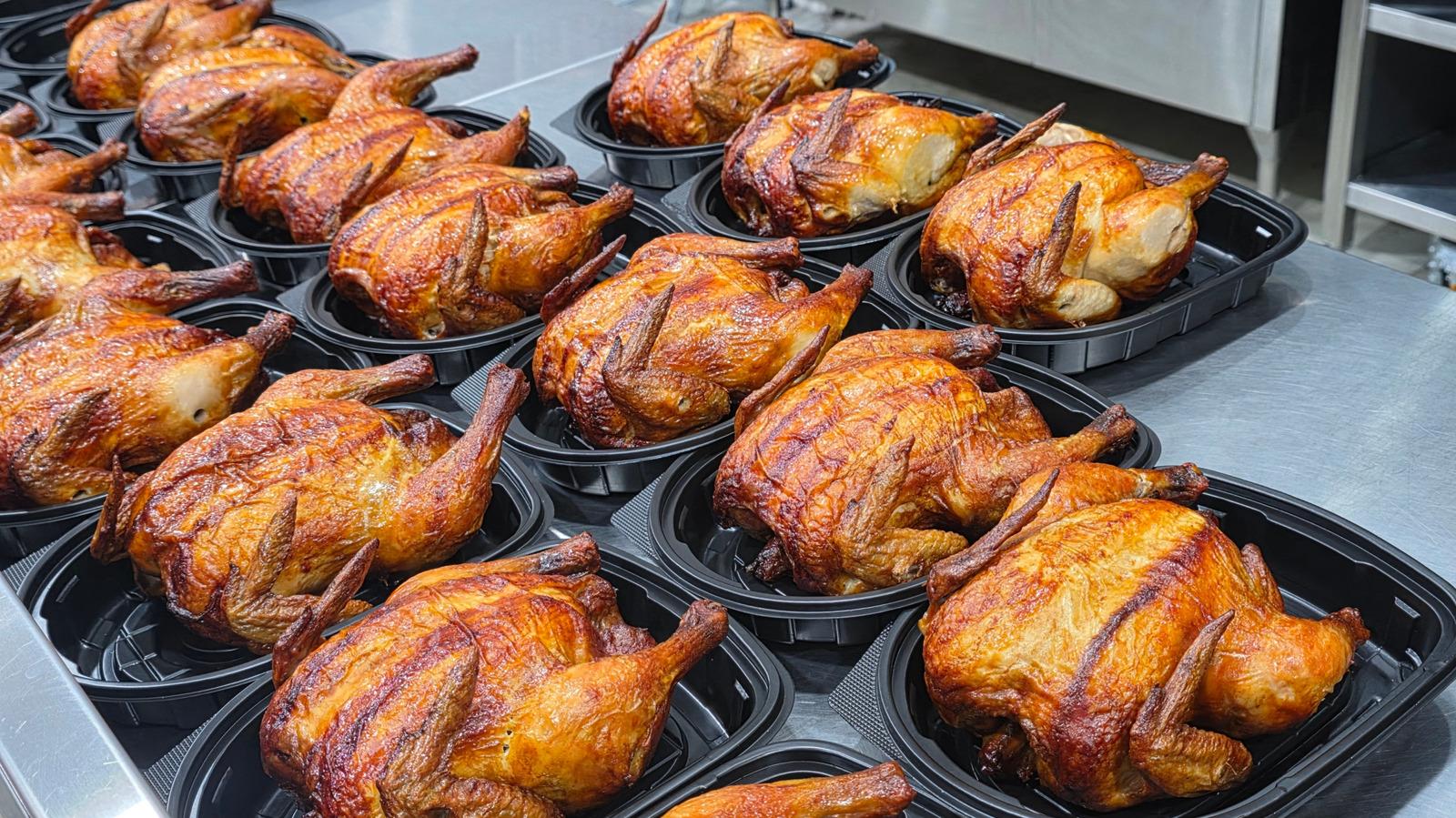
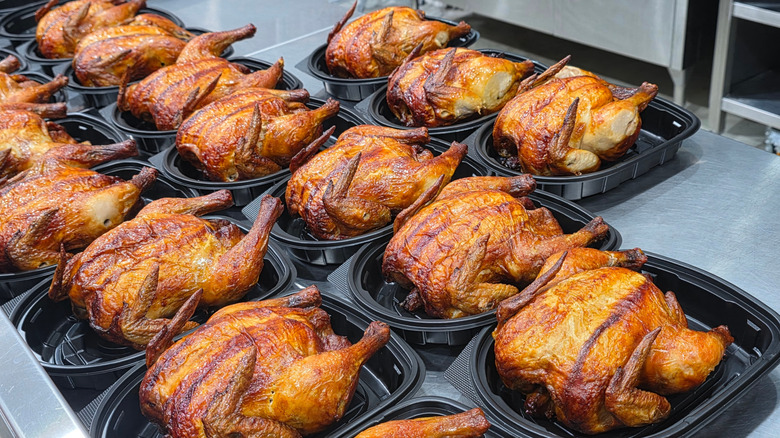
Grocers cook multiple rotisserie chickens at once by skewering each and roasting them slowly. The birds rotate in an oven, where they get a caramelized, crispy, and evenly browned skin all around. Here's the problem: An abnormally large rotisserie chicken won't get cooked evenly alongside birds half the size. It may not even be fully done. That's what one Redditor (whose account has since been deleted) said happened with theirs: "Thought I was getting an amazing bargain but when I cut into it at home, the thighs were still raw. Plus the rest of the meat just wasn't as tender or well cooked, even where it wasn't raw."
Plus, smaller birds tend to be more flavorful, and as poultry in general has gotten larger over several decades, it has shrunk in the taste department. A supermarket rotisserie chicken gets its signature taste in large part from the combination of a brine solution injected into it and a spice blend on the outside. A larger bird needs more salt and spices to taste as rich as a smaller one.
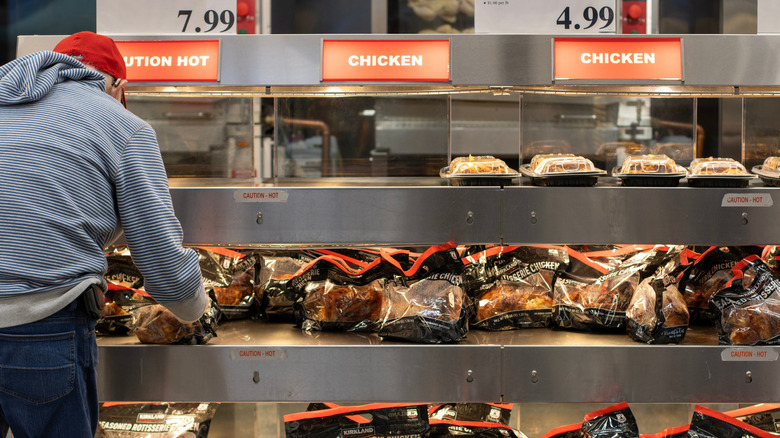
When you're looking at rotisserie chickens on the shelf, a bird that's heavy for its size is a good sign. When it sits in a warmer for too long, the juices can evaporate, leaving behind dry (and lighter) meat. But a fresh chicken will still be juicy and moist, so it'll be heavier.

 English
 Arabic
 French
 Spanish
 Portuguese
 Turkish
 Dutch
Dutch
 Italiano
 Russian
 Romaian
 Portuguese (Brazil)
 Greek
Greek