


Sharing Cute Animal Pics With Your Pals Might Actually Serve An Important Purpose
Sharing Cute Animal Pics With Your Pals Might Actually Serve An Important Purpose
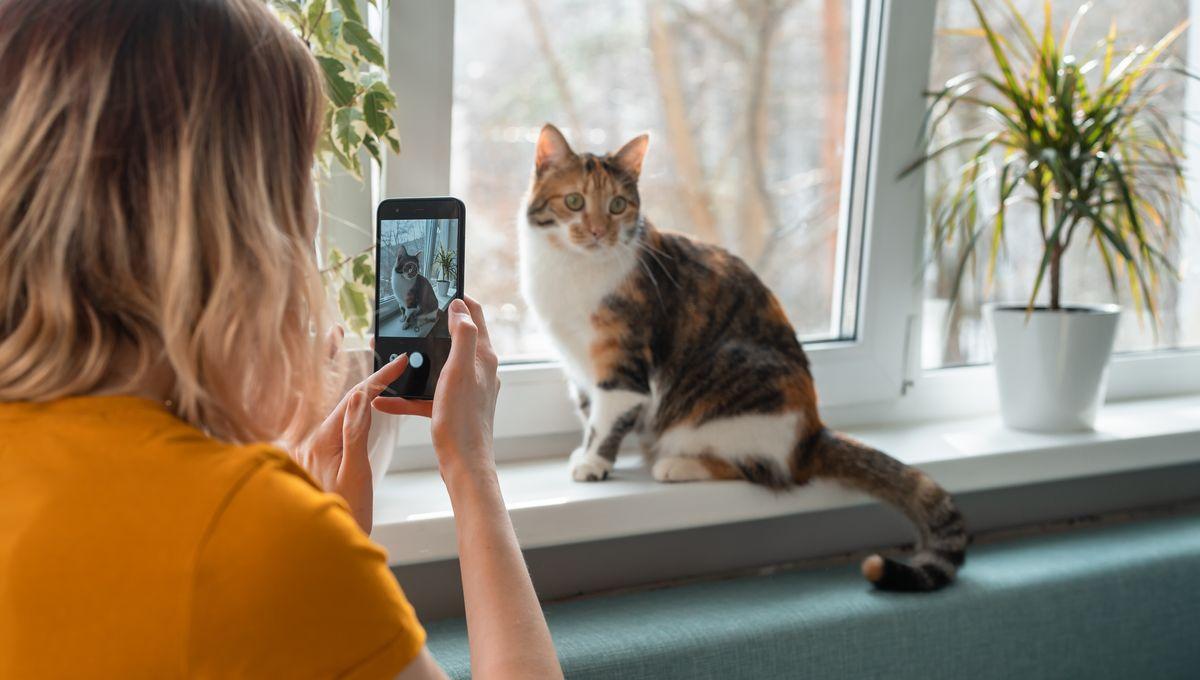
Is your group chat dominated by the likes of Moo Deng and Pesto? Perhaps the only way your dad uses Instagram is to send you multiple reels of puppies and kittens. A lot of us send content like this without really thinking about it – but it could be helping to strengthen relationships and foster positive online spaces.
That’s according to a recent study from researchers at Concordia University and ESSEC Business School, who wanted to better understand how cute animal content has come to dominate the Internet. “The creation, consumption and circulation of animal photos has become a social phenomenon,” said study co-author Zeynep Arsel in a statement. “It has gone well beyond animals advertising animal products.” To find out how adorable critters make their way across the web, and how they shape relationships as they go, Arsel and fellow co-author Ghalia Shamayleh interviewed 21 animal content creators and 12 animal content consumers. Arsel and Shamayleh even created their own accounts, creating and sharing content to get a better understanding of the experience. Creators were asked questions ranging from their relationships with the animal companions featured on their accounts through to their motivations for creating the account in the first place. The authors also analyzed their posts, noting things like the background of the image, or if there were any props, costumes, or digital manipulation used, as well as the language and hashtags in any accompanying text. Consumers, on the other hand, were asked about the kind of animal content they consumed, how it made them feel, and then their sharing habits, such as who they sent posts to and why they did so. What Arsel and Shamayleh found was that sharing animal content created “digital affective networks”, where content that evokes emotions or affects our mood is shared online in different ways. Using the example of famed pygmy hippo Moo Deng, the authors say that the beginning of the journey through this network is a step called “indexicalization”. This is the stage where the content is created – in this example, when the Thai zoo where Moo Deng is resident shared her rebellious interactions with zookeepers. The sight of a tiny pygmy hippo running around chomping people is pretty damn hilarious, but the emotions it triggers might also remind you of someone, who you then share the chompy content with as a sign of affection. This is often compared to “pebbling”, where some species share smooth pebbles with each other to build a bond during courtship. Next comes “re-indexicalization”, where people add their own emotional cues to content, making it personal to their own social networks, and even develop parasocial relationships with the animals being shared. Then, as seen in the case of Moo Deng, can come “decontextualization” – the original emotional cues and any personal ones from the last stage are stripped by animal content curators, and made to appeal to a broad audience with new, relatable cues. It’s at this point where animal content can often become “memeified”. “One such example is the textual cue ‘realizing it’s only Tuesday’,” the authors write of Moo Deng, “which reframes her defiance as a relatable expression of workweek fatigue and longing for the weekend.” People see that content, find it funny, share it, and the cycle starts again. “Our findings imply that companion animals’ capacities as social lubricants traverse to digital space, thus facilitating interactions and reinforcing relationships as companion species content,” Arsel and Shamayleh conclude. “By re-indexicalizing and sharing companion species content, consumers engage in relational maintenance, fostering connections with social contacts.” This transformative process and the positive bonds formed across the way create “networks of affective flows that make content creating and sharing irresistible.” And given that pictures of fluffy sheep and goofy baby penguins are adorable enough to lift just about anybody’s spirits, we’d argue that not being able to resist is certainly no bad thing. The study is published in the Journal of Consumer Research.

 Arabic
 French
 Spanish
 Portuguese
 Deutsch
 Turkish
 Dutch
Dutch
 Italiano
 Russian
 Romaian
 Portuguese (Brazil)
 Greek
Greek