


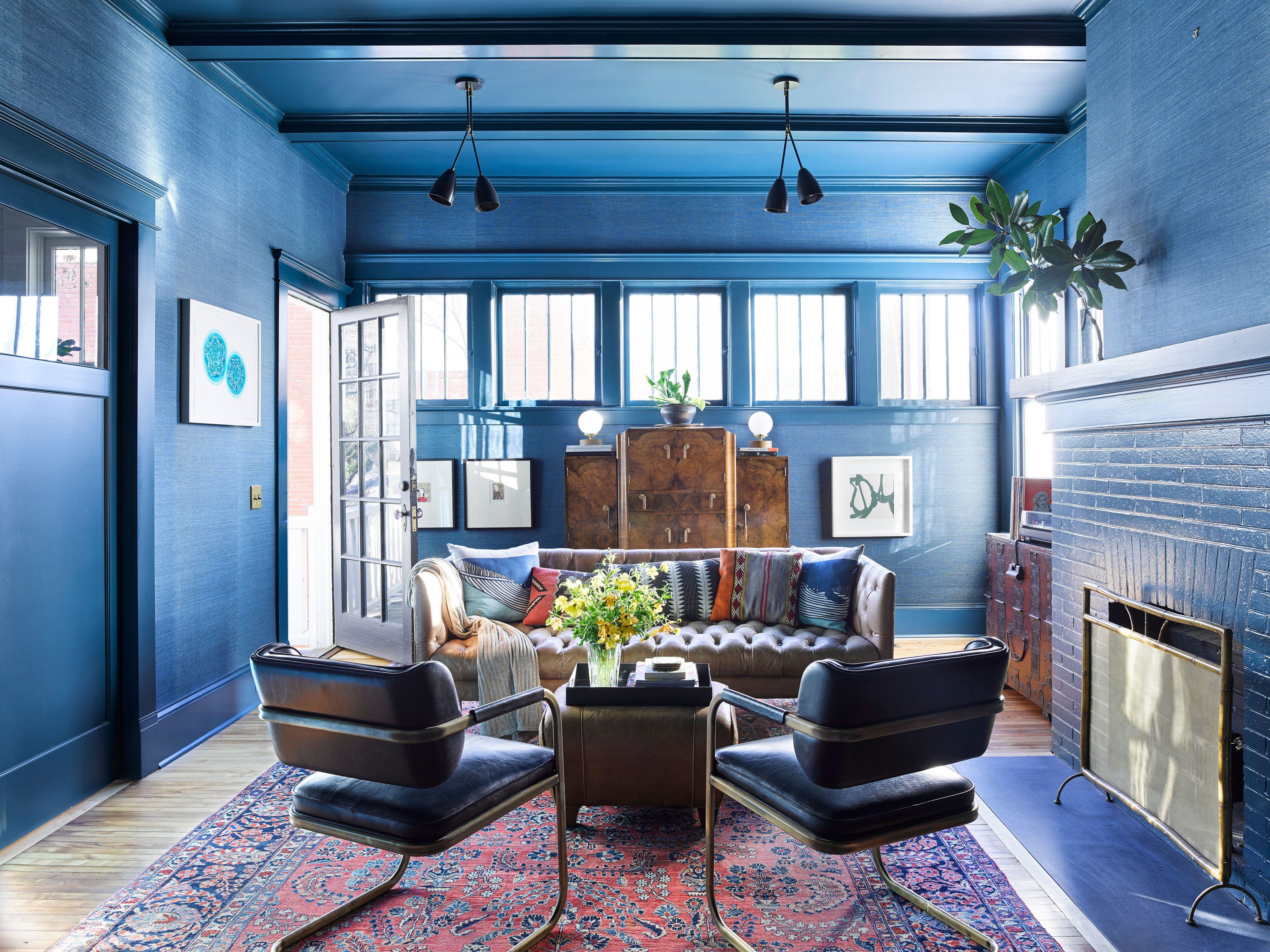
Lately, home decorators are painting walls, trim, and ceilings in one bold hue. This technique, called color drenching, came along with the resurgence of cozy, English interiors and ultra-dark paint colors. Some call it timeless, but others worry that in the world of quick-circuiting online trends, color drenching might be a regrettable move.
We spoke with a designer to find out whether this fad is worth trying; here's what she wants you to know.
Melanie Zaelich is an interior designer, home stylist, and founder of Happy Place Interiors.
Is Color Drenching a Timeless Trend?
It's rare to flip through a vintage magazine or design book and see a room where every surface is painted the same color. This is evidence that color drenching is a more recent design choice and might not be timeless. That said, not everything new is bad!
"I love color drenching in the right space," says designer Melanie Zaelich. She says that color drenching is alluring because it "shakes up the standard way of painting rooms." People with traditional, millwork-filled interiors are opting to color drench because it feels like a new way to approach old details. "The millwork gives the all-one-color room depth, texture, and interest," Zaelich says.
When Color Drenching Works Well
If you're curious about color drenching, but you don't want to take a big risk, Zaelich recommends trying it in one of these spaces.
Cozy rooms for rest: Color drenching can have a calming effect, given its low-contrast. Use this to your advantage, and apply color drenching in rooms where a slow, even sleepy pace is a good thing, such as bedrooms or dens.
"Nurseries, studies, or primary bedrooms are perfect for color drenching," Zaelich says. "Rooms where you want to curl up to read, nap, watch TV, or have easy conversations." To enhance the feeling of lush calm, add long drapes that also match the color of the room.
Modern homes: Many people apply color drenching onto "traditional" details, such as molding, beadboard, and trim. Color drenching can make a lot of sense, however, in a contemporary-style home, where large swaths of color enhance the geometric surroundings. Match boldly colored square tiles in a modern bathroom to the walls and ceiling to create a glowy grotto, or pair Memphis-style furniture with a color-drenched living room.
Low-budget spaces: Color drenching can quickly disguise a worn-out room for just the cost of paint. If you have a downtrodden porch or mudroom that's not high on the renovation list, painting it floor-to-ceiling in one color is a sure way to breathe in new life. This will give you a bold look and a fun space to accessorize without a large investment.
Related
Nathan Schroder
Alternatives to Color Drenching
If you're wary of the trend but still want a bold look, there are alternatives to color drenching. These ideas are as warm and welcoming as color drenching with more historic precedence.
Contrasting trim: One centuries' old approach is to paint the walls and ceiling one color and the trim another. Trim that pops, whether it's only slightly darker than the walls, a contrasting color, or simple white, will invite rhythm and depth into your design. Painting the trim is an easy update you can make to a room that's already color-drenched.
Pattern drenching: Pattern drenching is another recent trend that is more commonly seen in vintage design. Matching fabric or wallpaper adorns the walls and ceilings, and the same print is often used in drapes, canopies, bedding, or upholstery. This creates a luxe feeling that has a lot of depth thanks to the movement of pattern.
Draped or patterned ceiling: Adorn your ceiling with draped fabric, wallpaper, or a hand-painted design. This creates the cozy feeling of color drenching with a lot more texture.

 Arabic
 French
 Spanish
 Portuguese
 Deutsch
 Turkish
 Dutch
Dutch
 Italiano
 Russian
 Romaian
 Portuguese (Brazil)
 Greek
Greek