


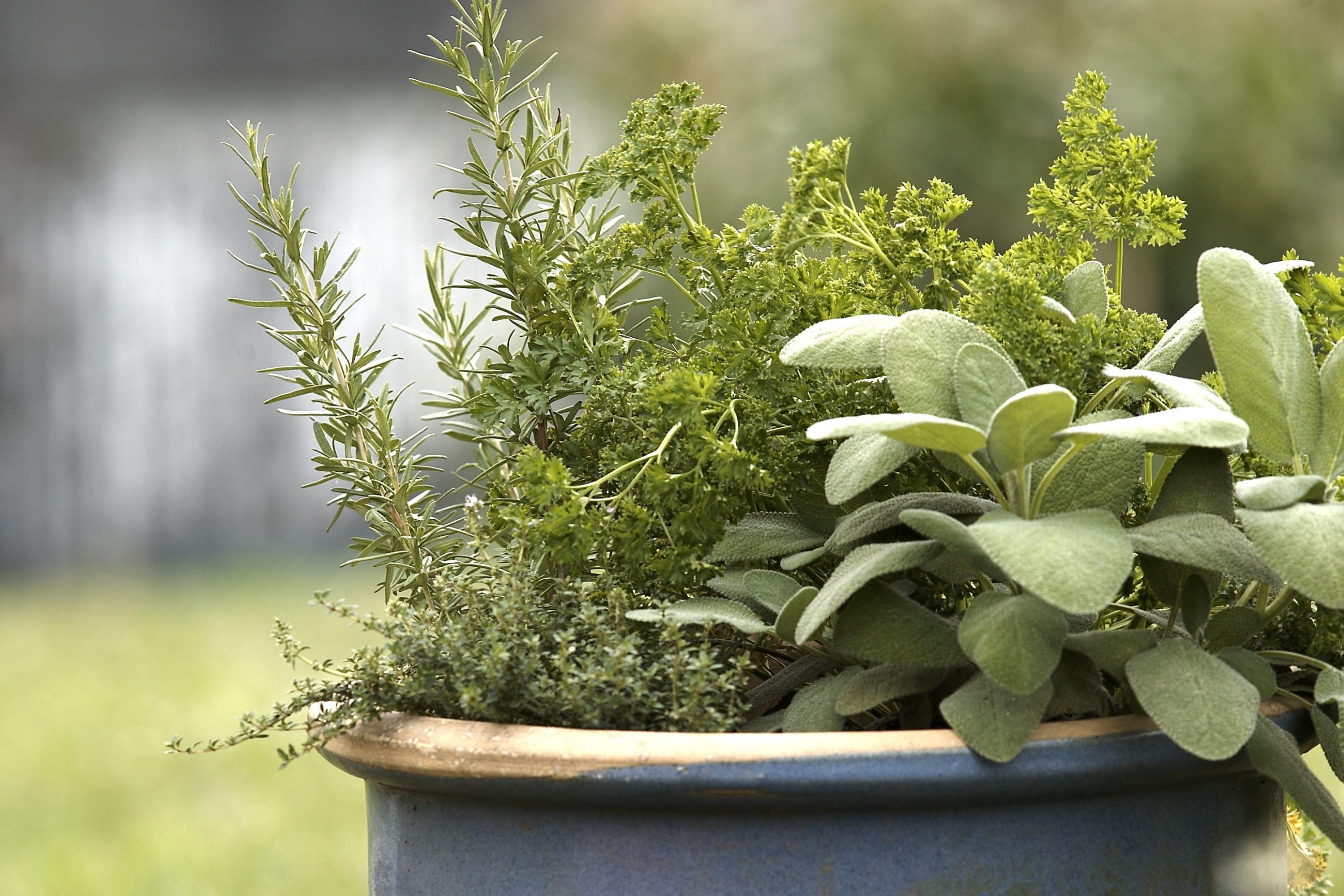
Many popular seeds should be started indoors about 6–8 weeks prior to your area’s last frost date. But for some herbs, you'll need to start their seeds indoors many weeks earlier because they simply are slow growers. Perennial herbs, in particular, germinate slowly and take a while to grow into seedlings that are big enough to transplant into the garden.
Knowing when to start slow-growing herbs from seed will help you significantly shorten the time between transplanting and harvesting. Here are six herbs that you should start from seed sooner than you think, so they'll be ready to transplant outdoors once temperatures are warm enough. With any luck, you'll be able to harvest them before the end of spring, and even into summer.
Bob Stefko
1. Thyme
Really tiny seeds, very slow germination, and low germination rates often make growing thyme (Thymus vulgaris) from seed challenging. In fact, even in perfect growing conditions, it can easily take this drought-tolerant herb three or more weeks just to sprout. You’ll need to sow seeds at least 8–10 weeks before your last frost date. Wait to transplant seedlings once they have two or three sets of true leaves.
Growing Conditions: Full sun and well-drained soil
Size: Up to 1 foot tall and 1 foot wide
Zones: 5–9
Bob Stefko
2. Chives
It’s easy to direct seed chives (Allium schoenoprasum) in your garden as soon as the soil warms up, but if you want an earlier harvest, sow the seeds in flats at least 8 weeks before your area’s last frost date. Sow several seeds per cell, and look for sprouts in 7–14 days. Thin to 3–4 seedlings once they reach a couple inches tall. Once temperatures stay above freezing, transplant seedling clusters into your garden 2–8 inches apart in rows 18 inches apart.
Growing Conditions: Full sun to part shade and well-drained soil Size:
Zones: 4–8
3. Rosemary
Plan ahead if you want to grow rosemary (Salvia rosmarinus) from seed because you’ll need to start seeds in flats 10–12 weeks before your area’s last frost. Cover the seeds lightly because they need light to germinate in 14–21 days. Transplant the seedlings to individual containers when the plants have two sets of true leaves, and then transplant the seedlings outdoors after the last frost.
Growing Conditions: Full sun and well-drained soil
Size: Up to 6 feet tall and 4 feet wide
Zones: 8–10
Related
Dean Schoeppner
4. Parsley
When growing your own parsley (Petroselinum crispum) from seed, it can take up to 30 days to germinate this biennial plant. To grow parsley indoors, soften the seed coat by soaking the seeds in water overnight prior to planting. Sow seeds in 1-inch cell containers about 8 weeks before the last spring frost date in your area. Transplant seedlings after the soil warms up.
Most gardeners grow parsley as an annual and use its first-year leaves to flavor foods before it dies back when a hard frost arrives. In USDA Hardiness Zones 3 and warmer, parsley roots can survive winters and emerge in spring as second-year plants that only produce flowers and seeds.
Growing Conditions: Full sun to part shade and well-drained soil
Size: Up to 1 foot tall and 1 foot wide
Zones: 2–11
Bob Stefko
5. Oregano
To grow oregano from seed, sow seeds indoors in flats 8–10 weeks before the last frost date in your area. The seeds should be tamped gently into the soil instead of being covered by soil because the seeds need light to germinate. Transplant the seedlings to individual containers when they have two sets of true leaves. After the last frost date in your area has passed, transplant the seedlings outdoors.
Growing Conditions: Full sun and well-drained soil
Size: Up to 3 feet tall and 2 feet wide
Zones: 4–8
Peter Krumhardt
6. Sage
Start growing your own sage (Salvia officinalis) from seeds about 8 weeks before the last frost date in your area. Sow 2–3 seeds in individual containers. After the seeds germinate in 7–21 days, thin the seedlings to one plant per container. Transplant the seedlings outside after the last frost in your area.
Growing Conditions: Full sun and well-drained soil
Size: Up to 3 feet tall and 3 feet wide
Zones: 4–8

 English
 Arabic
 Spanish
 Portuguese
 Deutsch
 Turkish
 Dutch
Dutch
 Italiano
 Russian
 Romaian
 Portuguese (Brazil)
 Greek
Greek