


Art Sleuths May Have Recovered Traces Of Da Vinci's DNA From One Of His Drawings
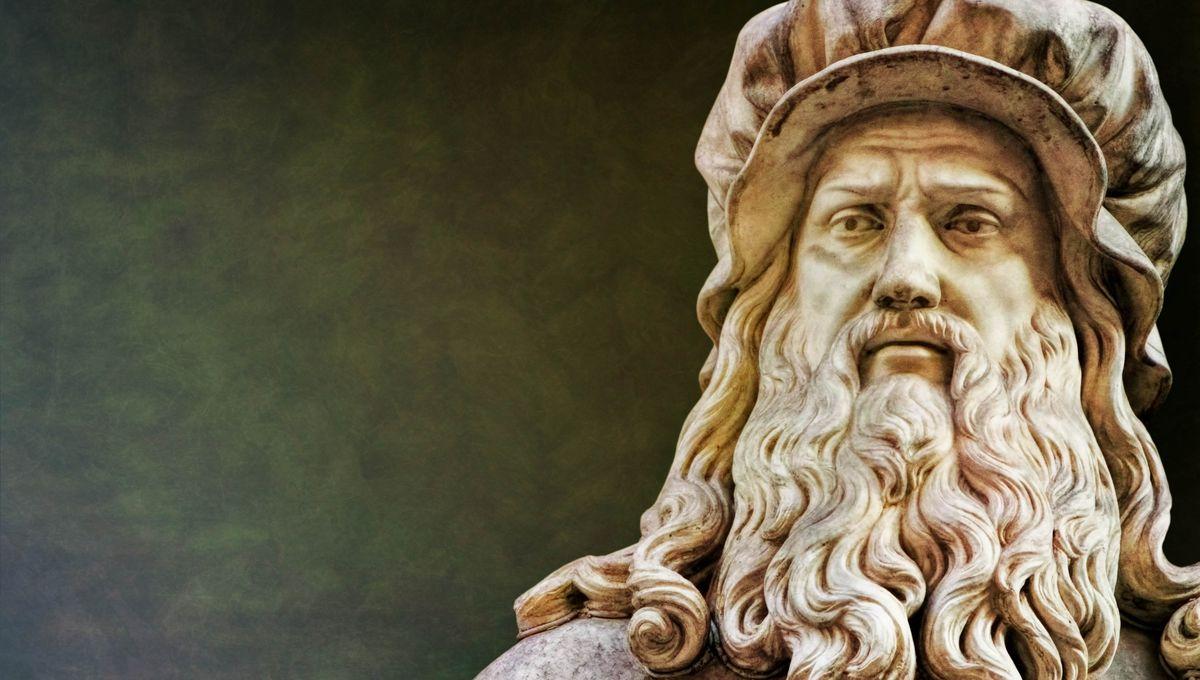
Art Sleuths May Have Recovered Traces Of Da Vinci's DNA From One Of His Drawings
Scientists may have recovered DNA belonging to Leonardo da Vinci from a drawing and other objects he touched while alive. If they’re correct, this development represents a significant milestone in a decade-long quest to profile the famous artist’s genome.
The rest of this article is behind a paywall. Please sign in or subscribe to access the full content. Cultural heritage objects, such as drawings, manuscripts, or archival documents, are not just sources of historical information; they can also harbor biological data. For instance, it is known that Leonardo da Vinci, the legendary renaissance polymath, used to paint with his fingers as well as his brush. During this process, some of his DNA could have been transferred to the canvas and may even remain to this day. If this DNA could be recovered, scientists could probe it for new insights into the master artist’s life. Researchers also believe that such data could have wider implications for "arteomics", an emerging field that complements traditional art analysis through scientific methods to learn more about an object’s creator, their environment, and the history of the object itself. It can also be used to help authenticate specific pieces or identify the artists behind unsigned work. But while this may sound good on paper, there are problems. Cultural objects are typically one-of-a-kind artifacts and extremely fragile. This means they are difficult to examine without relying on more invasive analytical techniques that could damage them. At the same time, the DNA traces on any given object can become contaminated by contact with other people over the centuries, be it while the object is in storage, when it is handled by subsequent owners, or even as it is prepared for analysis in the lab. This makes it difficult to separate a biological signal from biological noise. However, members of the Leonardo da Vinci DNA Project may have found a way around these hurdles by developing a new, minimally invasive sampling technique to recover DNA from cultural heritage objects. In a new preprint article, which is yet to undergo peer review, they claim to have potentially recovered samples of da Vinci’s DNA from a chalk drawing known as the “Holy Child”. The drawing was likely created sometime between 1472 and 1476 and depicts a young boy’s head slightly inclined to one side. It was acquired by the late art dealer Fred Klein in the 2000s and was attributed to the master artist due to some characteristic left-handed hatching, though this remains in dispute because it is possible the drawing was made by one of da Vinci’s students. Using swabs similar to those used for COVID-19 testing, researchers were able to collect samples of DNA from the drawing. The team also collected DNA from a letter that was supposedly written by da Vinci’s cousin, Frosino di ser Giovanni da Vinci. By sequencing the Y chromosomes of the DNA collected from the drawing and the letter, the samples were found to share a common ancestor in Tuscany, the region of Italy where da Vinci was born. This suggests the DNA from the drawing did indeed belong to the artist, but it isn't conclusive. At present, there is no way to confirm that the DNA belonged to da Vinci; this is because the artist has no known descendants and his remains were disturbed at their burial site during the French Revolution. In addition to human DNA, the team also recovered DNA belonging to a mix of fungi, bacteria, plants, and viruses that had accumulated on the drawing over the centuries. The data from these organisms has its own uses. It can help shine a light on the nature of the materials used by the artist to create his work, as well as offering insights into how the piece was stored, conserved, and handled by others. So while this study may not conclusively link the Holy Child to da Vinci, the results are a massive step toward this aim. “In summary, minimally invasive swab-based sampling, coupled with low input next generation DNA sequencing, can recover detectable, multi-domain biological material from cultural heritage objects and can support comparative profiling across artifacts and controls,” the team write in their preprint paper. “The current dataset provides a practical baseline for feasibility and conservation-oriented monitoring hypotheses.” [This is all super technical. I would be tempted just not to include these quoted portions, since I'm not sure they add anything. But then there would be no quotes in the whole piece.] The preprint, which is a preliminary version of scientific paper awaiting peer review, has been posted to bioRxiv.

 English
 Arabic
 French
 Spanish
 Deutsch
 Turkish
 Dutch
Dutch
 Italiano
 Russian
 Romaian
 Portuguese (Brazil)
 Greek
Greek