


If you’re decorating or refreshing your home in 2026, don't be too quick to reach for trending aesthetics. When we asked designers what decor trends are on the horizon, the message was loud and clear: Relax and enjoy.
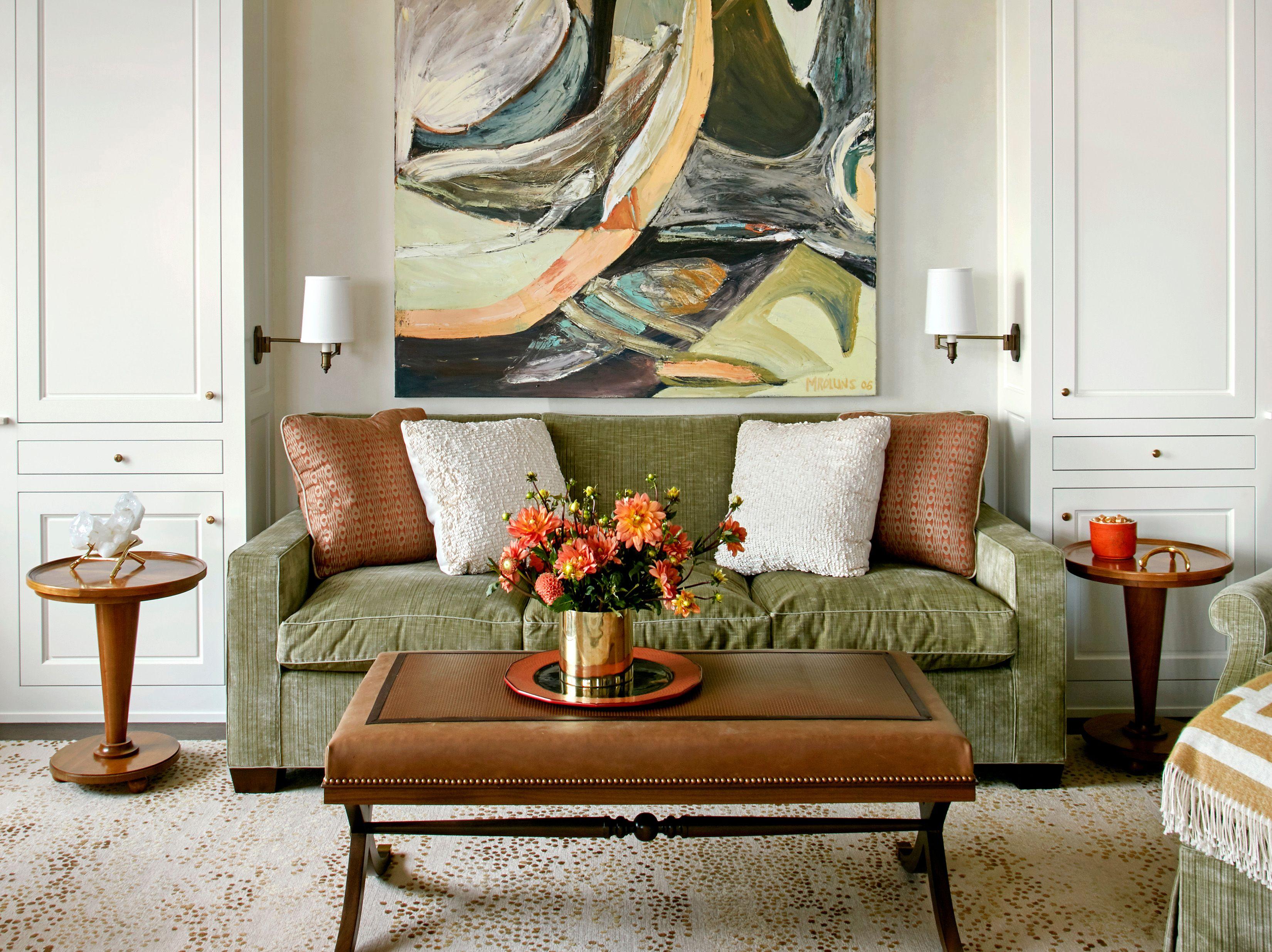
Designers and clients are seeing a shift from homes that look good to homes that feel good. There is less of an emphasis on styling, and more attention to comfort and stylish practicality. Sumptuous textiles with inviting textures, such as velvet, are hugely popular among designers and their clients. Likewise, people are reaching for warm color schemes and lighting to create a sense of welcome and retreat. Read on to learn more about 2026 interior design trends.
Adam Albright
In: Lush Colors and Textures
Out: Designing Purely for Aesthetics
Designers today believe your home should feel as good as (or even better than) it looks. There's an overt emphasis on sensuality this year that goes hand-in-hand with the year's other trends of warm colors and hand-crafted elements,
"We’re moving away from cold, over-sanitized spaces defined by smooth, glossy surfaces and 'perfect' finishes," says designer Sarah Akbary of Sarah Akbary Interiors. "The new language is warmth, imperfection, and tactility—medium-toned woods, limewashed plaster, unlacquered metals, layered textiles."
Huma Sulaiman of Huma Sulaiman Design agrees. "We’re currently loving lush, cocooning interiors drenched in sensual colors, [such as] emerald, garnet, plum and deep sapphire. We’re increasingly pulling velvet and letting it take center stage."
"The tactile, layered approach invites people to slow down and engage with their surroundings, to feel calm, connected, and grounded," Akbary says. You can achieve a more sensuous home by shopping with your hands. Go in person to stores to make sure you like how certain fabrics feel. Also focus on finding lighting that's task-appropriate but not too bright or too cool.
Haneen Matt
In: Warm, Earthy Color Schemes
Out: Stark Grays and Whites
When we chatted with designers about 2026 trends, 'warmth' was a term mentioned more than any other. Color is one of the quickest ways to achieve warmth in your home, especially when you opt for earth tones. Ryann Swan Hackett of Ryann Swan Design recommends rich hues, such as ochre, oxblood, olive, and tobacco brown, which "feel like a return to personality in interiors."
Additionally, designers recommend bringing in medium and dark wood tones to enhance your warm color scheme and add texture.
John Granen
In: Mixed Monochrome Hues
Out: Total Color Drenching
Color drenching in bold hues is fading from popularity. In its place is a preference to mix different shades of the same color. "Monochromatic rooms are back, but with new depth," Akbary says. "Instead of one flat hue, it’s about exploring a full spectrum within a color family—a blue room that moves from navy velvet to powder blue silk to steel-grey metal."
Other designers recommend combining neutrals in different textures to create quiet luxury. "We’re moving away from saturated tones and statement walls toward subtle, layered neutrals that allow texture to speak louder than color," Meridith Baer of Meridith Baer Home says.
Using a spectrum of one color automatically creates depth and allows you more flexibility than when you're locked into a single hue everywhere.
In: Lived-In (and Sometimes Messy!) Spaces
Out: Perfect Museum-Level Styling
From a design standpoint, the directive seems to be, 'do less.' However, if you want to achieve the layered, human-centered look of 2026, focus on arranging your space for how you live and collecting quality pieces that make you happy.
Designers and home decorators are rejecting perfection this year. "The spaces I love feel warm, human, and a little bit messy," Sam Sacks of Sam Sacks Design says. After years of seeing perfectly styled spaces online, people are realizing that not only is this approach unrealistic, but it also feels unpleasant and stiff.
"The perfectly staged 'less is more', purely edited space with three curated objects has had its run," Sulaiman says. "Although interesting from a purely aesthetic and editorial standpoint, these layouts aren’t practical on the daily."
Related
In: Mixed Metals and Finishes
Out: All-Brass Hardware
Combining different hardware finishes is another way to access 2026's emphasis on storytelling in design. When every finish in the kitchen is brass, you can tell it was all purchased at once. Layering different finishes creates more of a collected narrative. "Rather than being matchy-matchy, it curates contrast, like layering jewelry on a beautifully tailored outfit," Sulaiman says.
Sulaiman suggests pairings, such as brass with nickel and aged bronze with chrome to create "a subtle dialogue and light-catching accents." Try swapping out just one aspect of your kitchen and bathroom hardware to a new finish to begin your layering journey.
In: Handcrafted Pieces
Out: Fast Furniture
Opting for handmade or small-batch pieces is one of the easiest ways for your home to feel authentic and soulful, even if you have to DIY a few pieces yourself.
"We’re seeing more hand-blown glass, forged metals, and irregular shapes that add personality — it’s less about perfection and more about craftsmanship," Baer says. Baer also notices her clients gravitate toward pieces that feel human and grounded.
Designers are also seeing a level of sophistication and quality in clients' choices. "We’re moving away from rustic farmhouse and overly distressed looks, toward refined craftsmanship,"Hillary Cohen of HCO Interiors says. Rather than pieces that look old but are actually brand new, Cohen says people want furniture and decor that will last a long time, whether it's new or vintage.
Emily J. Followill
In: Patterned Upholstery and Dramatic Drapery
Out: Plain Fabrics
Home decorators are leaning into the traditional maximalism of the last few years in bolder ways. They're upholstering and adding curtains to walls, installing canopies, and draping fabric on the ceiling in tent-like formations.
"Nowadays we are embracing tactility and detail," Sulaiman says. "Surfaces inviting touch and absorbing light differently throughout the day feel more soulful."
"Dramatic drapery continues to dominate, but with an architectural twist: fabrics used as space dividers, ceiling canopies, or soft wall coverings," Sulaiman continues. Using fabric adds movement, liveliness, and drama to a room in a more advanced way than paint can. Sulaiman suggests using fabric to blur the boundaries between rooms or between walls and windows.

 Arabic
 French
 Spanish
 Portuguese
 Deutsch
 Turkish
 Dutch
Dutch
 Italiano
 Russian
 Romaian
 Portuguese (Brazil)
 Greek
Greek