


Why Don't Snorers Wake Themselves Up?
Why Don't Snorers Wake Themselves Up?
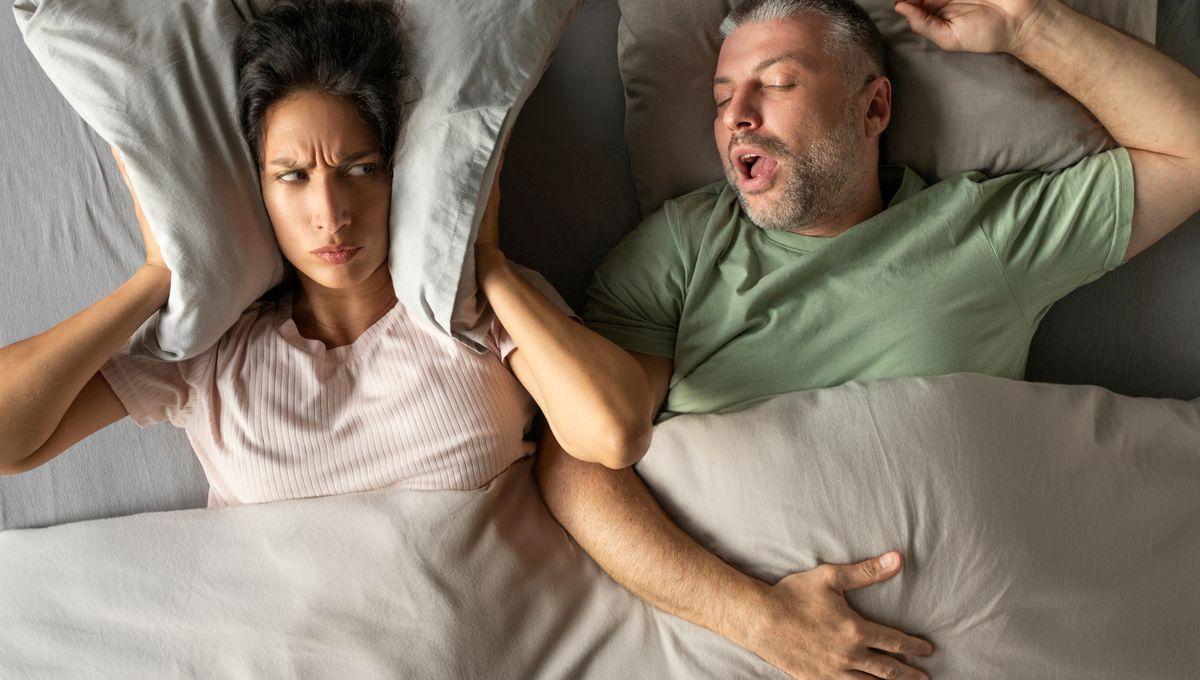
It’s a question asked – often loudly, at 2 am – by everyone who’s ever had to share a bed with a snorer: how the hell can you sleep through that noise?! Well, we have the answer – or, we should say, answers.
The rest of this article is behind a paywall. Please sign in or subscribe to access the full content. First, let’s be clear: sometimes, a person can wake themselves up by snoring. “Some snorers are awakened by their loud snoring sounds, others aren’t,” wrote Manish Shah, a general medical practitioner and dentist from the Sydney Center for TMJ and Sleep Therapy. “For those who do wake up from their snoring, the disturbance only takes place for a few seconds.” Sometimes, snorers know they wake themselves up – one 2022 study found that snorers were aware of at least four or five awakenings in the night from snoring. Far more almost certainly occur that they miss, though – for those with sleep apnea, which almost always manifests with extreme snoring, sufferers can be forced awake dozens or even hundreds of times throughout the night. The evidence bears this out, too. Multiple studies have confirmed that snorers have more disturbances in their sleep cycles, and one 2013 study found that those who snore experience fewer “microarousals” when they wear earplugs to sleep. However, you might argue that these very minor wakings don’t count. After all, most of these disturbances don’t even drag the snorer up into proper wakefulness: “The snorer can go back to sleep again,” noted Shah. “Many of them don’t even remember waking up. They are still in a sleep state when the sleep disturbance happens and do not have a recollection of it in the morning.” So, why isn’t your beloved bedfellow kept awake as much as you are by their noise? Well, the second part of the answer comes down to how our brains work. While you can still hear sounds while you’re asleep, a part of your brain called the thalamus filters out anything considered “low importance” – it’s why we can get used to the noise of traffic on the road outside our window, for example, or the sound of family or housemates going about their business in other rooms, but a fire alarm, or somebody shouting our name, would wake us up immediately. Now, like that traffic noise, our brains are basically used to the sound of our own snoring. It’s always there, and it comes from us – so, basically, our subconscious knows it’s not important. “The snoring sound you produce is filtered out because your ears and your entire system are used to that sound,” explained Shah. “Your brain also prioritizes restfulness, so it won’t trigger your body to wake up, even with the presence of your snoring sound.” The good news, if snoring is keeping you awake at night, is that the problem has a solution. Many, in fact. To reduce your snoring, “you can try sleeping on your side – either side – and then potentially sleeping elevated,” advised Virginia Skiba, MD, a neurologist and sleep medicine physician at Henry Ford Medical Center in Sterling Heights, Michigan, back in 2024. The sleeping position to avoid is on your back – “you’ve got gravity working against you,” Skiba explained – so any tactic that might wake you up if you roll over can stop snoring before it even starts. One thing you definitely shouldn’t do, however, is ignore snoring – although, for those of us forced to share a bed with a snorer, such a prospect is kind of impossible. If it’s a sign of sleep apnea, then there can be some pretty dire consequences – high blood pressure, heart attacks, strokes, diabetes – and short-term, it can just make you feel permanently groggy. Unfortunately, the treatment for that is a sleep apnea machine, or CPAP. While modern versions of these machines aren’t too noisy – they’re about 30 decibels, which is comparable to a soft whisper – they are constant. But hey, at least eventually, your thalamus should decide it’s low priority. Right? All “explainer” articles are confirmed by fact checkers to be correct at time of publishing. Text, images, and links may be edited, removed, or added to at a later date to keep information current. The content of this article is not intended to be a substitute for professional medical advice, diagnosis, or treatment. Always seek the advice of qualified health providers with questions you may have regarding medical conditions.

 Arabic
 French
 Spanish
 Portuguese
 Deutsch
 Turkish
 Dutch
Dutch
 Italiano
 Russian
 Romaian
 Portuguese (Brazil)
 Greek
Greek