


2. Genghis Khan

Fueled by a powerful belief in divine favor and his own vision, Genghis Khan united disparate Mongol tribes and conquered vast territories. His unshakable confidence in his destiny reshaped the medieval world (en.wikipedia.org).
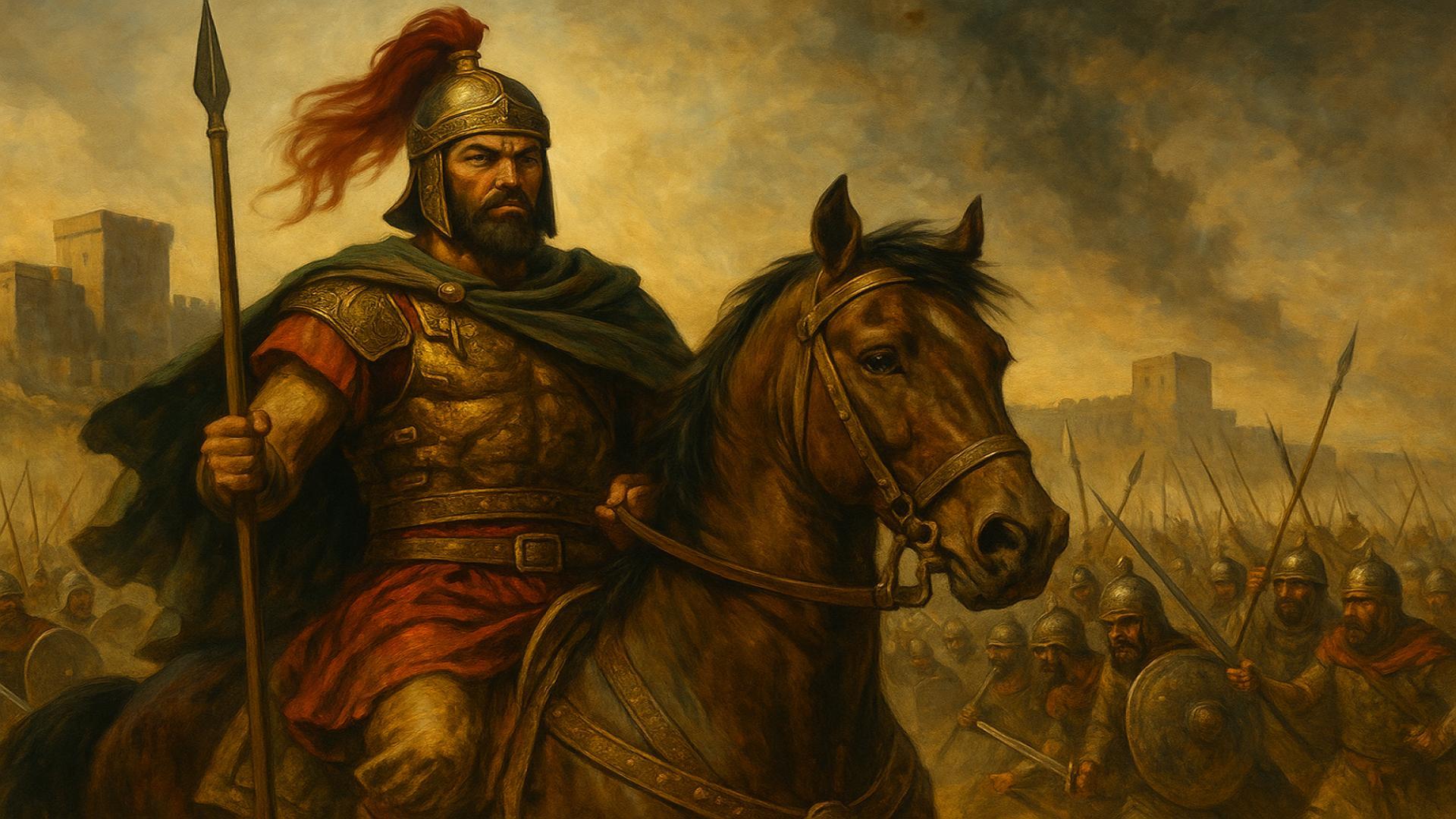
Fueled by a powerful belief in divine favor and his own vision, Genghis Khan united disparate Mongol tribes and conquered vast territories. His unshakable confidence in his destiny reshaped the medieval world (en.wikipedia.org).

Known as the ‘Scourge of God’, Attila considered himself unstoppable. This ruthless confidence drove his campaigns against both Western and Eastern Roman Empires, instilling terror across Europe (britannica.com).

Tutored by Aristotle and inspired by his divine lineage, Alexander believed he was destined for greatness. His boundless ambition led to one of the largest empires in history, but his belief in his own invincibility contributed to reckless campaigns.

The first emperor of a unified China, Qin Shi Huang’s belief in his authority led to feats like the Great Wall and his Terracotta Army. His obsession with immortality shows his belief in his own exceptionalism.

Tokugawa Ieyasu’s confidence in his hereditary right and military strategy cemented his rule over Japan. His unwavering self-belief established a lasting shogunate and set a model for future Japanese leaders.

Tamerlane’s conviction in his divine right to conquer matched his brutality. He emulated Genghis Khan and carved a massive empire, showing unwavering faith in his destiny.

Undeterred by the odds, Hernán Cortés spearheaded the conquest of the Aztec Empire, convinced he was favored by fate and God. His self-belief galvanized his men and terrified enemies.

Immortalized as Dracula, Vlad III ruled through sheer terror, convinced of his right to brutal control. His gruesome methods demonstrated belief in his infallibility (britannica.com).

Shaka Zulu revolutionized warfare in southern Africa, convinced he alone could unite the Zulu. His reforms birthed a fearsome army and expanded his domain, but his hubris led to internal dissent.

A visionary yet ruthless military leader, Oda Nobunaga’s conviction in his revolutionary approach transformed feudal Japan. His disregard for old customs made enemies.

Pizarro’s audacious self-belief enabled him to overthrow the massive Inca Empire with limited resources, dramatically altering South American history (history.com).

Crowned Russia’s first Tsar, Ivan IV’s ruthless campaigns were justified by his belief in absolute power. His paranoia and cruelty were fueled by the idea that he was divinely appointed (britannica.com).

By crossing the Rubicon in 49 B.C., Julius Caesar demonstrated supreme self-assurance, defying the Roman Senate’s orders and initiating a civil war. This bold move led to his consolidation of power and eventual appointment as dictator perpetuo (“dictator in perpetuity”) in early 44 B.C. His disregard for traditional republican governance and accumulation of power shocked Rome, culminating in his assassination on the Ides of March, 44 B.C., by a group of senators who feared his monarchical ambitions (en.wikipedia.org).

A leader of unyielding ambition, Alaric I, king of the Visigoths, sacked Rome in 410 AD—a feat born of sheer will and belief in his destiny, forever altering European power dynamics. This event marked the first time in nearly 800 years that Rome had fallen to a foreign enemy, signaling the decline of the Western Roman Empire (britannica.com).

 English
 Arabic
 French
 Spanish
 Portuguese
 Deutsch
 Turkish
 Dutch
Dutch
 Italiano
 Russian
 Romaian
 Greek
Greek