


Gary Gershoff/Getty Images
We may receive a commission on purchases made from links.
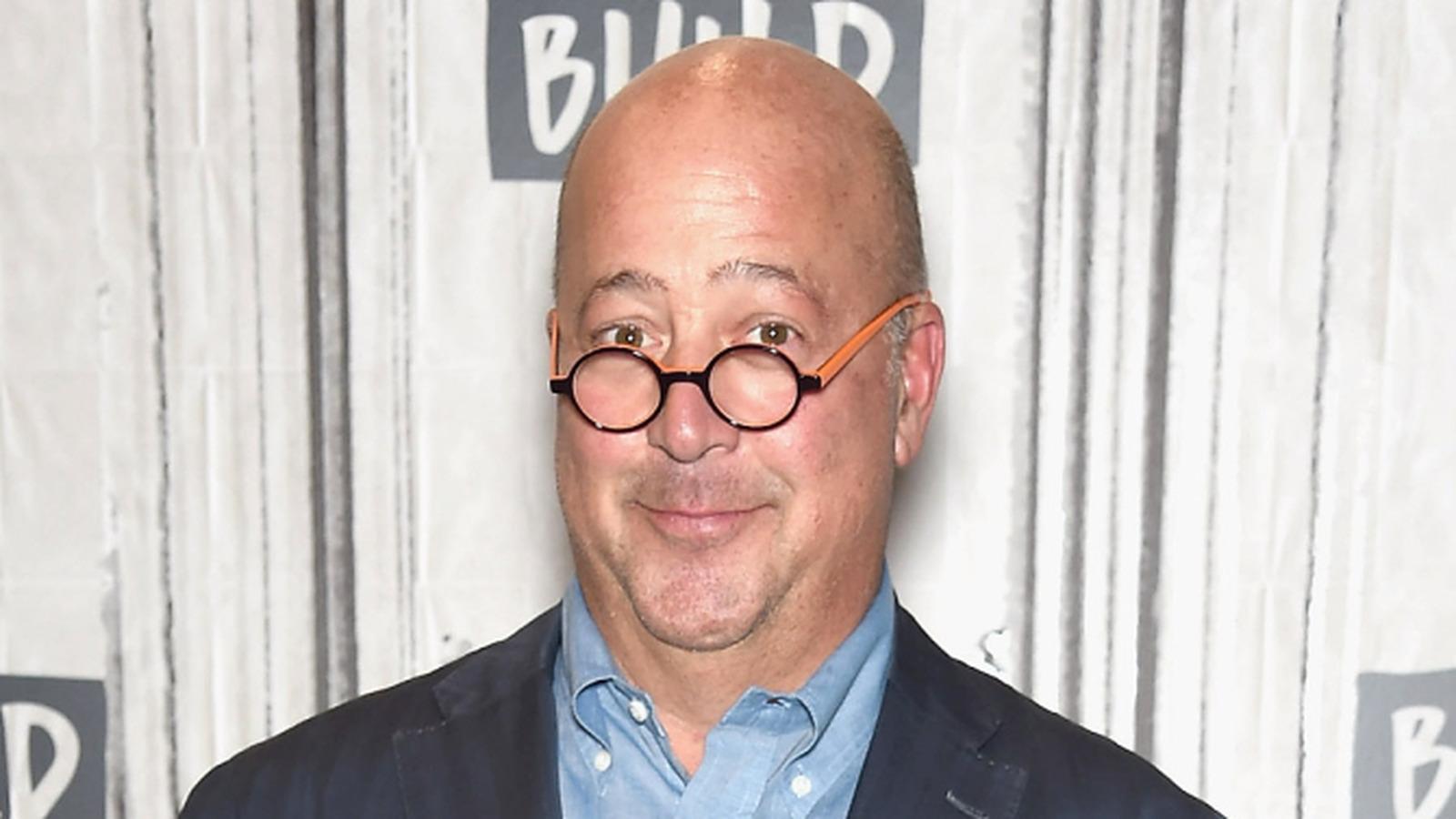
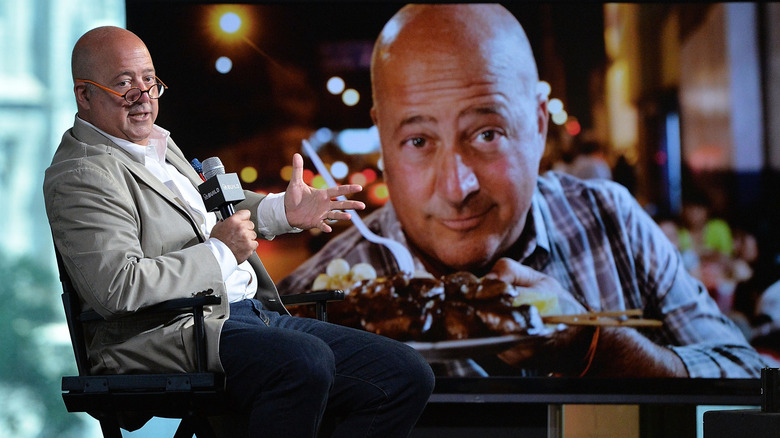
Most foodies know Andrew Zimmern from his hit show "Bizarre Foods," which made its debut on the Travel Channel in 2006. Since that time, the chef has helmed other TV shows, authored books, and launched many business ventures, including a media production company and a hospitality consulting firm. His position at the top of the culinary entertainment landscape is particularly impressive when you consider the many tragic details about Zimmern's life, including his struggles with addiction and family woes. The celebrity chef has also been embroiled in his share of scandals, some of which have had a lasting impact on his career and legacy.
Over the years, Zimmern has found himself in hot water with fans more than once due to his careless statements. The chef and TV show host's choice of words angered proprietors of Chinese-American restaurants in the Midwest, as well as the customers who swear by these establishments. Similarly, his characterization of certain cuisine has been viewed as tone-deaf, and accusations that "Bizarre Foods" didn't portray its subjects in a respectful light have dogged the chef since "Bizarre Foods" debuted. Zimmern addressed many of these allegations publicly and has even apologized in a few instances. These days, Zimmern is still active in the culinary world, publishing a cookbook in 2025 and creating new shows, but his past remarks have dampened his star power.
Zimmern insulted Chinese-American restaurants and Midwestern foodies
Aaron Davidson/Getty Images
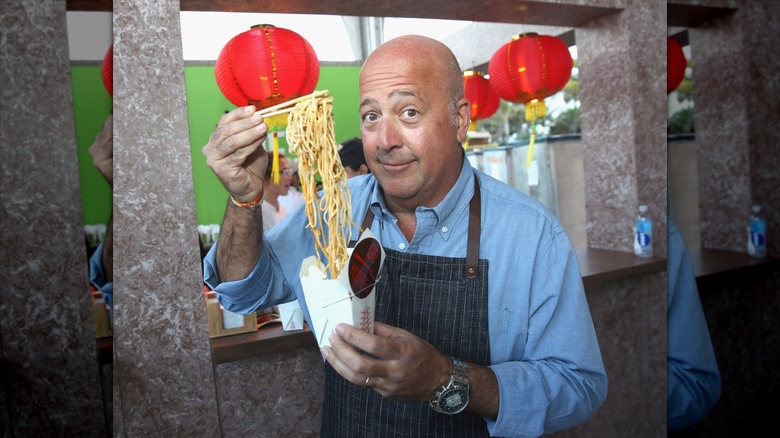
If you love mom-and-pop Chinese restaurants, you're not alone. While these establishments sometimes lack the creature comforts of five-star eateries, they make up for it in flavorful dishes that are hard to come by in Americanized restaurants. It's also worth noting that these restaurants are often run by immigrants, and during times when anti-Asian sentiments were at a peak, the restaurant business provided a path to citizenship for people seeking a new life in the States. This context is important to understand why Andrew Zimmern received pushback after comments he made while promoting his new Chinese-American restaurant, Lucky Cricket, were published by Fast Company.
In an interview with the magazine, Zimmern characterized Chinese restaurants in the Midwest as subpar, referring to them as "horsesh*t," and positioned himself as the best person to introduce Midwesterners to ingredients like "hot chili oil ... hand-cut noodle[s] ... and a real roast duck." To Asian-American chefs working in the Midwest, these statements were a slap in the face. In the Washington Post, Indiana-based restaurateur Edward Fong said, "[Zimmern] didn't just insult Chinese independent restaurants like ourselves ... but he really insulted people who like to come to our restaurants."
Zimmern apologized for his statements, saying, "I let myself get carried away and have too much fun ... You stop being mindful, and you say something flippant." However, the damage was done, and Lucky Cricket shuttered in 2019 after eight months in business. "Bizarre Foods" was canceled soon after, and some speculated that the controversy had something to do with it. Media outlets claimed the real reason "Bizarre Foods" was canceled was because the Travel Channel had pivoted to different programming.
His comments about Filipino cuisine came off as cultural appropriation
MDV Edwards/Shutterstock
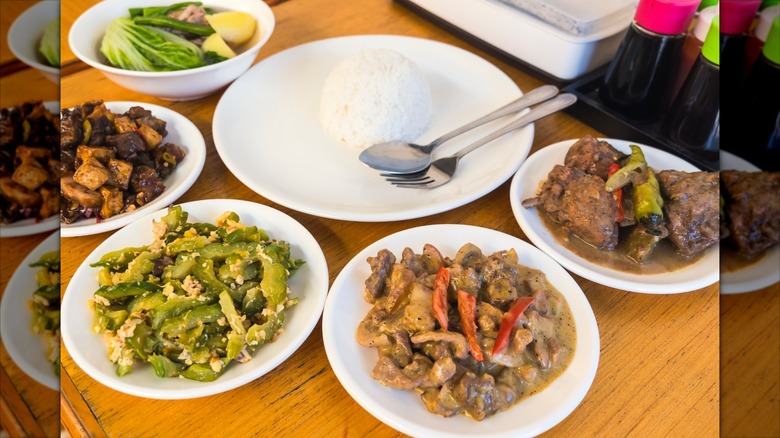
In a 2017 interview with Business Insider, Andrew Zimmern was asked about the next big food trend in the U.S. "I've been calling it for five years ...[Filipino food is] just going to keep getting more and more popular." The chef replied, "We've been obsessed over the last three or four decades in America with appropriating foods of different ethnicities." While this might not seem inflammatory to an outside observer, many in the Filipino-American culinary community found his statements dismissive of what is an established, long-standing cuisine. As explained by Martin Manalansan, director of Asian American Studies at the University of Illinois Urbana-Champaign, "We need to retell the story not so much as someone discovering Filipino cuisine as if it's never existed before, but showcase how it's been a part of a longer history" (via Scripps News).
Zimmern's take highlighted his tendency toward insensitive remarks. In addition to making derogatory comments about Midwestern Chinese-American restaurants, in his infamous Fast Company interview, he used questionable terminology. When asked about his reasons for relocating to Minnesota, the TV host said, "I was actually Shanghai-ed in the 19th, 18th century naval sense of the word." The outdated term refers to tricking or kidnapping someone in an effort to force labor from them, and is largely considered offensive today. Later in the same interview, Zimmern mentioned an "underground railroad" of chefs in Minnesota, a trivializing reference to the network of abolitionists who assisted people escaping slavery in the 18th and 19th centuries.
Zimmern fielded allegations that Bizarre Foods was culturally insensitive
Slaven Vlasic/Getty Images
In our ranking of the best "Bizarre Foods" episodes of all time, host Andrew Zimmern eats his way through dishes like camel ribs, rat hearts, and fermented shark. While these foods are uncommon in the U.S., it's important to remember that every culture and country has its own cuisine and culinary concepts. And in some (but not all) cases, the foods dubbed "bizarre" were essential to regional diets due to a lack of other types of nutrition. As such, Zimmern's hit TV show has come under greater scrutiny since it aired, something the chef himself acknowledged.
In his interview with Fast Company, Zimmern described early seasons of the show as, "Fat guy, goes around the world, eats bugs." When the interviewer stated that those early seasons delved into "exoticism" of other peoples and cultures, the TV chef wholeheartedly agreed. "There was a lot of cultural insensitivity," Zimmern admitted, "There was a lot of playing somebody else's serious cultural totems dear to them for laughs." Ultimately, Zimmern said the tone of the show shifted when he became executive producer, allowing him to have a greater say in how "Bizarre Foods" approached global cuisine.

 English
 Arabic
 French
 Spanish
 Portuguese
 Turkish
 Dutch
Dutch
 Italiano
 Russian
 Romaian
 Portuguese (Brazil)
 Greek
Greek