


Key Points
- Landscapes styled for social media posts and gardens without a habitat for wildlife are out.
- Not maintaining native landscapes is no longer a trend, but cutting down on fall cleanup is.
- Too much hardscaping, synthetic chemicals, and faux nature are also a thing of the past.
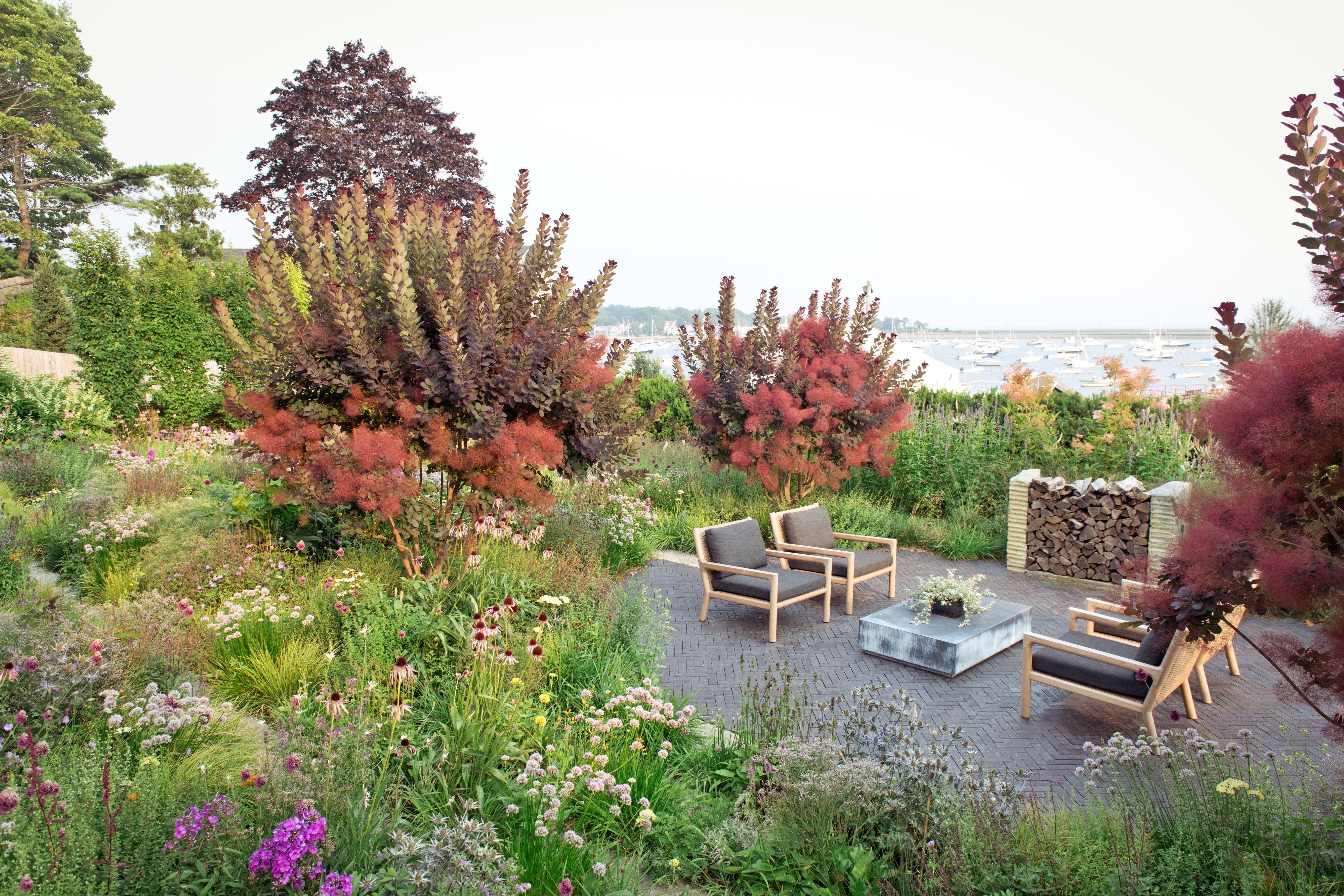
Forget perfection. Today’s designers want gardens that feel alive and a little bit unruly—in the best possible way. Ditch rigid layouts, obsessive cleanup, and make space for pollinators, surprise, and joy. From ditching empty, over-manicured lawns to saying no to chemical quick fixes and over-paving, the message is clear: Gardens should delight, not stress.
Here are the trends top designers want you to skip—and the freedom they’d rather see take root.
- Leigh Adams is a landscape designer at the Los-Angeles-based Studio Petrichor.
- Courtney Olander is the founder and owner of Olander Garden Design in Seattle, Washington.
- Jan Johnsen is co-principal at Johnsen Landscapes & Pools in Westchester County, New York.
- Frank Hyman is the designer behind Cottage Garden Landscaping in Durham, North Carolina.
- Nan Sterman is the founder and owner of Waterwise Gardens in Encinitas, California.
1. Gardens Designed for the Camera
Designers are tired of gardens engineered for Instagram and rigid control. They want spaces made to be enjoyed—playful, reflective, and in collaboration with nature.
“I’d like to see fewer gardens designed for the camera and the ‘finish photograph’, says Los-Angeles-based designer Leigh Adams of Studio Petrichor. She says rectilinear gardens based on quadratic architecture lock us into “fixed expectations that fail to acknowledge natural ebb and flow, growth and decline, and living systems.” In addition, she says, “I’d like to see fewer gardens that have forgotten the concepts of sanctuary, retreat, and the secret gardens of childhood.”
Courtney Olander, who designs gardens in Seattle, says her clients are trending this way, too. “In general, I'm finding clients want less harsh and sparse, controlled modernism and more soft, romantic, and whimsical. A modern garden can still have abundance and surprise! I love finding that intersection.”
To find that sweet spot, she wants us to let go of some of the rules we were brought up with about how a garden “should” look. She encourages clients to pursue what they love, and what makes them happy.
“Roses? Jewel tones? Plants for pollinators? It's my job to find a way to bring it all together. Creating and being in a garden should be fun." According to her, fewer rules mean more fun and joy, and less work translates into fewer rules. "It’s a circle that goes both ways,” she says.
2. Gardens That Neglect Habitat
Gardens that don’t support pollinators by providing habitat, shelter, water, and forage, especially around businesses, homes, schools, and community centers, are missing out on ecological health, birdsong, beauty, and wonder, Adams explains. Instead, the trend goes towards welcoming nature back into your yard. By inviting beneficial insects and pollinators into your yard, you boost ecological diversity, improve soil health, and support wildlife while growing healthier plants that need less fertilizer and pesticides.
Conventionally managed lawns are hard on the environment, requiring energy and chemicals while giving little back. Designers say they are no longer the default choice. Landscape designer and author Jan Johnsen from Westchester, New York, would like to see less lawn in designs overall, especially “bare open lawns that have no shape or definition.”
Start by planting pollinator-friendly shrubs and perennials along the edges of your lawn. “It actually makes their backyard space seem larger” than the typical skinny strip edging a bed, Johnsen says.
If you love the look of the smooth green carpet or want a space for playing or lounging, consider what Frank Hyman, a landscape designer based in North Carolina, proposes. “When I wanted to rip out our lawn, my wife asked if we could keep a ‘lawnlet.’ A well-maintained lawnlet makes a gorgeous contrast with perennial beds.”
3. Unmaintained Native Plantings
Native plantings are great for pollinators, but they still need some care. Even meadow plantings need tending; if left untouched, native meadows are easily overtaken by invasives. Surrounding them with “cues to care” like crisp edges, a mown path, or artwork goes a long way to blending them into the neighborhood as intentional rather than unkempt spaces.
Adding native plants in a willy-nilly way and then not taking care of them is a bad idea, Johnsen warns. “It’s important to pay attention to the overall design and structure of the space and then use native plants to fit within that design.”
“I’m despondent over ‘meadow’ gardens that look like the houses they belong to were abandoned, and there is a tick festival going on," agrees Hyman. “Not every random assortment of perennials will look like a meadow for most of the year.”
Also, choosing the right natives for your region and growth conditions is critical. “People think ‘Oh, it’s native, it’ll work,” Johnsen says, “but we need to be a bit more discerning.”
Related
4. Fall Cleanup Overkill
Say goodbye to traditional fall clean-up, and with it, to sore October hamstrings. Experts say that cleaning up perennial stems and leaves removes up to 40% of the local caterpillars and moths that birds need to eat to survive.
“An example of less work and more joy is something as simple as not raking the leaves away in your garden beds,” says Olander. “By dropping the intensive fall clean-up rule, you're creating beneficial habitat for bugs—a massive positive for our environment.”
This is your permission slip to give up on “having everything so perfect,” Johnsen notes. “Leaves to me are such a resource, and we are just throwing them away.”
5. Hardscape Sprawl
Hardscape overkill is out. Instead, plants are in. Designers and some municipalities are calling for more plants and less concrete.
“I feel we pave areas almost without thinking. I see people make patios straight up to the base of the house. No one is going to sit at the base of the house,” says Johnsen. “Over-paving reduces soil health, stormwater resilience, and room for plants. Less paved areas allow more space for plants and create a more thoughtful, livable garden.” Even small reductions in paving can make a garden feel more welcoming and support the environment by filtering stormwater and supporting biodiversity.
6. Chemical Shortcuts
Designers are moving away from automatic pesticide and fertilizer use and toward organic materials, integrated pest management (IPM), and plant choices that require fewer chemical inputs. Olander recommends reducing or eliminating pesticides, saying, “We're losing our insect population—not just bees—to extinction at an alarming rate.” Plus, many lawn and garden chemicals can be harmful to humans and pets when over-used.
7. Faux Nature
Stop with the plastic plants, artificial turf, and other contrived looks, say designers. For California-based designer Nan Sterman, her pet peeves include using rock mulch for anything other than succulents. People may think that plastic plants and rock mulch will be lower maintenance and last longer than their organic counterparts, but this often isn't the case. Plus it usually doesn't look as good as the real deal.
8. Imported Materials
Designers say the planet—and your pocketbook—will thank you for using local materials instead of those brought in from far away. Specifically, Olander urges using local stone and regionally appropriate materials to reduce carbon footprint and strengthen your landscape's sense of place.
Olander is also keen to say goodbye to tropical hardwoods. “Americans are the biggest consumers of wood originating in rainforests. Use sustainable alternatives such as bamboo, a fast-growing, renewable resource. Or, use materials that are local to the area. For example, if you live in the Pacific Northwest, choose basalt and granite from nearby instead of stone shipped from another country or region of the U.S.”

 Arabic
 French
 Spanish
 Portuguese
 Deutsch
 Turkish
 Dutch
Dutch
 Italiano
 Russian
 Romaian
 Portuguese (Brazil)
 Greek
Greek