


 PUBLISHED
Let’s face it, 2025 hasn’t exactly been the cheeriest of years when it comes to news. But when everything seems gloomy, it helps to look for the light where you can – so let’s do that very thing by reminiscing upon some of our favorite wholesome stories from the last year.
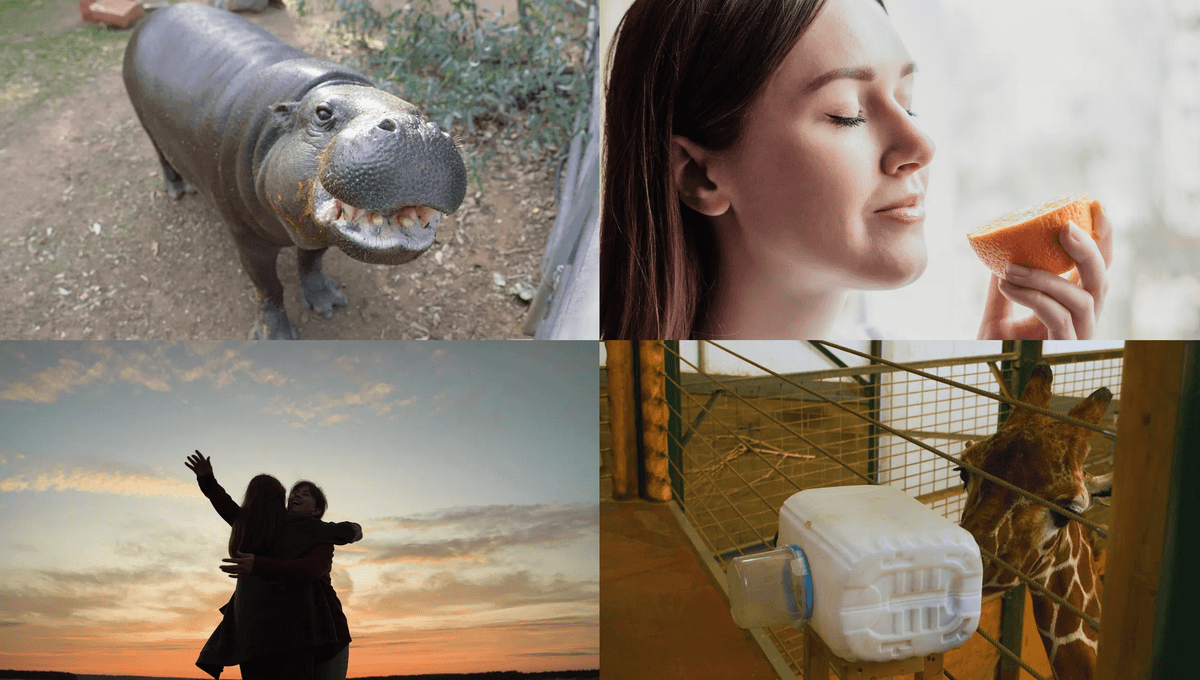
The rest of this article is behind a paywall. Please sign in or subscribe to access the full content. Forget getting a table the Met Gala – the only event we wished we’d been invited to was the 52nd birthday party of Hannah Shirley, the world’s oldest pygmy hippo. ⓘ IFLScience is not responsible for content shared from external sites. The star of San Diego Humane Society’s Ramona Wildlife Center celebrated in appropriate style with a Hungry Hungry Hippos-themed bash, complete with delicious snacks, oversized toys representing the different pieces of the game, and an adorably goofy-looking carboard hippo. Nothing beats a “When we hug, the combination of tactile and thermal signals increases our sense of body ownership, so we are more connected to our embodied sense of self. Feeling warm touch on the skin enhances our ability to sense ourselves from the inside and recognise our own existence. We feel, ‘this is my body, and I am grounded in it’,” said study co-author Dr Laura Crucianelli in a statement. In news that might just be enough to tempt me into petting a dinosaur, were they brought back to life, scientists discovered the first evidence that dinosaurs may have had a type of soft buccal tissue – AKA chubby cheeks. This might not have made them any more adorable looking, but just let me live in hope, okay? The biggest implications from this finding, however, could be for our understanding of how these ancient reptiles chewed their food. While Melman from Madagascar might willingly step into the vet’s office, giving a real-life giraffe medical treatment isn’t always quite so easy. But earlier this year, after three years of training, 16-year-old reticulated giraffe Mahiri, who lives at Banham Zoo in the UK, was finally able to breathe easy after learning how to use an inhaler. ⓘ IFLScience is not responsible for content shared from external sites. This isn’t the kind of inhaler you or I might be given; it was specially designed for Mahiri so that she could fit both her mouth and nose in, with a little snack inside for encouragement too. That’s an addition I’d like to see added to more human medicines. Barbary lions, a population of the Northern lion subspecies (Panthera leo leo), once roamed all the way from the Atlas Mountains to the Mediterranean. Now, they’re widely believed to be extinct in the wild, with only a small population of less than 200 remaining in captivity. However, that population got a very cute boost back in August, with the arrival of four Barbary lion cubs at Dvůr Králové safari park in the Czech Republic, and the hopes of one day reintroducing this rare group of big cats back into the wild. The loss of your sense of smell (known as anosmia) is one of the most well-known symptoms of COVID-19, but for some people with long COVID, it didn’t come back – and the impact that can have isn’t to be underestimated. But earlier this year, 12 long COVID patients with anosmia finally had their sense of smell restored after receiving a surgery that’s typically used to help people breathe more easily. “Before I had the surgery on my nose, I had begun to accept that I would probably never be able to smell or taste things the way I used to. It seemed dire, and after around two and a half years of parosmia, I had totally changed my lifestyle,” Penelope Newman, one of the patients, said in a statement at the time. “Since the surgery, I have begun to enjoy food and smells the same way I used to. I can now cook and eat garlic and onions (and people can cook for me too). I can go out to eat with my friends and family. Got any more wholesome stories that brought you joy this year? Let us know in the comments.The best birthday bash of the year
Scientists figured out why warm hugs make us feel good
Jet2 holiday toasty squeeze, but why does it make us feel quite so nice? This year, science finally gave us the answer, determining that it involves how we sense temperature, and how that in turn enhances our sense of self.Dinosaurs might have had chubby cheeks
A giraffe learned how to use an inhaler
A conservation win for Barbary lions
Long COVID patients got their sense of smell back



 Arabic
 French
 Spanish
 Portuguese
 Deutsch
 Turkish
 Dutch
Dutch
 Italiano
 Russian
 Romaian
 Portuguese (Brazil)
 Greek
Greek