


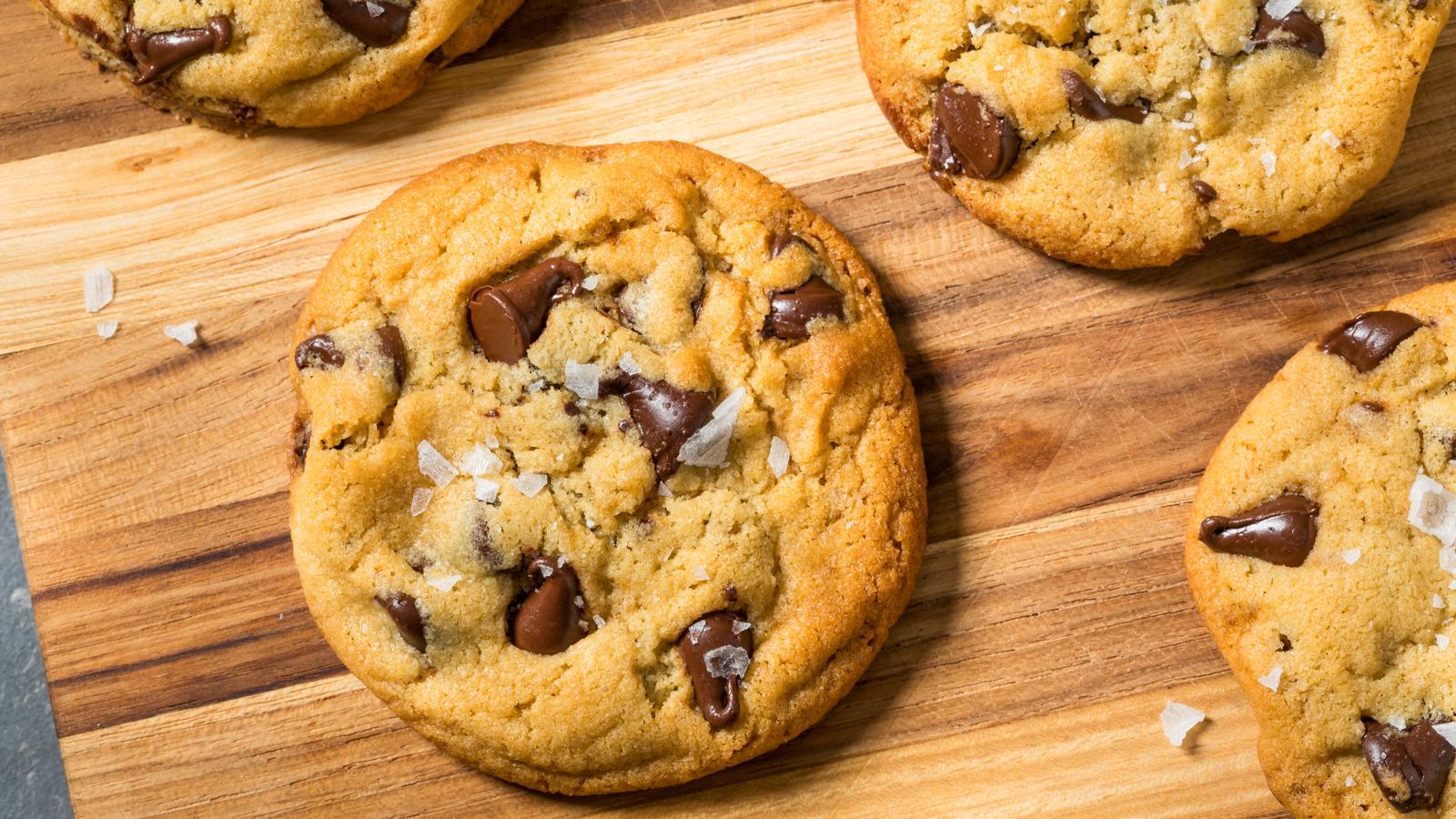
Bhofack2/Getty Images
When you think of a chocolate chip cookie, you probably have a perfect example in mind, whether it's one from your favorite bakery or the batches your grandma used to make when you were a kid. But, when you make them yourself, they're not quite the same, and you end up disappointed. There are some mistakes everyone makes with chocolate chip cookies, and these could be holding you back from perfection.
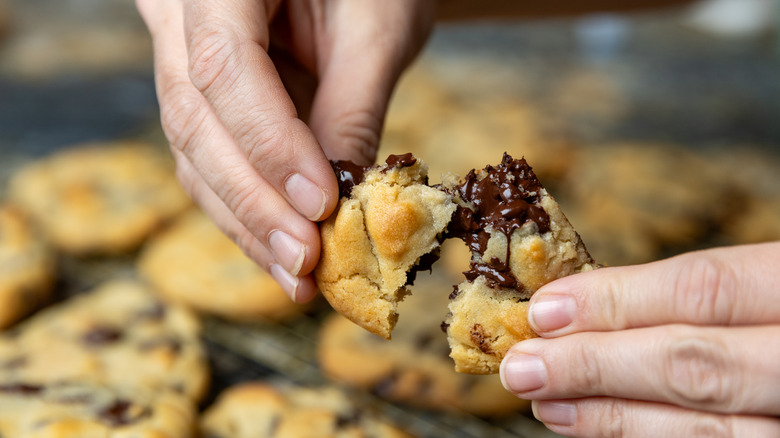
The trouble is that everyone has their own idea of what makes a great chocolate chip cookie. Some people like them flat and chewy, while others like them thick and gooey. For some folks, more chocolate than cookie is the way to go, but other people prefer a more sparse quantity of chunks. This makes it hard to give one set of instructions that will turn out the perfect baked goods. Rather, you need to learn how different variables affect cookies and then adjust your recipe accordingly.
Approach this article thinking about what you need to tweak — whether that's flavor, texture, thickness, or something else — and you'll come away with a handful of tips to make your bake better. What's a mistake for many people, such as flattening the dough, can help others get their cookies just how they like them. It might take some trial and error, but with some adjustments to your go-to recipe, you can make the best chocolate chip cookies of your life.
Thinking chocolate chip cookies have to use chocolate chips
Candice Bell/Shutterstock
Yes, they're called chocolate chip cookies, but that doesn't mean you have to use chocolate chips. It's not necessarily wrong to use chips if that's your preference, but it's a mistake to not at least consider your options. You might end up with a better cookie by using other types of chocolate.
Firstly, what's wrong with chocolate chips? Well, they're designed not to melt during baking, so they contain a range of thickeners and vegetable oils to achieve this. But, this affects the quality of the chocolate. It may have a lower percentage of cocoa and a slightly grainy texture. That's why chocolate chips could be ruining your desserts. On the plus side, they're good when you want distinct pieces of unmelted chocolate in your cookies, rather than gooey pools of melted chocolate. They can also help you recreate a nostalgic recipe from your childhood. Packaged chocolate chunks are made in a similar way as chips, just in a different shape, so the same pros and cons apply.
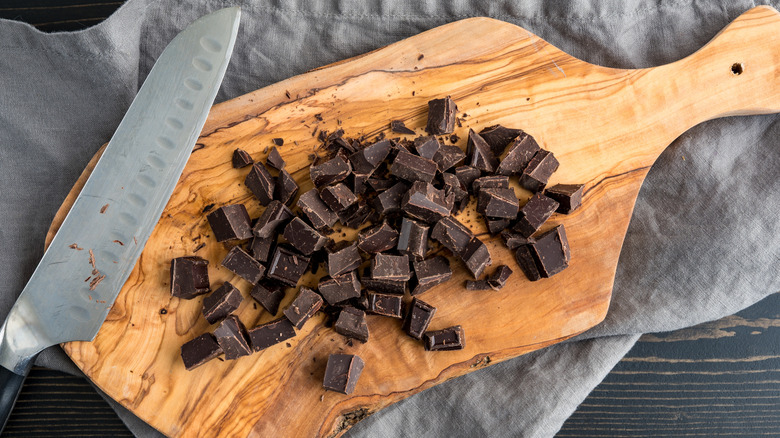
If you're looking for something to use instead, chopped chocolate bars are the most readily available. You can easily find a wide variety of options at any supermarket. Quality varies depending on what you buy, but there are plenty of high-quality options. You can chop them roughly for larger pools of chocolate or finely for a speckled effect and smaller chunks. You can also opt for discs of chocolate called fèves, which are used by professional bakers, but they're harder to get hold of.
Sticking with one type of chocolate
Carlosgaw/Getty Images
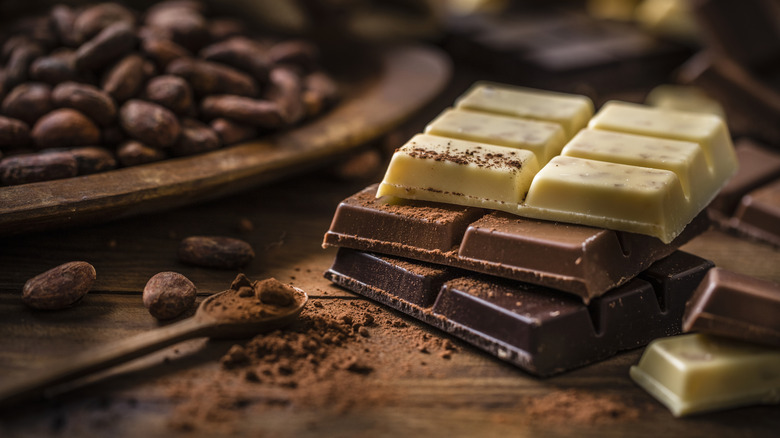
If you always opt for the same type of chocolate — whether that's dark, milk, or white — in your cookies, you're missing out on the potential for more flavor. Or at least a change. The chocolate that best suits you will depend on your ideal cookie, so don't assume that what you've been using is the way to go.
Dark chocolate can range anywhere upwards of 35% cocoa solids, though the percentage you'll read on the package is the combined cocoa solids and cocoa butter. This type of chocolate usually has a minimum of 40%, though 60% to 80% is more common for higher quality options. The higher the percentage, the less sugar it contains, so an 80% dark chocolate will be bitter and intense, while a 40% option will be much sweeter and more of a crowd pleaser. Some folks love intense chocolate chunks, while others prefer them in the 40% to 50% range.
As the name suggests, milk chocolate contains a significant quantity of milk, in addition to cocoa solids and cocoa butter. This makes it creamier and sweeter than dark chocolate. White chocolate (which isn't technically chocolate at all) is also sweet and milky, but only contains cocoa butter not cocoa solids. That's why it's white rather than brown. A less common option is caramelized white chocolate, which adds more complexity to the usual sweetness of white chocolate. There's no right type of chocolate to use, but it's a good idea to experiment and think about your preferences. You might want to combine multiple varieties to get your desired result.
Using too much or too little chocolate
Pamelajoemcfarlane/Getty Images
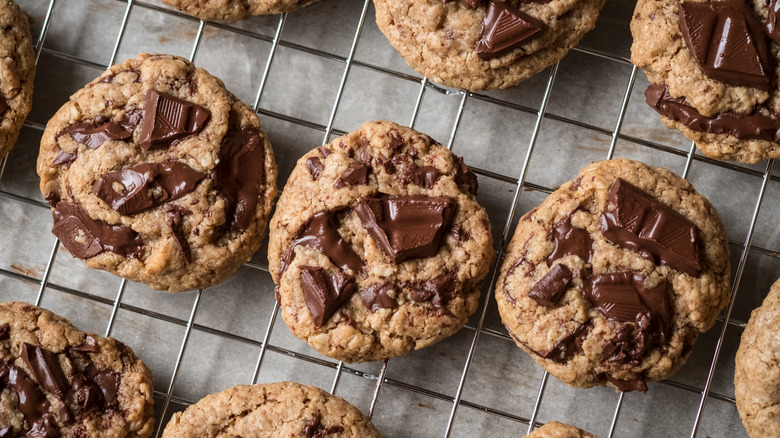
Using either too much or too little chocolate in your cookies can ruin the whole batch. Or at least make them less enjoyable. The thing is, there's not just one right or wrong answer here. It all comes down to what you like. So, following the quantity in your chosen recipe is a good place to start, but don't treat it as law. If it seems to have too much or too little chocolate for you, it's alright to adjust.
You can experiment with different percentages of chocolate in your cookies. Some people like chipless "chocolate chip" cookies but we'll leave them to their own devices. You can start with about 10% of the total weight of the recipe, which will give you very sparsely chipped cookies and go up to about 60%, which is literally more chip than cookie. Anything higher is technically achievable but impractical.
The best ratio does come down to personal preference, but for most people, that's somewhere in the 25 to 40% range. This gives you a good balance of chocolate to cookie. The dough isn't totally overwhelmed by chocolate but it's not lacking chocolate, either. You might need to eat your way through lots of cookies to find the perfect percentage. For science, of course.
Leaving out sea salt in chocolate chip cookies
Elena Veselova/Shutterstock
Leaving the salt out of chocolate chip cookies is a mistake. People can get spooked by salt, thinking it's unhealthy. But, it's more complicated than that. Too much is bad, sure. But so is too much water. It's actually an essential part of the human diet. Much like chocolate chip cookies.
You might see salt on an ingredient list and wonder if you really need it. Perhaps you're worried it will taste strange or maybe you're looking to reduce your salt intake. Either way, it's not much and it does make a difference to the flavor. Using sea salt in chocolate chip cookies brings out the sweet-salty contrast. Salt also accentuates other flavors, so adding some to the recipe can make the chocolate more chocolaty and enhances those toasty notes.
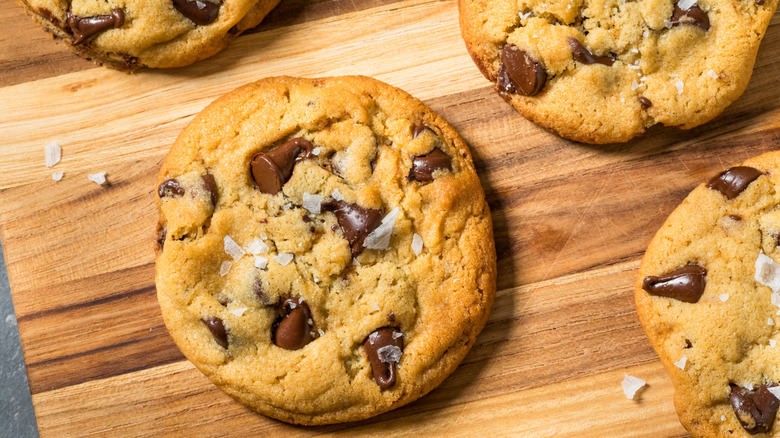
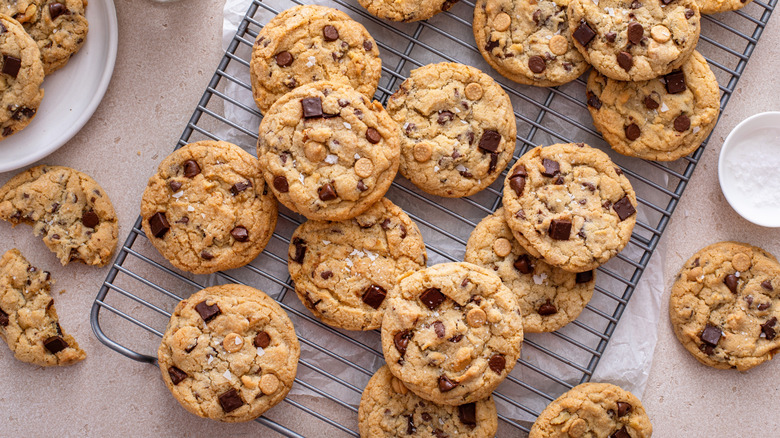
In addition to any salt in the recipe, sprinkling a small quantity of sea salt flakes on top of each cookie before baking is a nice touch. We're talking just a few flakes. It accentuates that sweet-salty balance, plus it brings a pleasant crunch. So, don't skip it. Your cookies will be worse for it.
Thinking it doesn't matter when you add the chocolate to your cookie dough
this_baker/Shutterstock
If you think you can add the cookies to your cookie dough at any point in the process and it won't make a difference, you've already made an error. But, exactly when you should add them is up for debate. People have differing opinions, and they all make valid points. So, while it does make a difference when you add the chocolate, there isn't just one correct way to do it. You'll have to try and see what works for you.
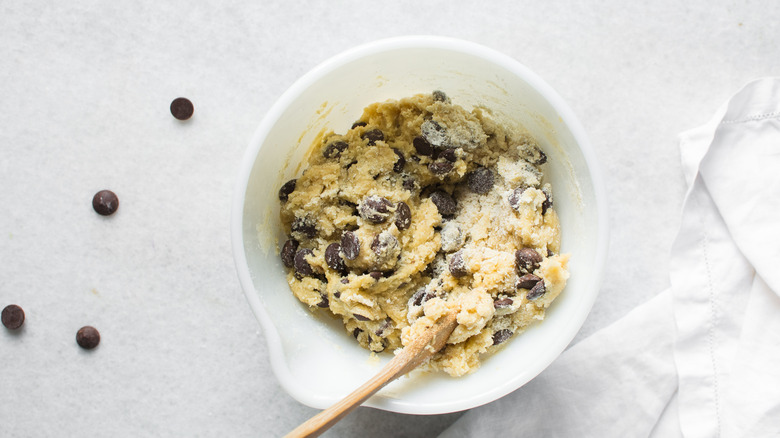
It's common for chocolate chips to be added after the wet and dry ingredients have been fully combined. The logic behind this is that mixing them for too long can cause them to break up in the dough, making the cookies less aesthetically pleasing. It can also keep the chocolate chips from melting into the dough if any part of it is warm; for instance, if you used melted or browned butter. If you choose to do it this way, just fold the chocolate in at the last minute before chilling or portioning out the dough.
However, some people believe the best time to add the chips is at the start, mixing them with the dry ingredients before adding the wet ones. This coats the chocolate in flour so it disperses evenly through the dough rather than sinking or clumping together.
Using too little or too much flour in your chocolate chip cookies
cristiancozaciuc/Shutterstock
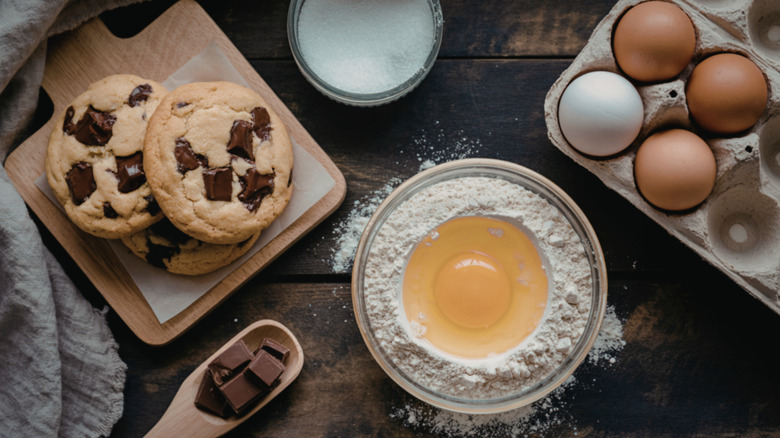
Adding too little flour to chocolate chip cookies is one of the big mistakes you can make. But then, adding too much flour is also an issue. So, it's important to get the balance right or you might get results that are far from perfect. When you add too little flour to cookie dough, they end up overly flat. Because they've got a higher ratio of sugar to flour than they should, they can brown quickly. And because they have more fat to flour than normal, they can seem overly greasy. You can usually tell when the dough has too little flour as it will seem wet or sticky.
On the other hand, too much flour leads to cookies that don't spread much at all. They may look more like biscuits than cookies. When you bite into them, they may be dry and crumbly. When a dough has too much flour, it looks hard and clumpy. On the extreme end, it may be sandy or floury, as there's too much of the dry ingredients to combine with the wet.
When you follow a reliable recipe, you shouldn't have this issue unless you have a measuring problem. While cup measurements are common, they're not all that accurate. If you regularly have these kinds of issues, it's best to weigh your ingredients using a digital scale.
Not experimenting with flour
cristiandaclesanu/Shutterstock
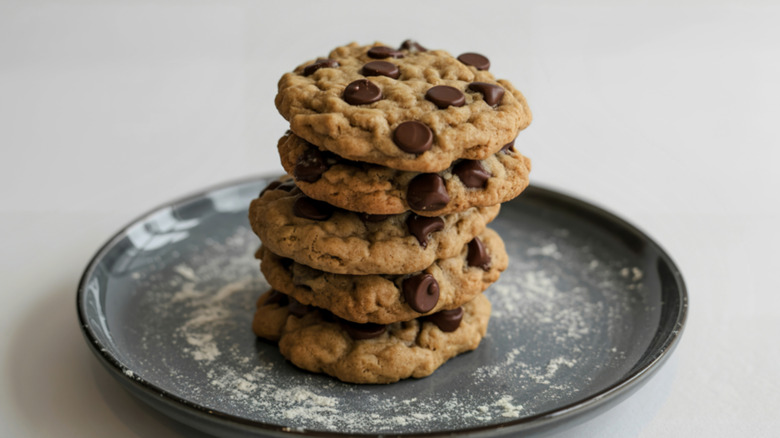
If you only ever use all-purpose flour made from wheat, you're missing out on some delicious variations. Experimenting with flour brings a tasty new element to chocolate chip cookies. It might not give you conventional results, but if you're looking to make cookies with a twist, this could be what you need.
Rye is the flavorful flour you should use to make chocolate chip cookies. It has a toasty, nutty taste that brings a lot to the table. It gives you a more grown up take on a classic chocolate chip cookie that's great with a sprinkling of sea salt. Some recipes use all rye flour, while others combine rye and wheat for a more subtle flavor.
You might also consider using oat flour, which brings an oatmeal-like flavor. You can even mix in some rolled oats to make a sweet treat that's somewhere between an oatmeal cookie and a chocolate chip cookie. Personally, I feel oatmeal-raisin cookies could be improved by switching the raisins for chocolate chips, anyway.
Flattening your cookie dough before baking — unless you like thinner cookies
Veselovaelena/Getty Images
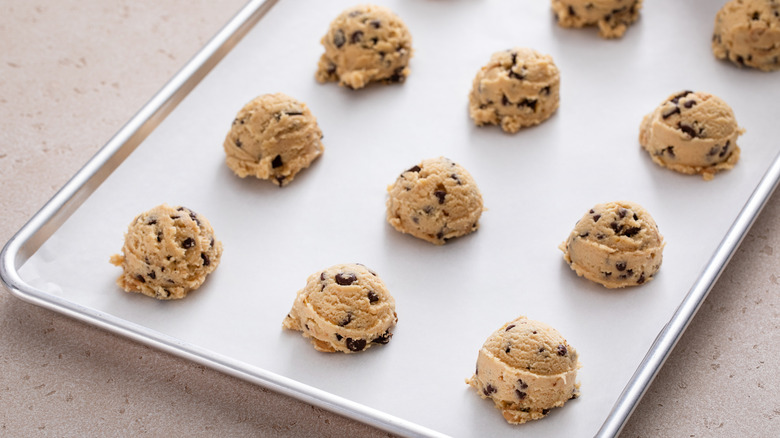
Flattening out your cookie dough before baking it isn't necessarily a mistake, but it is when you want massive, thick cookies. Some people like theirs relatively thin with flat edges, in which case, flattening the dough balls a little before they hit the oven is the way to go. But chunky cookies like the ones from Levain bakery are all the range right now, and those require a different approach.
If you like your cookies relatively thick but not huge and domed, leaving them in balls when you put them in the oven will do the trick. However, if you want them to be extra-thick, you need to form the dough into a cylinder-like shape that's taller than it is wide. This technique might seem odd but will give you the super thick, bakery-style cookies of your dreams. Cookie dough flattens and expands as it bakes, so when you don't want it to expand too much, it needs to start out tall.
Skipping the extra steps that can add more flavor
Candice Bell/Getty Images
If your chocolate chip cookies are perfectly good, but just not special, you might be wondering what you can do to make them stand out. There's nothing technically wrong with them, but they're lacking that wow-factor. Well, your mistake might be that you're skipping the extra steps you could take to add more flavor. Take these opportunities where they arise, and you'll end up with better cookies.
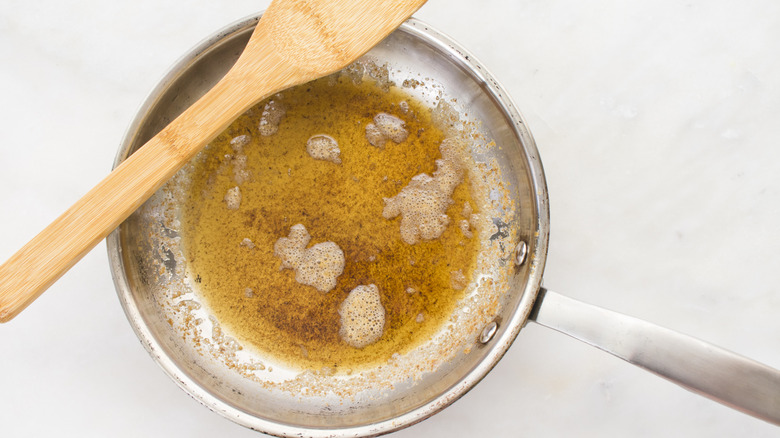
One option is to brown the butter in the recipe. This toasts the milk solids in the butter, which produces a more complex, nutty flavor. However, it's best to use a specific brown butter chocolate chip cookie recipe. When you brown butter, you evaporate the water out of it, so the recipe would turn out differently if you use it like-for-like. There are ways to adjust for this if you're a confident baker, but when trying it for the first time, it's much easier to use a recipe that's been developed and tested using brown butter.
Another way to easily add extra layers of complexity is to use some malted milk powder. You don't have to use enough to make it a feature of the recipe (though you can do.) Rather, popping a teaspoon or two in the dough adds a little toasty malt flavor to subtly boost flavor and make your cookies stand out.
Not adjusting the bake time for larger chocolate chip cookies
AnastasiyaGrant/Shutterstock
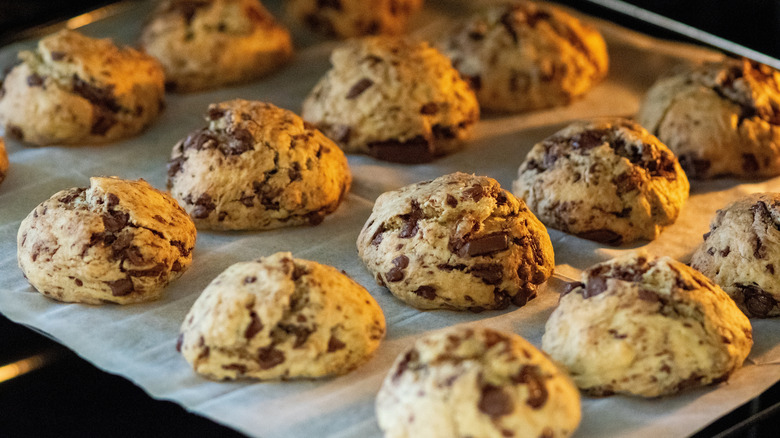
Many chocolate chip cookie recipes give you modestly sized results. These might be great for an average day, but sometimes you want huge, bakery-style cookies that are practically as big as your face. It's fine to adjust the recipe, but it's a mistake if you don't adjust the bake time.
We're all for gooey, melt-in-the-mouth cookies. And, in fact, slightly underbaking them can give you this result, as they keep cooking a little even once they're out of the oven. However, there's a difference between this and cookies that are basically raw in the middle. Either they'll be so soft that you can't even pick them up off the baking sheet without them falling apart or, worse, the center will have got so little heat that it's still dry and floury.
There isn't an exact formula for this, as it depends on the oven temperature, the original bake time, the original size of the cookies, and how much larger you've chosen to make them. But, an extra-large cookie usually needs somewhere between 12 and 15 minutes. Keep an eye on them, and when they're done they'll be starting to brown at the edges, with a center that's soft but not totally wet.
Thinking oven temperature doesn't affect the bake
Crobertson/Getty Images
It seems safe to assume that if you bake cookies at a higher temperature (like 375 degrees Fahrenheit) for 10 minutes, you'd get a similar result as you would baking them at a lower temperature (say 350 degrees Fahrenheit) for 12 minutes. But, actually, the temperature you use does affect the bake. Ignoring this fact could leave you with cookies that aren't to your preference. If you're not getting the results you want, it's a good idea to use an oven thermometer to check if your oven temperature is accurate.
If you're looking to make thick cookies, you should bake them at a higher temperature for a shorter amount of time. This keeps them from spreading out too much. But, if you like them soft in the middle and crisp on the outside, with a slightly thinner, more classic bake, they should be baked for longer at a moderate temperature. The low and slow approach causes cookie dough to spread out more, while the high temperature sets the exterior before it's had a chance to flatten out. And, if you want them slightly crunchy or with a snap, cook them low (about 325 degrees Fahrenheit) for even longer. This gives them a chance to dry out so they aren't as soft.

 Arabic
 French
 Spanish
 Portuguese
 Deutsch
 Turkish
 Dutch
Dutch
 Italiano
 Russian
 Romaian
 Portuguese (Brazil)
 Greek
Greek