


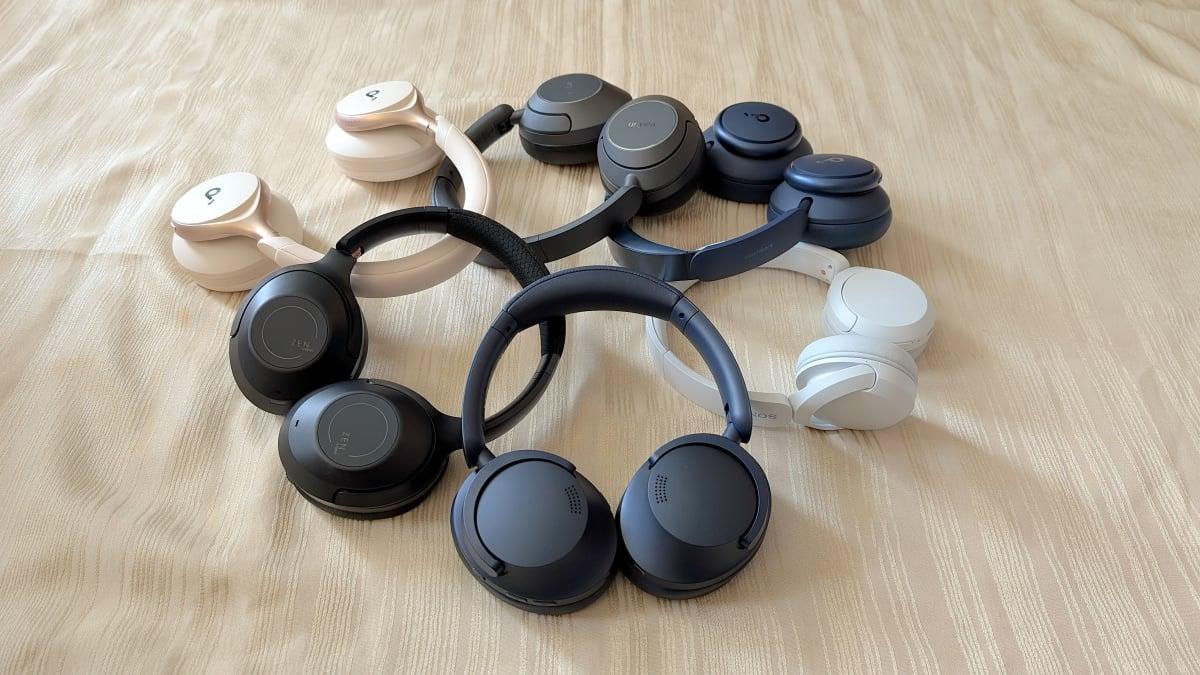
Flagship models aren't your only options.
By

Stacia Datskovska
Mashable Shopping Intern
Stacia Datskovska is an NYU journalism major (graduating this December). Her work has appeared in USA Today, Boston Globe, Teen Vogue, HuffPost, Bustle, and more. When she's not writing something or other, Stacia can be spotted crying over poetry, making a home-cooked meal, or walking on an NYC pier. For her more half-baked thoughts: @staciadats on Twitter.
and

Alex Bracetti
Freelance reviewer
Alex Bracetti is a freelance product reviewer and journalist covering gadgets and men's grooming products. An experienced consumer tech writer, he has bylines at Mashable, Complex, SPY.com, Thrillist, AskMen, CNN Underscored, and Tom's Guide. In addition to writing about the latest tech trends and gadgets, he's also covered men's fashion, sports, and gaming. For Mashable, he primarily covers headphones/wireless earbuds, party speakers, smartphones, and mobile accessories.
on
All products featured here are independently selected by our editors and writers. If you buy something through links on our site, Mashable may earn an affiliate commission.

Credit: Alex Bracetti / Mashable
If you want to cheat the system a bit and get your hands on incredible, crisp sound from a pair of headphones under $100, we've got you. You no longer need to choose between a cheap pair of headphones and incredible features like active noise cancellation, Hi-Res Audio certification, and multi-device pairing.
Overview
Table of Contents
Sure, you might have your eyes on the class-leading Sony WH-1000xM6 headphones — unveiled at the start of summer — but those things will cost you $450. Don't bother dishing out that much money when you can get headphones for a fraction of the price (with much of the same functionality) or, better yet, noise-cancelling headphones that carry longer battery life and a stronger sonic punch than the AirPods Max. Speaking of which, did you know that users were previously reporting that their Apple headphones suffered "condensation death" after being exposed to moisture buildup? Fortunately, our wireless headphones suggestions are all models you can wear for lengthy stretches — without stressing about their impending expiration date.
What are the best budget headphones?
If you're still an Apple loyalist when it comes to headphones, stick with us for a sec. You'll soon discover that these top picks from popular budget audio brands like 1More, Anker, and JBL are giving the market’s best a run for their money. We even have a bargain entry from Sony that’s well worth a look.
Don't believe it? You'll want to see for yourself by reading our reviews of the best headphones under $100 below.
Our Pick

The Good & The Bad
- Vibrant, well-balanced sound
- Effective ANC
- Very long battery life
- Light and comfy
- Finicky app
- Price is indicative of the build quality
- Weak spatial audio
Who it's for
The budget-friendly SonoFlow Pro are an ideal pickup for penny pinchers who refuse to spend a quarter of their rent money on premium ANC headphones. Not only do these noise-cancellers provide four times the battery life of Apple’s headphones, but they are stacked with extra features that expand functionality.
Why we picked this
Let’s start with audio performance, which is noteworthy right out of the box. 1More’s sound signature leans heavily toward the low end. This results in thumpy, impactful bass that blends nicely with transparent mids and highs. Frequencies can be adjusted in the companion app via EQ or genre-specific presets. LDAC codec support creates smooth hi-res playback over Bluetooth and reveals more detail and nuance on tracks. Spatial audio is a thoughtful inclusion that moderately enlivens content, but most listeners will want to keep it disabled to optimize sound quality and battery life.
Noise cancellation on these headphones surpasses expectations. Would we say it’s Bose- or Sony-level good? Absolutely not. What you get is sufficient for quieting common daily distractions, including chatty coworkers, household appliances, and the occasional emergency vehicle siren from afar. The over-ear design does a solid job of isolating background noises. Transparency mode is just as effective for increasing environmental awareness.
We can overlook the chintzy craftsmanship (the creaky hinges are worrisome) because of the headphones’ pleasant comfort. We wore them for five-hour stretches throughout the day before fatigue set in.
Battery life is the SonoFlow Pro’s unsung feature. A full charge nets you 100 hours of playback when turning off noise cancellation. That’s close to three weeks of usage (five hours daily). Enabling noise cancellation decreases ANC playtime to about 40 hours, and though that seems like a dramatic drop, you’re still getting about 15 hours more than the AirPods Max (20 hours) and Bose QuietComfort Ultra (24 hours).
Details

The Good & The Bad
- Solid, adjustable ANC
- Frequently on sale for $50 or less
- Impressively long battery life
- Balanced sound profile
- Comfort levels can depend on the user
- Headphones can creak somewhat with head movement
- App lags
Who it's for
It's hard to find a better value pair of headphones than the JLab JBuds Lux ANC, especially on sale. During Black Friday 2025, we saw them drop all the way down to $27.99, but we've also caught them on sale just under $40 and $50 year-round. For balanced sound and adjustable ANC, that's an absolute steal.
Why we picked this
Lead Shopping Reporter Bethany Allard tried out these headphones and came away with the take that they're the Bose QuietComfort headphones made affordable. Their sound profile is relatively balanced out of the box, but even better after some adjusting with the equalizer in the app. The ANC is solid, especially for their price point, and with the app, can also be used to adjust to different levels (which isn't even a given on more premium headphones like the QuietComforts).
Their design also invokes the more expensive headphones, offering a standard look in a nice array of colorways. Senior Shopping Reporter Haley Henschel owns these headphones herself and especially appreciates the long-wear comfort they provide (Allard found them a little uncomfortable after a few hours of wear, so this can vary from person to person). Still, undeniably, their 40-hour battery life also allows for extended wear time, making them an especially great option for anyone who travels frequently or likes to wear over-ear headphones while they work.
Details

The Good & The Bad
- Long battery life with high-speed charging
- Acceptable sound quality
- Compact and conveniently portable
- Multipoint technology to pair up to two media devices simultaneously
- Incredibly small feature set
- On-ear design lets in ambient noise
- Uncomfortable after 2 hours of wear
Who it's for
Retailing at $49.95, the price tag on these JBL Tune 510BT headphones is kind of unbeatable, making them ideal for those who are trying to save money. Don't expect them to perform magical acts for you, but also don't underestimate this handy JBL pair. They're great if you're not devoted enough of an audiophile to consider professional-level sound quality (or lack thereof) a dealbreaker.
Why we picked this
The Tune 510BT headphones do everything wireless headphones are supposed to: They provide reasonably good sound quality, allow you to switch between two device audio outputs at once, and last for days on end. Each of these points comes with a caveat — to be expected when your headphones come out costing less than 50 bucks.
As for sound quality, these JBLs won't provide active noise cancellation (though their ear cups certainly protect your ears from hearing what goes on in the outside environment). That being said, you'll still hear a bit of outside noise mixed with your favorite song.
When testing out the multi-device connection of this JBL model, we found that it was possible but worked in a much slower fashion than its counterparts. In other words, when stopping a video on YouTube and immediately launching into a song on the phone, the headphones didn't immediately reflect this switch: It took them a good three to four seconds to start playing the second audio input.
In terms of battery life, we were impressed with the fact that these headphones were fully drained only after 38 hours — which comes quite close to JBL's promise of a 40-hour battery life. The device gave off a little tone that signified the battery was almost out, but this feature (in a real-life versus for-testing-only setting) is honestly "too little, too late." Unlike in other headphone models, there unfortunately wasn't a voice that announced the exact battery percentage when powering on the Tune 510BTs. To make up for this small flaw, the headphones are equipped with Quick Charge functionality. Just five minutes of them being plugged in via a USB-C connection adds two hours of power. Pretty sweet.
Details

The Good & The Bad
- Versatile audio performance
- Equipped with several advanced features
- Plausible adaptive noise cancellation
- Serve well as gaming headphones
- Very large
- Disappointing call quality
- Awkward control scheme
Who it's for
These headphones are massive — reminiscent of a gaming headset (think wide and deep ear cups, a thick band, and an undeniable heaviness). That being said, they certainly aren’t meant for working out (especially not running), unless you don't mind wearing something clunky and heavy on your head while boosting those endorphins. If you're planning on wearing them around the house, on a long plane ride, or during your daily gaming ritual, you'll fall in love with these budget headphones. After all, nothing about them screams "budget" and they're super new on the market.
Why we picked this
Despite their cumbersome frame, these headphones take “accommodation” to the next level with a floating axis design, rotating ear cups, and a cozy plush headband.
The Space One outclass their rivals in two key areas. The first is (and don't laugh) the fact that they come with a cute, color-coordinated carrying bag. The second is that five quick minutes of charging boosts the power of these headphones not by one hour, not by two hours, but by four whole hours. They also have three mics with an AI algorithm that pinpoints your voice and amplifies it on calls. In case you don't want to hear the voices of others, they are specially designed to reduce crowd noise by up to 98 percent.
In terms of how this crowd noise reduction feature fared in real-time, I would say that the passive noise cancellation aspect of the headphones was more responsible for making it feel like you're in your own musical bubble than the ANC. We still recommend trying the adaptive noise cancellation feature since it adequately adjusts noise reduction to your surroundings. You’ll get to enjoy the full-bodied sound that blasts from Anker’s 40mm dynamic drivers with minimal interference.
The (completely free) Soundcore app is chock-full of add-on features that you can enable at your convenience. One of these is currently in beta testing — it's called Easy Chat and lowers your music volume when it detects speech. While this is theoretically good for calls (no more scrambling to turn off your rap/hip-hop song queue when grandma calls to check in), I once started to sing along to a song, which sadly turned off, thanks to this feature being enabled. Bear that in mind when toying with all of Soundcore's fancy audio tools.
Details

The Good & The Bad
- Comfy on-ear design
- Equipped with Sony’s proprietary sound technologies
- Up to 50 hours when fully charged
- Strong connectivity
- No noise-cancelling or transparency mode
- Subpar construction
- Weak mic array
Who it's for
If you don't need all the bells and whistles that come with top-of-the-line headphones, the Sony WH-CH520 will likely check your must-have boxes. To be completely frank, these Sonys look akin to headsets given out on flights — what with their primitive earpads, basic head cushion band, and inability to completely fold into themselves to save space. Yet, functionality sometimes trumps appearances, and this sentiment rings true for the WH-CH520 model.
Why we picked this
Sony's WH-CH520 headphones are a great pair of affordable, basic headphones. They'd be nice for working out or sitting in the office. And they come in stylish colors like butter yellow and pink.
Through the compatible Sony app, you can manage connected devices, play around with the sound equalizer, set up "360 Reality Audio" by analyzing your ear shape, and choose whether you want to prioritize sound quality or stable connection. The learning curve to figuring out the headphones' on-ear controls is not steep at all: Press the "+" button twice to skip forward a song, the "-" button twice to go back, and the power button to start or stop.
Beware — the headphones' ear cups are kind of tiny, which can provide an uncomfortable experience for those whose ears are on the larger side. They're meant to sit on top of your ears, rather than enclose them like over-ear headphones. As far as durability goes, we could only infer that snapping the headphones' band in two would be an easy task, since this pair felt quite flimsy overall and wasn't all too cushioned. Still, the audio quality of this Sony pair certainly packed a punch. When running in them (pretty comfortable, all things considered), the sound of traffic and the wind was just barely audible — certainly way less audible than you'd expect from such a minimalistic headphone design.
Details

The Good & The Bad
- Equally great noise cancellation and sound
- Access to many of Anker’s prime features
- Reliable wireless performance
- Hold a charge longer than Bose headphones
- Lackluster call quality
- Digital assistant needs work
- Clunky design
Who it's for
The older Space Q45s sell for a higher price than the Space Ones. Why is that? Who knows. We believe it’s because they offer a more complete brand experience. They’re also the market’s most well-rounded wireless headphones under $100 (when they're on sale). These headphones are for someone who wants the total package for less than $100.
Why we picked this
Most of Anker’s flagship features and technologies are available on the Space Q45. There is so much to discover and enjoy upon unboxing these headphones.
Bass dominates the soundstage in a positive way. Headbangers will salivate over the Space Q45’s boomy and energetic low-end presence. Customized settings (e.g., EQ, music presets) make room for crisp highs and rich mids. LDAC brings out more clarity and detail when listening to the best music streaming services on compatible devices (primarily Android phones). Enabling noise cancellation slightly increases bass without compromising other frequencies, and the technology is capable of blocking out 80 percent of external sounds. Ambient listening mode is just as rewarding for keeping tabs on your surroundings.
You’ll find many more extras in the Soundcore app. The Safe Volume setting helps prevent hearing loss; it detects volume being output from the headphones in real-time to determine if sound is potentially harmful. Basics like a battery level indicator, control customization, and firmware updates are accounted for. Outside of the app lie popular wireless features like multi-device pairing and quick charging (five minutes equals four hours of use). Google Assistant and Siri are also accessible, granted Apple’s digital assistant often struggles to register voice commands.


 Arabic
 French
 Spanish
 Portuguese
 Deutsch
 Turkish
 Dutch
Dutch
 Italiano
 Russian
 Romaian
 Portuguese (Brazil)
 Greek
Greek