


WilsonCreative/Shutterstock
To truly understand the culture of the East Coast, you need to eat your way through it. The dishes you'll find in this region of the U.S. are deeply rooted in history, telling the story of the communities and traditions that built the East Coast from the ground up. From Jewish Polish immigrants who brought the techniques used to make New York–style bagels to Indigenous communities in the Chesapeake region whose cooking traditions laid the foundation for Maryland crab cakes, these foods represent culture, tradition, and regional identity. The specialties on this list are timeless classics that act as culinary landmarks. They're the foods that people from these states and regions grew up with and crave when they move away.
Each item on this list belongs on any East Coast itinerary, meant to be eaten exactly where it was born — a plump lobster roll on the Connecticut coast, a freshly baked bagel from the Big Apple, and a steaming bowl of she-crab soup in the Lowcountry. Together, they tell the story of the people who have shaped the East Coast into what it is today.
Lobster roll
David Johnson/Getty Images
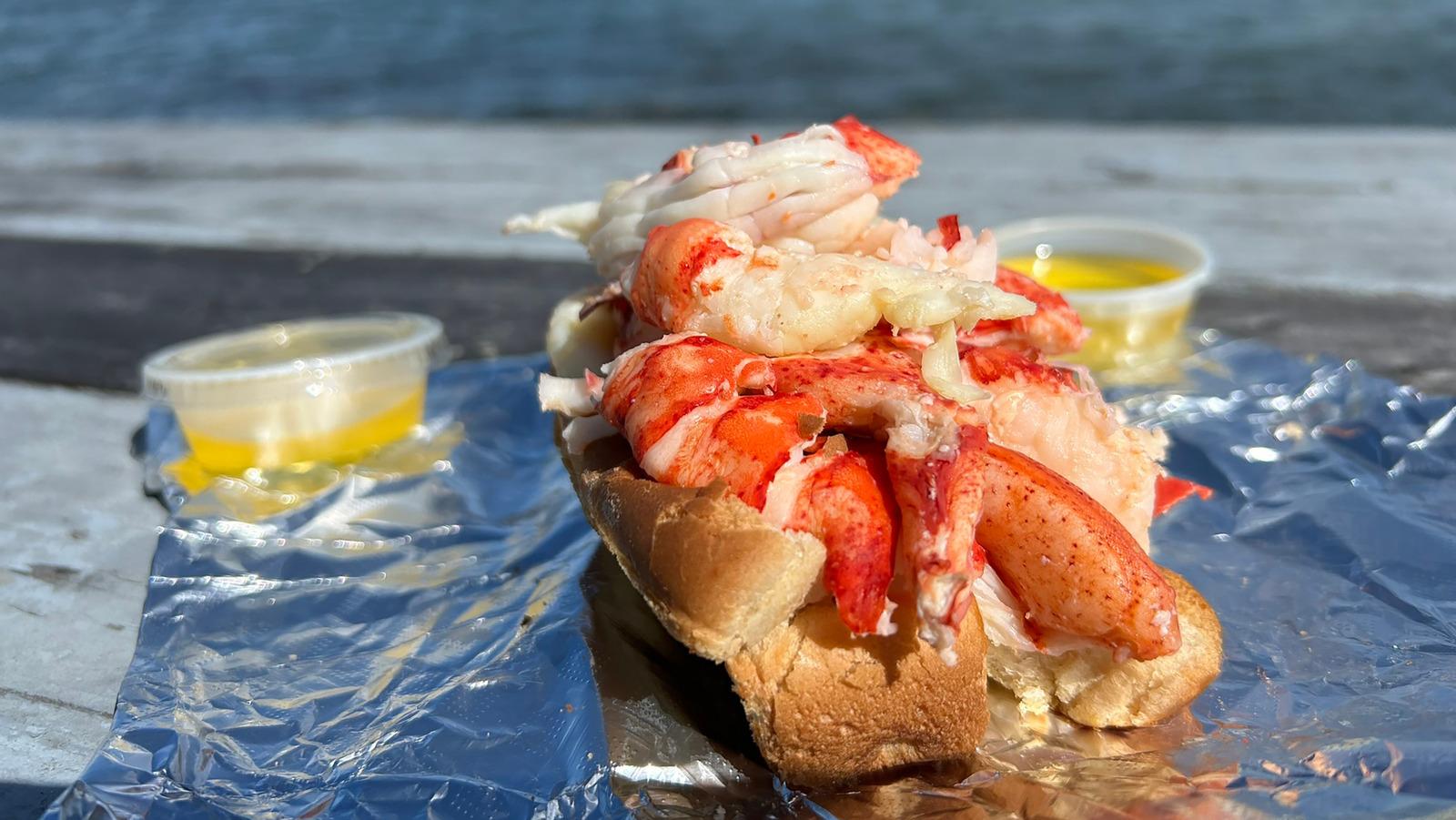
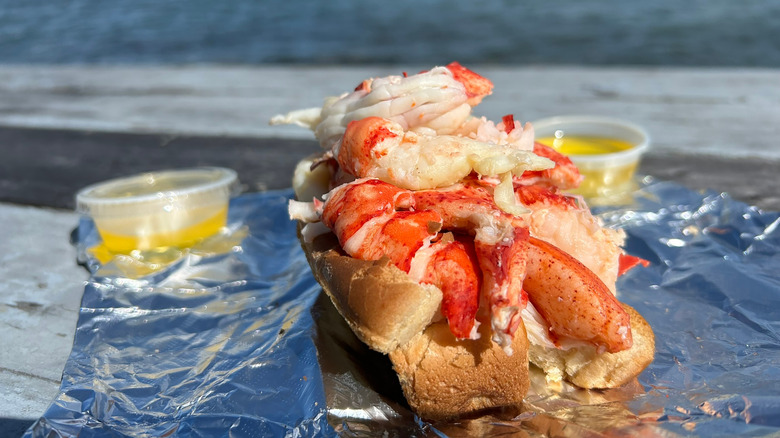
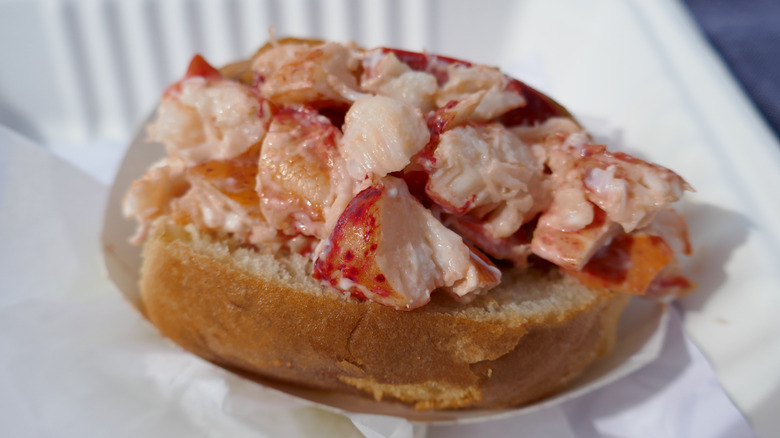
Nothing says summer in New England like a lobster roll. It's the first sign that warm days are ahead after a long winter. The base of the lobster roll is simple — sweet, briny chunks of lobster meat on a toasted, buttery bun. You can then choose your own adventure. There are two main types of the dish that are characterized by location. If you want it served cold with mayo, you'd ask for a Maine-style lobster roll. If you'd rather have it warm with oozing butter, you'd get a Connecticut-style lobster roll. No matter which one you choose, though, you're in for a treat. Some lobster shacks even up the ante by adding things like lemon or tarragon. But the quintessential lobster roll from New England is simple. And perfect.
Most people trace the specialty back to a restaurant in Milford, Connecticut, where Harry Perry created the earliest version of the sandwich. Shortly after, customers fell in love with the humble decadence of lobster meat on a bun. The idea took off from there. This dish now represents everything good about New England — in the most unpretentious way possible. It isn't the only region to find a good lobster roll, though. You can enjoy different versions across the country, and some have even earned their spot as the best lobster rolls in the U.S.
New York bagel
Impresyjna/Shutterstock
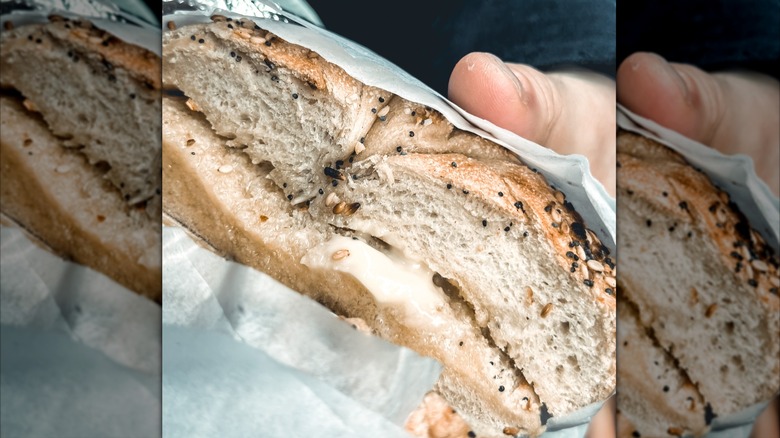
You can find a good bagel just about anywhere. But if you're looking for the best one, a trip to New York City is in order. And the locals will be the first ones to tell you that. New York bagels are lightly yeasty, pleasantly dense, and doughy in all the right ways. Unlike the soft, puffy ones you can find in most bakeries around the U.S., bagels from New York have a caramelized crust on the outside and a springy chew on the inside. This signature difference is due to one simple step: boiling before baking. That quick dip in hot water sets the edges and locks in the bagel's structure, creating the unmistakable texture New Yorkers swear by.
Long before bagels became a Big Apple icon, they were a staple in Polish Jewish households. When those families immigrated and settled in New York in the late 19th century, they brought their recipes and traditions with them — including the craft of boiling before baking. This technique spread like wildfire in delis and pushcarts across the city until the crisp-outside, soft-inside bagel became inseparable from New York itself. A trip to Manhattan isn't complete without stopping for a bagel that's still warm from the oven and slathered with a heavy helping of cream cheese.
Maryland crab cakes
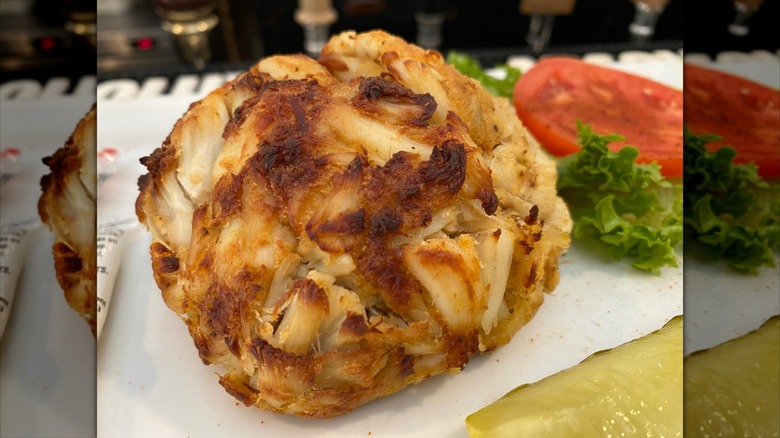
Dennis Wildberger/Shutterstock
There's a huge difference between a crab cake and a Maryland crab cake. A true Maryland crab cake is unmistakable, with sweet, tender lumps of blue crab held together with just enough binder to keep it from falling apart. There's no filler, no excess breading, and nothing to disguise the true flavor of this Chesapeake classic. The meat of the blue crab is what gives this dish its signature taste. It's delicate, soft, and naturally buttery, with a texture that holds up well when cooked. And with a crab cake that pure, it's no surprise that, out of every state's best sandwich, this one is Maryland's. Whether you eat it on a bun or with a side of tartar sauce, a single crab cake is worth an entire trip to this East Coast state.
The origin of the Maryland crab cake likely dates back to Indigenous communities in the Chesapeake region, and their reliance on the coastline's abundant blue crab population. English settlers adopted the process and cooking methods, and by the early 20th century, Maryland crab cakes were already a New England specialty. Today, the Maryland crab cake is synonymous with the state itself.
Boston baked beans
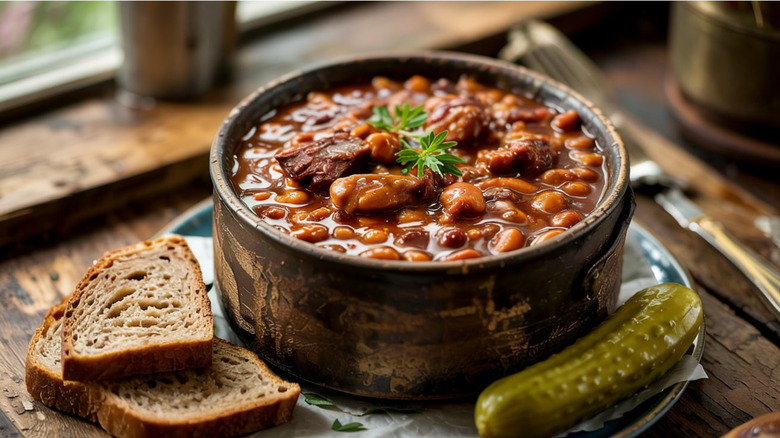
Food is Love/Shutterstock
Boston didn't get the nickname Beantown for nothing. Boston baked beans were woven into the city's history through centuries of tradition, and are now a staple in the state capital. Fundamentally, Boston baked beans are tender navy beans baked low and slow with molasses, salt pork, mustard, and sparse seasonings. This method of cooking beans creates a glossy, caramelized sauce that sets the dish apart from other types of baked beans across the country. The result is rich but not heavy, savory with a smoky undertone, and sweet without feeling like a dessert.
Boston baked beans date back to the 17th century, when Puritan settlers chose dishes that could be cooked on Saturday and eaten on Sunday, allowing families to observe the Sabbath without working. As trade continued to expand, molasses from the Caribbean became a cheap and abundant ingredient in New England. The addition of molasses to the baked beans became the regional dish's defining aspect. What started as a simple and inexpensive meal for families centuries ago is now a sweet and savory food that helped Boston earn its enduring nickname.
She-crab soup

Warren Price Photography/Shutterstock
She-crab soup is as defining to South Carolina as hushpuppies and palmetto trees. President William Howard Taft inspired the first she-crab soup recipe during a visit to South Carolina. Charleston mayor Robert Goodwyn Rhett's butler, William Deas, elevated the family's crab soup by adding roe from female blue crabs. Deas said the roe gave the dish extra flavor and color, turning a simple soup into something presidential. The dish is now known as a Lowcountry staple.
The best way to describe she-crab soup is similar to a chowder without the potatoes and comparable to a bisque with more of a tang. At its core, she-crab soup is built from crab meat, roe, butter, cream, aromatics, spices, and a finishing splash of sherry. It's rich but not heavy, silky but not shy, with layers of sweetness, salt, and subtle heat. The magic of the soup is in the roe, which is the bright orange richness that gives the soup its name and its signature depth, and also what separates it from bisques and chowders. Due to fishing restrictions, however, it's increasingly difficult to find the dish with its historic addition of roe. Nevertheless, it's a must-try food on any trip to the Carolinas.
Philly cheesesteak
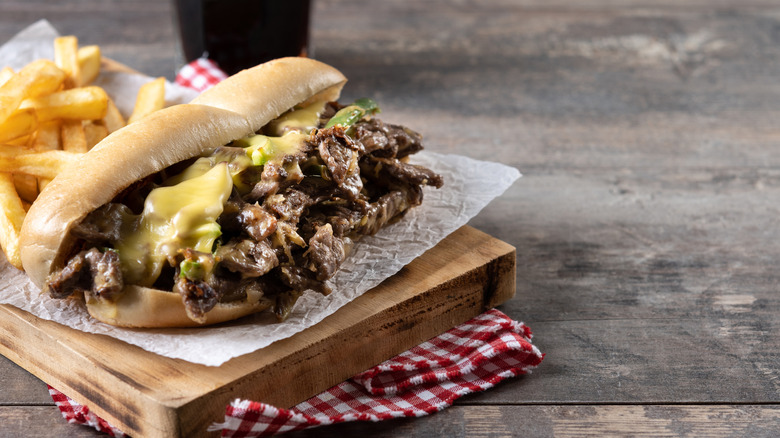
Etorres69/Getty Images
The Philly cheesesteak isn't just a menu item in Pennsylvania — it's the state identity. This classic Philadelphia sandwich is made with thinly sliced beef (typically ribeye). The beef is then cooked and chopped on a flattop griddle. Cheese is added at the end so it has just enough time to melt into the meat. Optional additions include onions, peppers, and mushrooms. The beef mixture is then piled onto a long hoagie roll, resulting in a rich, savory, and oh so satisfying sandwich. The beef is tender and slightly caramelized, the cheese adds the perfect amount of creaminess, and the roll is dense enough to soak up all the juices without falling apart. It's messy in all the right ways.
The sandwich's story dates back to 1930, when South Philly hot dog vendor Pat Olivieri got bored of serving hot dogs and created a mixture of grilled beef and onions instead. This improvisation is now tattooed to the soul of the city. Similar to how New Jerseyans have a fierce debate over Taylor ham versus pork roll, Philadelphians passionately argue about their cheesesteaks. And with opinions that strong, it's hard to know where to start — which is exactly why we broke down where to find the best cheesesteaks in Philadelphia.
White clam pizza
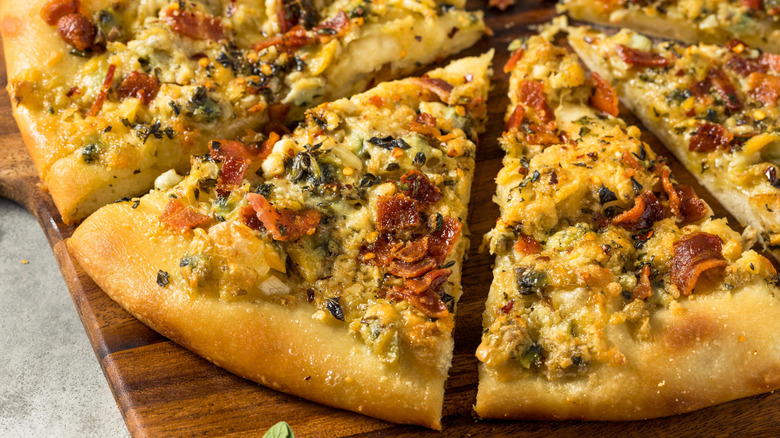
Brent Hofacker/Shutterstock
White clam pizza might sound odd at first — but once you try it, you get it. It's a culinary trademark of New Haven, Connecticut, that proves how breaking the rules can pay off. White clam pizza is exactly as it sounds. Instead of tomato sauce, the crust gets a coating of olive oil. Instead of topping it with mozzarella and pepperoni, it's topped with chopped clams, garlic, oregano, and a sprinkle of Pecorino Romano. The pizza then goes into a blistering hot coal-fired oven where it gets its signature char. That char gives the pizza a smoky bitterness that balances out the briny clams. Each bite is crisp and chewy at the same time, and layered with salty, sweet, and garlicky goodness.
White clam pizza originated at Frank Pepe Pizzeria Napoletana in New Haven in the 1960s. Frank Pepe was an immigrant who drew on his Italian baking traditions to sell apizza, a distinctive thin-crust, coal-fired pizza, in New Haven's open-air markets. Eventually, he launched his own pizzeria where he served littleneck clams on the half shell alongside pizza pies. At some point, those clams made their way onto the pizza dough, giving rise to what is now known as one of Connecticut's most iconic dishes.
Apple pie with cheddar cheese

Erika J Mitchell/Shutterstock
If you're not one of the many people who love pineapple on their pizza, wait until you hear what Vermonters are putting on their apple pie. While some folks stick to a scoop of vanilla ice cream, the people of Vermont reach for a slice of cheddar cheese. To outsiders, this might seem like a questionable pair. But to locals, it's a flavor combination that tastes like home. And honestly, it's not that wild when you remember that both ice cream and cheese start from the same place: milk. Take one bite, and you'll understand why this pairing is a must-try of all the East Coast delicacies. The salty sharpness of the cheddar cuts through the warm, spiced apples, creating a sweet and savory contrast that hits in all the best ways.
The idea of pairing fruit with cheese surfaced long before it was a Vermont staple. When English settlers introduced their custom of serving cheese with fruit desserts to New England, the tradition quickly took root in an area rich with apple orchards and dairy farms. As pies became the region's signature way to celebrate every orchard harvest, the addition of melting cheddar into the pie naturally followed. Apple pie may be America's dessert, but apple pie with cheddar is Vermont's proud legacy.

 Arabic
 French
 Spanish
 Portuguese
 Deutsch
 Turkish
 Dutch
Dutch
 Italiano
 Russian
 Romaian
 Portuguese (Brazil)
 Greek
Greek