


Global Peripheral Neuropathy Market Strategic Analysis 2024
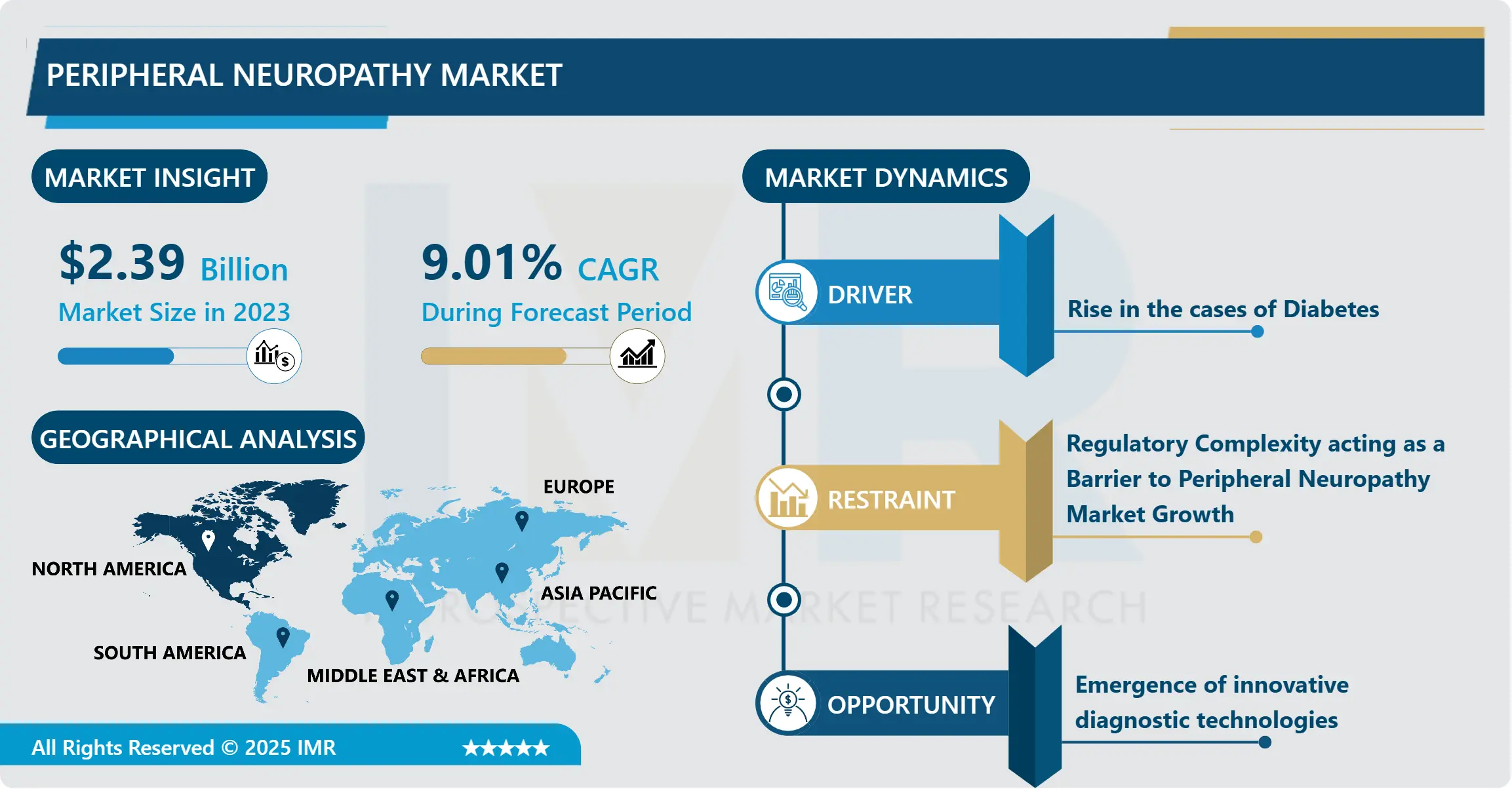
The Global Peripheral Neuropathy Market Size Was Valued at USD 2.39 Billion in 2023 and is Projected to Reach USD 5.20 Billion by 2032, Growing at a CAGR of 9.01% From 2024-2032.
Peripheral neuropathy is a complex neurological condition resulting from damage to the peripheral nerves the vast communication network that transmits information between the central nervous system and every other part of the body. This damage often manifests as numbness, tingling, muscle weakness, and sharp, throbbing, or burning pain, typically in the hands and feet. The market for peripheral neuropathy treatments includes a broad spectrum of pharmacological interventions such as antidepressants, anticonvulsants, and topical agents, as well as non-pharmacological therapies like physical therapy and transcutaneous electrical nerve stimulation (TENS).
The primary advantage of modern peripheral neuropathy management over traditional palliative care is the shift toward targeted therapeutic approaches that address the underlying mechanisms of nerve damage. Recent advancements in biotechnology have led to the development of regenerative therapies and advanced neuromodulation techniques that offer more sustainable pain relief and functional recovery compared to standard oral medications. Major sectors within the healthcare industry utilizing these treatments include specialized pain management clinics, neurology departments in hospitals, and rehabilitation centers. The rising global prevalence of diabetes and the increasing geriatric population are significant drivers of the market’s robust expansion.
👉 To request a sample report: https://introspectivemarketresearch.com/request/18432
Market Segmentation
The Peripheral Neuropathy Market is segmented into Type, Treatment, and End-User. By Type, the market is categorized into (Diabetic Peripheral Neuropathy, Chemotherapy-Induced Peripheral Neuropathy, Idiopathic Peripheral Neuropathy, Others). By Treatment, the market is categorized into (Pharmacological Treatment, Non-Pharmacological Treatment, Neuromodulation Therapy). By End-User, the market is categorized into (Hospitals, Specialty Clinics, Ambulatory Surgery Centers).
Growth Driver
The principal growth driver for the Peripheral Neuropathy Market is the alarming rise in the global prevalence of diabetes mellitus. Diabetic Peripheral Neuropathy (DPN) is the most common complication of diabetes, affecting nearly half of all diabetic patients during their lifetime. As lifestyle-related metabolic disorders increase worldwide, the pool of patients requiring long-term neuropathic pain management is expanding rapidly. This trend is further fueled by improvements in diagnostic techniques, allowing for earlier detection of nerve damage, and an increasing healthcare expenditure targeted toward chronic disease management in both developed and emerging economies.
Market Opportunity
A major market opportunity exists in the development and commercialization of disease-modifying therapies that target nerve regeneration. Currently, most available treatments focus on symptomatic pain relief rather than reversing nerve damage. The integration of neurotrophic factors, gene therapy, and stem cell research into clinical practice offers a transformative potential to restore nerve function. Furthermore, the expansion of the "Chemotherapy-Induced Peripheral Neuropathy" (CIPN) segment provides a high-growth niche, as oncology patients live longer and require specialized care to manage the debilitating side effects of life-saving cancer treatments.
Detailed Segmentation
Title: Peripheral Neuropathy Market Market, Segmentation The Peripheral Neuropathy Market is segmented on the basis of Type, Treatment, and End-User.
Type
The Type segment is further classified into Diabetic Peripheral Neuropathy, Chemotherapy-Induced Peripheral Neuropathy, and Idiopathic Peripheral Neuropathy. Among these, the Diabetic Peripheral Neuropathy sub-segment accounted for the highest market share in 2023. This dominance is attributed to the sheer volume of the global diabetic population and the progressive nature of the disease. High blood sugar levels lead to nerve damage through complex metabolic and vascular pathways, making DPN a chronic condition requiring continuous medical intervention. The increasing focus on personalized diabetes care and the high awareness levels among patients and healthcare providers ensure that DPN remains the primary driver of diagnostic and therapeutic volume in the market.
Treatment
The Treatment segment is further classified into Pharmacological Treatment, Non-Pharmacological Treatment, and Neuromodulation Therapy. Among these, the Pharmacological Treatment sub-segment accounted for the highest market share in 2023. Pharmacological interventions, including gabapentin, SNRIs, and tricyclic antidepressants, remain the first-line therapy for peripheral neuropathy due to their established clinical efficacy and widespread availability. The segment’s market leadership is sustained by the high patient preference for oral medications over invasive procedures and the continuous introduction of new formulations with improved safety profiles and reduced side effects, making it the standard of care for the majority of patients.
Some of The Leading or Active Market key Players Are-
Pfizer Inc. (United States) Eli Lilly and Company (United States) Novartis AG (Switzerland) GlaxoSmithKline plc (United Kingdom) Merck & Co., Inc. (United States) Bristol-Myers Squibb Company (United States) Johnson & Johnson (United States) Abbott Laboratories (United States) Teva Pharmaceutical Industries Ltd. (Israel) Lupin Limited (India) Grünenthal Group (Germany) AstraZeneca plc (United Kingdom) and other active players.
Key Industry Developments
In May 2024, Pfizer Inc. announced positive results from a Phase III clinical trial for a next-generation voltage-gated sodium channel blocker. The therapy aims to provide targeted relief for neuropathic pain without the central nervous system side effects typically associated with older anticonvulsants. This development is expected to redefine the pharmacological landscape for patients with refractory peripheral neuropathy.
In February 2024, Abbott Laboratories received regulatory approval for a new miniaturized spinal cord stimulation (SCS) system. This advanced neuromodulation device is designed specifically for patients with chronic lower-limb neuropathy who have not responded well to traditional medications. The launch reflects a broader market trend toward minimally invasive technological solutions for long-term chronic pain management.
Key Findings of the Study
· Dominant Segments: Diabetic Peripheral Neuropathy (DPN) and Pharmacological Treatments currently lead the market in terms of revenue and patient volume.
· Leading Regions: North America maintains the largest market share due to its advanced healthcare infrastructure, high prevalence of diabetes, and rapid adoption of novel therapies.
· Key Growth Drivers: The rising global incidence of diabetes and increasing awareness regarding early neuropathic symptoms are the primary catalysts for growth.
· Market Trends: There is a significant shift toward multidisciplinary care models, combining neuromodulation devices with targeted drug delivery systems to improve patient outcomes.
🔍 𝐈𝐧-𝐃𝐞𝐩𝐭𝐡 𝐑𝐞𝐩𝐨𝐫𝐭:
https://introspectivemarketresearch.com/reports/peripheral-neuropathy-market/
About Introspective Market Research
Introspective Market Research is a global provider of data-driven market intelligence and strategic advisory services. Our analysts and consultants deliver comprehensive reports, actionable insights and customized consulting to clients across chemicals & materials, healthcare, energy, environment, infrastructure, and advanced manufacturing sectors.
Media Contact:
Introspective Market Research.
Email: press@introspectivemarketresearch.com
Website: http://www.introspectivemarketresearch.com
Phone: +91-91753-37569

 Arabic
 French
 Spanish
 Portuguese
 Deutsch
 Turkish
 Dutch
Dutch
 Italiano
 Russian
 Romaian
 Portuguese (Brazil)
 Greek
Greek