


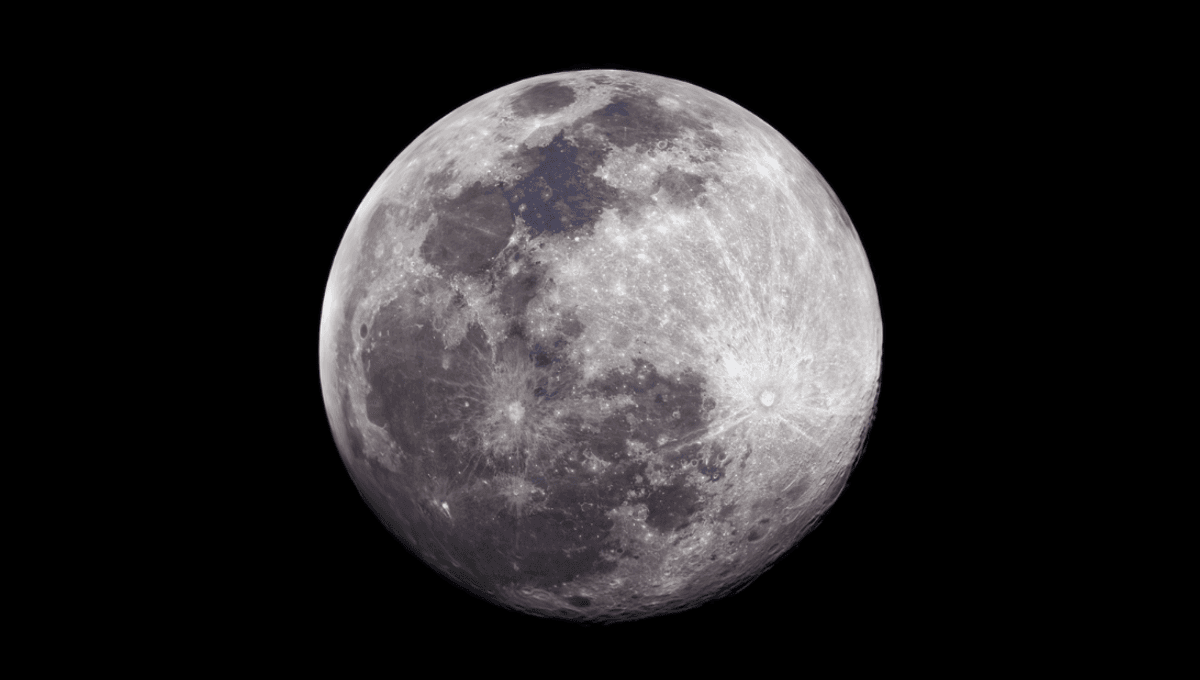
Despite popular mythology, nobody has ever seriously thought that the Moon is made of cheese. But exactly what it is made of has been a question we’ve only very recently been able to answer.
The rest of this article is behind a paywall. Please sign in or subscribe to access the full content. And the more we learn, the more interesting things get. Not only can we now physically touch pieces of the Moon itself, but seismological and spectroscopic techniques have revealed hints of what lies even further beneath the surface. As it turns out, it’s not so different from what’s down here. There’s a reason the Moon has captured imaginations for millennia, and it’s not what’s going on in its core. The “light” of the Moon is of course technically no such thing – it’s just the reflection of sunlight from the other side of the Earth, and not even that much of it either: “the Moon is one of the least reflective objects in the Solar System,” pointed out Christopher Baird, associate professor of physics at West Texas A&M University and author of The Top 50 Science Questions with Surprising Answers, back in 2015. “The Moon is actually quite dim, compared to other astronomical bodies,” he explained. “The Moon only seems bright in the night sky because it is so close to the earth and because the trees, houses, and fields around you are so dark at night.” So, what makes the Moon so… well, dim? Mostly, it’s just the most boring stuff on Earth: no snow, clouds, ice, or atmosphere; lots of rocks and dust. And oxygen. “In rocks of the Earth and Moon, oxygen is the most abundant chemical element,” explained Randy Korotev, a now-retired lunar geochemist from Washington University in St Louis. There’s not even all that much in it: on Earth, the crust is about 46 percent oxygen; on the Moon, it’s between 41 and 45 percent. The similarities don’t stop there. Some 98-99 percent of the Moon’s crust and regolith – that is, the “soil” of the Moon, comprising Moon dust, Moon rocks, and so on – is made up of oxygen, silicon, magnesium, iron, calcium, magnesium, and aluminum, per Korotev – startlingly similar to our own planet’s crust. Of course, it’s not all equally spread: the brightest, most reflective areas of the Moon are richer in elements like calcium and aluminum, while the darker shadows are home to higher levels of iron and titanium. The reason for this discrepancy in makeup is fascinating, by the way. The darker depressions on the surface of the Moon are called “maria”, named long ago by astronomers who thought they were looking at far-off seas. While of course no such bodies of water exist on the Moon, they were more right than you might think: between 4.2 and 1.2 billion years ago, the Moon was pummeled by cosmic debris that left huge impact craters across its surface. Those filled with lava and molten lunar material, which eventually cooled to leave the dark mottling we see today. Compared to Earth’s crust, the Moon’s is super-thick. Even at its thinnest, it’s around 40 kilometers (25 miles) deep – and considering how small the Moon itself is, that’s a pretty hefty wodge, comprising about 2 percent of the total diameter. On Earth, the crust is only about 0.15 percent of the total diameter, making it about 1/13 the proportion overall. The Moon’s crust is also kind of… wonky. It’s “a scientific puzzle,” notes NASA: “The crust is about 37 miles (60 km) thick on the side farthest from Earth, but only 25 miles (40 km) thick on the near side – quite a difference. Scientists are still trying to find out why the lunar crust is so uneven.” But this chunky, lopsided crust is nothing compared to the next layer down: the mantle. It’s roughly 1,338 kilometers thick (831 miles), which is a whopping 77 percent of the diameter overall – Earth’s, for comparison, is about 2,900 kilometers (1,802 miles), or about 45.5 percent – and it’s mainly solid basalt rich in pyroxene and olivine. With so much of the Moon taken up by the mantle and crust, there’s not much room left for the lunar core – and indeed, only about 20 percent of the Moon’s diameter is taken up by the core. That’s really small, from what we know about other rocky bodies – most, Earth included, have cores that are up to 2.5 times that proportion of their cross-section. Like Earth, the Moon has a solid inner core comprised mostly of iron – plus some nickel and sulfur – surrounded by a molten outer core. While that’s quite similar to Earth’s core makeup, there’s one crucial difference between the two: here on Earth, the outer core is still active, churning out the magnetic field that protects our planet from the sun’s harmful radiation. Without that magnetic field, the Moon is left to the mercy of solar radiation. The result: striking “lunar swirls”, static sparks, and – potentially, one day – the ingredients for creating water. So, what is the Moon made of? Well, as you may have gathered the overwhelming answer is “pretty much the same stuff the Earth is made of”. And there’s a very good reason for that. “Before Earth and the Moon, there were proto-Earth and Theia,” explains the Natural History Museum, London (NHM). “The giant-impact model suggests that at some point in Earth's very early history, these two bodies collided.” It was both supremely devastating – and wonderful. Theia – before, a planet roughly the size of Mars – all but disappeared: much of it melted together with Earth, reforming the latter planet to be more than 50 percent larger than it had previously been. The collision fundamentally changed the chemistry of the Earth, imparting the volatile chemicals necessary for life to form – without this apocalyptic event, in other words, Earth would be just another barren rock in the Solar System. The rest of Theia? Well, that became the Moon. Two planets, likely very similar to begin with in any case, came together and swapped ingredients, making for an Earth and Moon that are extremely close in composition – just different enough to rule out one body splitting apart; too close to allow for the Moon to have come from somewhere else entirely. In other words: there’s more of our history out there than we might realize. “The mineralogy of Earth and the Moon are so close that it's possible to observe Moon-like landscapes without jetting off into space,” the NHM notes. “The Moon hasn't had volcanoes for billions of years, so its surface is remarkably unchanged.” Thus, it explains, “by looking at the Moon we can tell a lot about what the Earth was like four billion years ago.” All “explainer” articles are confirmed by fact checkers to be correct at time of publishing. Text, images, and links may be edited, removed, or added to at a later date to keep information current. A great big shiny rock in the sky
Below the surface
Our twin in space

 Arabic
 French
 Spanish
 Portuguese
 Deutsch
 Turkish
 Dutch
Dutch
 Italiano
 Russian
 Romaian
 Portuguese (Brazil)
 Greek
Greek