


Fastest Cretaceous Theropod Yet Discovered In 120-Million-Year-Old Dinosaur Trackway
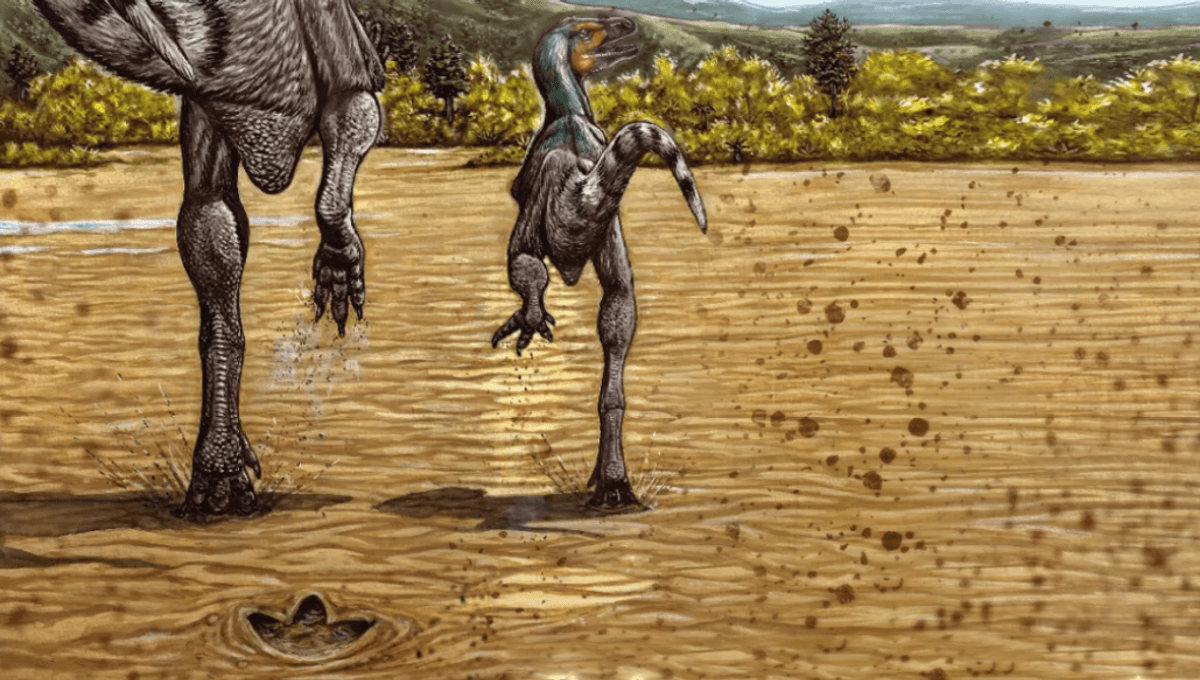
Did Dinosaurs Get The Zoomies? New Trackway Reveals Fastest Theropod Ever Documented From The Cretaceous
How fast were dinosaurs? If we're talking medium-sized theropods: very. That's according to a new fossil discovery that has become the fastest theropod trackway ever documented from the Cretaceous.
The rest of this article is behind a paywall. Please sign in or subscribe to access the full content. By figuring out the size of the dinosaur that left behind the fossil footprints and the distance between each step, scientists were able to determine that it was dashing through the landscape at around 45 kilometers (28 miles) per hour. That’s about the same speed as a professional cyclist. Footsteps fall under an area of palaeontology known as ichnology, which looks at fossilized traces like footprints, swim tracks, and even marks left behind by dinosaur mating rituals. Such fossils can reveal a lot about dinosaur behavior if you know how to read them. A new trackway was recently uncovered in Mongolia in a sedimentary layer from the Lower Cretaceous. That means that whatever left the prints lived around 130 to 120 million years ago. The trackway isn’t a single set of prints, but instead two isolated trackways that have been attributed to a large theropod dinosaur (thought to be Chapus lockleyi), and an as-of-yet-unidentified medium-sized dinosaur thought to belong to the Eubrontidae. Chapus lockleyi appears to have been moving through at a leisurely walking pace (as we would expect of a big dinosaur), but our Eubrontidae was absolutely gunning it. We can figure out the approximate speed an animal was running at based on its fossilized footprints by first figuring out how big it was and how large its strides were. If you then divide stride length by the animal’s hip height, you get its relative stride length, for which walking scores 2 or lower, trotting scores 2 to 2.9, and running scores 2.9. Our medium-sized dinosaur? It scored 5.25. Distribution map showing the trackway T1 and nearby footprints, (b) Photograph, line drawings, and false-colored depth maps of the first three footprints of T1 (with colors ranging from yellow to brown indicating increasing footprint depth). Image credit: ©Science China Press It's estimated to have been traveling at around 45 kilometers (28 miles) per hour – a running speed that must’ve been approaching its maximum. This is supported by the fact that the trackway is also very straight and has deep toe impressions, while the heels are pretty much absent, indicating a sprint-like gait pattern. “This speed represents the fastest known theropod trackway in the Cretaceous period,” write the study authors. “Biomechanical modeling consistently indicates that large theropod dinosaurs (particularly those weighing over 1,000 kg) typically employ walking or low-speed running gaits, whereas small and mid-sized theropods are capable of achieving greater running speeds.” “The running speed of the mid-sized theropod identified in this study aligns with predictions from existing biomechanical models for dinosaurs of comparable size, thereby providing substantial support for biomechanical research and further enhancing our comprehension of the locomotor capabilities of theropod dinosaurs.” So if any time travelers have plans to go back to the Cretaceous, my advice is to make sure you pack a car. Clearly, a bicycle isn’t going to cut it. The study is published in the journal Science China Earth Sciences.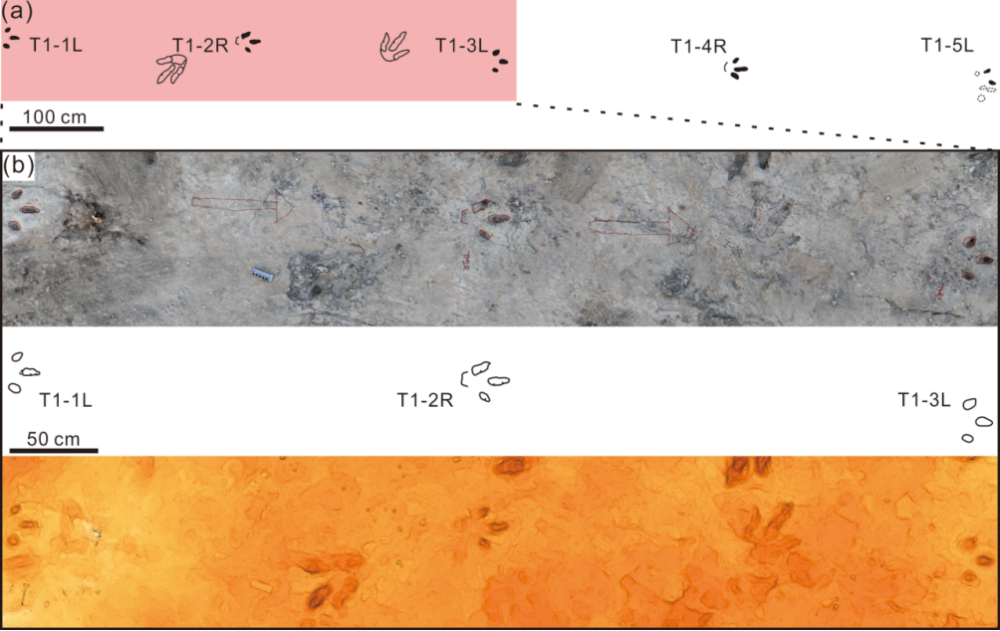

 English
 French
 Spanish
 Portuguese
 Deutsch
 Turkish
 Dutch
Dutch
 Italiano
 Russian
 Romaian
 Portuguese (Brazil)
 Greek
Greek